
Romance book clubs bring readers together to share swoon-worthy finds and discuss a book or monthly trope. Your next steamy binge-read can come with great conversation, too. Some groups read the same book, while others choose a theme and let everyone pick a title. That leaves room for different tastes, budgets, and favorite kinds of happily-ever-after. Public libraries offer useful examples: one club meets monthly for an hour, with books available about a month before each discussion. That gives you a simple sense of the routine, whether you’re looking for a group or dreaming up one of your own.
The genre’s appeal shows in the numbers: in 2025, Publishers Weekly reported that Circana BookScan-tracked print romance sales rose 3.9% to nearly 44 million units. But the best club pick isn’t always the newest bestseller. It might be a tender slow burn, a laugh-out-loud contemporary romance, or a magical love story you can binge-read and then discuss with fellow fans. A club gives you a welcoming reason to try an author or subgenre you might not choose on your own, while sharing the books you can’t stop recommending. Whether you want a ready-made group or a low-cost way to find your next favorite, a romance book club can make reading even more joyful.
A romance book club brings readers together to enjoy romance novels, share swoon-worthy finds, and talk about what makes a love story work. Some clubs choose one book for everyone, while others use a subgenre or trope as a loose theme. A theme might point toward a gentle slow burn, a steamy binge-read, or a friends-to-lovers story, while leaving room for members to choose different books.
The conversation can cover more than whether the couple has chemistry. You might talk about how the characters change, what keeps them apart, and whether the relationship feels caring and believable. The Romantic Novelists’ Association’s definition of romance calls for a healthy relationship dynamic and an uplifting resolution: a happily-ever-after (HEA) or happily-for-now (HFN). An HEA suggests the couple’s future together is settled; an HFN offers a positive ending while leaving more of their story to come.
That ending can shape the whole reading experience. Your club might debate whether a slow burn earns its payoff or whether a couple’s happy ending feels true to their journey. Emily Henry’s Book Lovers, for example, gives fans a contemporary romance to enjoy and discuss. A club centered on a particular trope can also help you compare how different authors handle a familiar setup.
Romance clubs can make it easier to try something outside your usual reading lane, too. If you usually reach for contemporary romance, you might discover a historical love story through a fellow member, then bring a favorite back to the group for others to try. The fun comes from sharing your enthusiasm: gush over a swoon-worthy moment, explain why a character won you over, or hear another reader make a case for a book you might have passed by. In a group such as Tyngsborough Public Library’s Lonely Hearts Book Club, a romance genre or trope can guide the monthly reading, giving fans a common thread while leaving room for different tastes.

You can find a romance book club through public-library calendars, independent bookstores, community event listings, local reading groups, and social platforms. Search for “romance book clubs near me” or add your city’s name, then check library and bookstore event pages for upcoming meetings. Local reading groups and community listings can also reveal gatherings that do not appear in a dedicated book-club directory.
Public libraries are a useful place to start: Clyde Public Library’s Romance Readers Book Club meets monthly for an hour, and books are available about a month before each discussion. That notice can help you plan your reading and find a free copy through the library. Another library club is for adults 18 and older and centers each month on a different romance genre or trope.
Library calendars can also help you find a group that welcomes a range of romance tastes. Nashville Public Library announced its Slow Burn Book Club in January 2025 as a monthly club for adults 18 and older that explores romance subgenres and diverse voices. A theme like slow burn can help you try a different kind of love story. For example, you might bring up Emily Henry’s People We Meet on Vacation when talking about a relationship that develops over time.
Independent bookstores can be more than places to browse for your next swoon-worthy read. The Associated Press reported that a Brooklyn bookstore hosted three book clubs and a romance comedy night, showing how a bookstore can bring romance fans together. Check bookstore event pages and social posts for clubs, themed gatherings, or reading nights.
Before joining, check how often the group meets and whether the bookstore or library supplies copies. That can help you see if the schedule and cost fit your reading life. Check the club’s age range, too. Then find out whether everyone reads one assigned book or chooses a different title to match a shared theme. Online groups offer a flexible option if you do not find a local fit: you can join readers beyond your area and take part from home.
A club’s format can make it easier to join, keep up with reading, and find books that suit your taste. Choose a plan that fits your group’s schedules and budgets, then make the routine clear so everyone knows what to expect.
A theme-based variation lets everyone read a different book, then bring a short summary to the group. Potsdam Public Library’s Why Choose? Romance Book Club meets monthly for one hour. Each member may read a different book that fits the selected trope, present a summary, and discuss how the trope works across the books. That structure keeps the conversation lively without requiring everyone to track down the same title.
Decide whether you’ll meet in person or by video chat, and choose a meeting length your members can manage. A one-hour meeting offers a clear time frame, while an in-person gathering makes it easy to pass around book covers and recommendations. Video chat can help members join from home. For either option, share the next theme or title in one dependable place, such as a group message or calendar, and ask members bringing different books to prepare a brief, spoiler-aware summary.
A simple recurring plan can keep the conversation welcoming without making it feel like homework. Start with a welcome and check-in, move into a spoiler-aware discussion, invite everyone to share favorite moments, and finish with an announcement about the next read. Let readers know when spoilers are coming, so anyone who has not finished the book can still enjoy the conversation.

The Kiss Quotient by Helen Hoang, Book Lovers by Emily Henry, Get a Life, Chloe Brown by Talia Hibbert, and The Very Secret Society of Irregular Witches by Sangu Mandanna can all spark lively romance book club conversations. They offer different moods and story worlds, so your group can explore more than one kind of swoon-worthy love story.
For contemporary romance, The Kiss Quotient gives you plenty to discuss about communication, intimacy, and the assumptions characters make about one another. Book Lovers brings a sharp, bookish feel to its love story, making it a fun pick for talking about character chemistry and romantic comedy conventions. Get a Life, Chloe Brown offers another contemporary angle, with a heroine pursuing new experiences and a romance that invites discussion about personal growth.
If your club wants a warmer, more magical mood, The Very Secret Society of Irregular Witches blends fantasy romance with found family. Talk about how the magical setting shapes the romance, as well as what makes a group of characters feel like a family. Rotating between contemporary romance, romantic comedy, fantasy romance, and other members’ interests can keep your reading list varied without turning it into a ranking of the “best” books.
Familiar tropes also make useful conversation starters. Does an enemies-to-lovers story give its characters a believable reason to change their minds about each other? How does a grumpy/sunshine pairing balance contrasting personalities? In a found-family story, do the friendships feel as rewarding as the romance? You can compare how different books handle the same trope or invite each member to bring a title that fits the theme.
Take turns suggesting picks so every member gets to introduce a favorite, explore a new-to-them author, or nudge the group toward a subgenre it has not tried. Before choosing, agree on content preferences, including the level of spice the group is comfortable discussing. A quick check can help you find a pick that works for everyone:
Format availability: Can members find the book in a format they can use, such as print, ebook, or audio? Preferred spice level: Does the romance match the group’s comfort level? Reading length: Is the book a manageable fit for the time members have before the discussion? Chosen theme: Does the title suit the group’s selected mood, trope, or subgenre?
That quick check gives you room to choose a steamy binge-read, a gentle slow burn, or a magical escape while keeping the group’s tastes in view.
Move the conversation past “Did you like the couple?” with questions about how the romance works. What makes the characters’ chemistry believable, or keeps it from clicking for you? Do the partners make room for each other’s needs, or does one person do most of the changing? Which conflict feels hardest to overcome, and does the story give the characters a convincing way through it? There’s no answer key. Readers can notice different details and still enjoy the same book.
The setting can shape the relationship, too. In Red, White & Royal Blue, for example, how do public roles and attention affect the characters’ choices? Ask whether a story’s place feels like part of the romance or simply a backdrop. Then talk about the emotional payoff: Did the ending reward the characters’ growth? Did the final reunion, commitment, or hopeful new beginning feel satisfying to you?
A trope-themed meeting gives everyone a shared starting point without requiring a shared book. Choose a trope such as fake dating, second chance, or enemies-to-lovers, and invite each reader to bring a different title that fits. Each person can give a brief pitch: name the book, describe how the trope appears, and share what made the story worth reading. One reader might bring The Hating Game for an enemies-to-lovers discussion, while another picks a different take on romantic rivalry. Comparing approaches can be more fun than deciding which book used the trope “right.”
Make space for the moments readers love most. Invite everyone to share a swoon-worthy scene or a short passage they want to discuss, whether it’s a tender confession, a witty exchange, or a grand gesture. Nobody has to choose the group’s favorite moment, and describing a scene works just as well as reading a passage aloud. You might hear why one reader treasures a quiet act of care while another loves the dramatic declaration.
For a light activity, start a shared list of favorite meet-cutes and grand gestures. Members can add a book title and a few words about the scene, building a handy source of future recommendations without turning the meeting into a contest. A quick “pitch a future pick” round works, too: each reader can suggest one romance they think the group might enjoy and explain what makes it tempting.
Leave a little room at the end for next-read ideas. Members can name a new trope to explore, recommend a title that fits the next theme, or suggest a book for the group to consider. A fresh possibility on the list gives everyone a reason to look forward to the next conversation.

You can keep club reads affordable by mixing free library copies, member-to-member swaps, used books, and formats readers already use. A public library may offer a print copy, ebook, or audiobook, so check which options are available before settling on a shared title. Giving members plenty of notice can also make it easier to borrow a copy when it becomes available. A trope-based club can help you try a new romance author without asking everyone to buy the same book. For a friends-to-lovers theme, each reader can bring a different title they already own or can borrow from a library or friend. Members can share a quick, spoiler-aware pitch about the book and how it uses the trope, then trade recommendations for future reads. Member-to-member swaps are another low-cost way to explore a new-to-you writer. A reader who has finished The Kiss Quotient might lend it to a fellow member, then borrow another person’s contemporary romance in return. Used copies can also be budget-friendly. Members can compare notes on local secondhand shops, library book sales, and community swap events. Choose titles in formats your members already use, whether that means print, ebook, or audio. A reader who listens during a commute may prefer an audiobook, while another may borrow an ebook. Checking format access before the meeting helps prevent a shared pick from becoming an unexpected expense. Romance-focused bookshops and their events can also be welcoming places to meet fellow fans and hear fresh recommendations.
If you’ve found a club, choose its next listed meeting and check what the group is reading. Note the title and meeting format, then ask the organizer whether you can join if you have not finished the book. If the assigned read is not calling to you, ask whether the club has a trope-themed meeting where you can bring a different romance.
Starting a group? Send readers a simple choice: “Would you rather read Book Lovers by Emily Henry together, or bring a different friends-to-lovers romance to discuss?” That gives everyone a clear first decision and lets you see whether the group prefers one shared story or a theme with room for personal picks. Once the group chooses, check your library catalog for a copy before anyone buys the book.
If you want to try a theme first, suggest slow burn and invite each reader to bring a book that fits. You could choose People We Meet on Vacation as a shared starting point, or let members pitch their own slow-burn finds. Ask each reader to share the title and a spoiler-free reason it suits the theme. Then put the next meeting in a group message or calendar so your first swoon-worthy read has a date.
A romance novella often runs about 20,000–40,000 words, but there’s no single length range that applies to every romance book. Romance guidelines use different ranges: 20,000–40,000 words is one example, while short stories may be fewer than 20,000 words and novels may be 40,000 words or more. These categories give you a helpful point of comparison, but publishers don’t all sort books the same way. Writers can also check Cupid’s Arrow Publishing’s guidelines when comparing submission requirements. If you’re looking for a quick, focused love story rather than a full-length binge-read, check the listed length to get a better sense of what to expect before settling in with a swoon-worthy couple.
Guidelines vary by publisher. Some romance guidelines use a broader novella range of 25,000–50,000 words. That variation means “novella” alone can’t tell you exactly how long a book will feel. Page totals are less dependable because editions and text layout affect the number of pages, while a book’s stated length gives you a steadier way to compare books. Writers can also consult Hachette Book Group’s Forever Yours guidelines for submission requirements. Check the format, blurb, and listed length together, then choose a story to suit your mood, whether you want a brief steamy escape or a longer romance with more room to linger.
A romance novella may be classified as 20,000–40,000, 25,000–50,000, or 30,000–40,000 words, depending on the guidelines. No single boundary applies to every book. These ranges suggest a quick, focused romance, but the label alone can’t tell you exactly how much story you’ll get. The listed length and the publisher’s classification offer a clearer idea.
Some publisher guidelines use 30,000–40,000 words as an ideal novella range. A book in that range may still differ in plot, pacing, and how much space the couple’s relationship gets. Writers can also consult Quills & Quartos Publishing’s guidelines when choosing a target. The number of words is a guide to length, not a promise about your reading experience.
Publishers can also set different targets by imprint or subgenre. For instance, contemporary and historical romance manuscripts may have different length ranges from paranormal romance manuscripts. This variation shows that “novella” may reflect a particular publisher’s categories rather than one standard used across romance.
Award categories can have their own definitions, too. The 2026 Nebula Awards rules classify a novella as 17,500 to fewer than 40,000 words, with novels starting at 40,000 words. The Nebula Awards recognize science fiction, fantasy, and related genres, so their classification isn’t a universal rule for romance.
When you see “romance novella,” treat it as a helpful sign that the story is shorter and more focused than a full-length romance, not as an exact measurement. A listing that includes the number of words makes it easier to compare books, even when their publishers use different cutoffs. The specific guidelines behind the label add context, especially when a publisher sorts lengths by imprint or subgenre.

Romance word counts vary because publishers and imprints set their own boundaries, and some use different ranges for different subgenres. A “novella” can mean one length in a contemporary romance list and another in a paranormal romance list.
Some guidelines consider contemporary and historical romance manuscripts of 15,000–55,000 words, while others consider paranormal romance manuscripts of 15,000–60,000 words. These ranges show how much the category can vary, even within one publisher’s guidelines.
Subgenre helps shape what you can expect from a story, but it doesn’t set one fixed length. A contemporary romance such as Beach Read by Emily Henry, a historical romance such as A Knight in Shining Armor by Jude Deveraux, and a paranormal romance such as A Discovery of Witches by Deborah Harkness each offer a different story world. They’re examples of their genres, not promises about novella length.
For writers, the intended publisher or imprint matters more than a general definition of “novella.” A manuscript that fits one publisher’s range may fall outside another’s, even when both are considering the same subgenre. Check the current submission guidelines for the specific publisher or imprint you’re targeting, including any separate ranges for contemporary, historical, or paranormal romance.
For you as a reader, the novella label gives you a broad category, not an exact measure of a book’s length. The listed length offers a more specific sense of length, while the publisher or imprint’s classification can explain why the book carries that label. If a listing includes both, use the number to compare titles and the classification to understand how that publisher groups them.
A novella falls between a shorter story and a full-length novel. It gives a romance room for a relationship to develop while keeping the reading experience more focused than a novel. It can follow a couple through attraction, conflict, and a meaningful choice without taking the longer route a full-length story might. The result can still feel swoon-worthy and emotionally complete, with less room for side plots and extended subplots.
Short-story, novella, and novel labels don’t divide romance into one universal set of word counts. A separate awards classification from science fiction, fantasy, and related genres defines a novelette as at least 7,500 but fewer than 17,500 words, a novella as 17,500 to fewer than 40,000 words, and a novel as 40,000 words or more. Romance publishers use their own ranges, which can differ from those awards categories. Those thresholds are an awards classification for those genres, not a rule every romance publisher follows.
That difference matters when you compare labels. One publisher may set a different novella range from another, while an awards category sorts eligible works into defined length groups. A romance described as a novella can therefore fall outside the novella range used by an awards classification and still fit its publisher’s romance guidelines. The label tells you how a particular publisher or classification groups the work, while the stated length gives you a clearer sense of its size.
Length doesn’t determine whether a love story feels satisfying. The Romantic Novelists’ Association defines romance around a healthy relationship dynamic between the main characters and an uplifting, positive resolution, such as a happily-ever-after or happily-for-now ending. A novella can deliver that relationship arc in a focused way, without needing the breadth of a full-length novel. For a familiar example of a romance centered on a changing relationship, The Kiss Quotient by Helen Hoang follows Stella and Michael as their connection develops. A shorter romance can give its own couple room to build trust and reach a positive ending, while keeping the story moving at a brisker pace.

A romance novella has no dependable page count. The total changes with the edition and the way its text is laid out. A paperback, hardcover, and ebook can present the same story across different numbers of pages. In print, trim size, font, spacing, and margins all affect how many pages the text fills.
An ebook may let you change the text size or screen layout, so the page total can shift with your settings. Some digital listings show reading locations instead of a fixed page count. An audiobook listing may give you a runtime rather than a page count, which is more useful for estimating how long listening will take.
A book’s length in words gives you a steadier way to compare the length of two books. Page counts can still help when you’re choosing a specific edition, but they work best alongside the format and other details in the listing. A romance such as The Hating Game by Sally Thorne is a reminder that a page total belongs to a particular edition, not to romance as a whole.
When you’re picking a quick read, check whether the listing is for print, ebook, or audio, then look for the listed length, page total, or runtime provided for that format. A paperback page count can help you picture the physical book, while an audiobook runtime gives you a clearer sense of listening time. If the listing gives only a page total, treat it as a detail about that edition rather than a universal measure of novella length.
The blurb can also help you decide whether the story suits the time and mood you have. A focused romance about one couple may be just right for a short reading window, while a book with a larger cast or several subplots may call for a longer stretch. Together, the format, listed length, and story description give you a more useful picture than pages alone.
A short romance often keeps your attention on the central couple, moves through key relationship moments in a compact span, and leaves less room for secondary plots than a longer novel. That focus can make the connection feel immediate because you spend more of the story with the people whose choices and feelings drive the romance. If you’re in the mood for a swoon-worthy escape, a novella can give you a satisfying love story without a long wait to reach its emotional turning points.
Courtney Milan’s historical romance novella The Governess Affair centers on Serena Barton and Hugo Marshall. Their relationship unfolds amid a conflict involving the Duke of Clermont, which adds tension alongside the developing romance. The historical setting and the couple’s circumstances make the story feel distinct, while its compact scope keeps their connection in the foreground.
A shorter format can also mean fewer scenes devoted to friends, family, or other romantic pairings. You may get glimpses of those characters, but the story has less space to follow several separate arcs in depth. That doesn’t mean every novella moves at the same speed or uses the same structure. Some linger over a couple’s growing trust, while others move briskly through attraction, conflict, and a decision that changes the relationship.
A brief story can still pack an emotional punch. A romance can build anticipation, make you care about the couple’s choices, and deliver a meaningful payoff without taking the length of a full novel. Romance readers may also look for an uplifting resolution, such as a happily-ever-after or happily-for-now. That positive ending can feel earned when the couple has faced a real obstacle and reached a future together, even if the story stays tightly focused on them. A quick read can still leave you smiling over the couple long after you’ve turned the last page.

You can choose a quick romance read by checking its listed word count, then matching the story, heat level, and format to your mood and budget. Use this short checklist to find a steamy, swoon-worthy binge-read without assuming every book called a novella will take the same time to finish.
CraveRomance publishes romance recommendations and information, but it doesn’t sell books. Check book listings for current format and pricing details, then choose the story that fits your reading mood.
If you want a quick historical romance, try Courtney Milan’s The Governess Affair. Search for the title in your library’s ebook or audiobook catalog and in the book sources you already use. Compare the formats and current prices, and check whether a free library copy or low-cost offer is available before choosing where to read. Availability and deals can vary by title and source.
If you’re unsure whether a novella will suit your mood, read the book description and a sample when one is offered. For The Governess Affair, look for clues about the couple’s conflict and the Duke of Clermont’s role in the story. A sample can help you decide whether Milan’s historical setting and writing style appeal to you before you commit.
Want a different kind of romance? Choose the setup you’re craving, then search for a title with a listed length and compare it with the publisher’s label. Keep a short list of promising books in your reading app or notes, including the format and price you found. When you spot a free or inexpensive option that fits your mood, you’ll have your next read ready instead of starting your search from scratch.
Disability in romance novels means stories where one or more disabled characters are part of the central love story, with desires, relationships, and lives beyond disability. The range is wide: in 2022, one in four U.S. adults reported at least one of six disability types, including hearing, vision, cognitive, mobility, self-care, or independent-living disabilities, according to the Centers for Disease Control and Prevention. CDC estimates put cognitive disability at 13.9% and mobility disability at 12.2%. Romance can make room for that range without making disability a character’s only defining trait. You might find a story about an autistic heroine, a character who uses a prosthetic limb, or a romance shaped by blindness. Every experience is different, so specific descriptions can help you find the representation you want.
The genre’s central love story and emotionally satisfying, optimistic ending can make room for disabled characters to be desirable, to desire, and to look forward to the future. Romance Writers of America’s definition of romance fiction puts the love story and hopeful ending at its heart. That doesn’t mean every book will suit every reader, or that one novel can represent everyone. You can look for swoon-worthy romances where disability is part of a whole life, not a problem that love must fix. With titles exploring different setups and experiences, your next thoughtful, steamy binge-read may be closer than you think.
Disability in romance novels means a disabled character is part of the central romantic relationship, and disability can shape their life without defining everything about them. A character may navigate access needs, symptoms, or other effects of disability while also having desires, flaws, relationships, and goals unrelated to disability. The romance gives that character a place in the love story, not just a role as someone to be cared for or “fixed.”
The Romantic Novelists’ Association’s description of its DISCO chapter says it includes members with disabilities, chronic health conditions, mental health issues, or neurodivergence, as well as carers. That range helps explain why readers may use different words for their experiences, or why one person’s account may not match another’s. A novel’s portrayal is one character’s story, not a template for everyone with a similar condition.
Legal definitions serve a different purpose from literary descriptions. In the U.S. federal civil-rights context, the Americans with Disabilities Act defines disability as an impairment that substantially limits one or more major life activities, a history or record of such an impairment, or being regarded as having one. The ADA’s definition belongs to that legal context. It is not a checklist readers must apply before a character or story can count as disability representation.
Romance can explore how disability and a relationship shape one another without making the relationship a cure. A 2026 article in the Journal of Medical Humanities examines three contemporary romances about relationships between disabled heroines and nondisabled heroes. The article considers how those books connect chronic illness with romance’s hopeful promise, including the possibility of love and a happy ending. This pairing is one way to tell a disability romance, not a requirement for the genre.
The key is that the disabled character belongs at the heart of the romantic story and is treated as a full person. Disability may affect intimacy, plans, or everyday choices, but it does not need to be the plot’s only source of conflict. A romance can make room for tenderness, attraction, uncertainty, humor, and joy while taking a character’s disability seriously.

Disability representation matters because disabled characters deserve to be central to love stories, not limited to plots about hardship. When a heroine or hero is desired, flirtatious, funny, uncertain, or stubborn, you can enjoy them as a full person. Their disability can shape the relationship without becoming the only reason the couple faces conflict.
Romance’s hopeful ending can give disabled characters room to build relationships and imagine futures. A 2026 research article analyzes three contemporary romances about disabled heroines and nondisabled heroes, arguing that the novels challenge the idea that chronic illness rules out romantic love or a happy ending. That possibility matters: a disabled character’s future can hold intimacy, commitment, and joy without suggesting that love cures disability.
An interabled romance pairs a disabled character with a nondisabled character. A romance with disabled leads on both sides of the central pairing is a different setup, bringing two distinct experiences into the love story without making either character a stand-in for everyone with that disability. In Out on a Limb, for example, Win’s right hand is less developed than her left, and Bo has a prosthetic leg, as described in a Publishers Weekly review. Their pairing lets you enjoy a swoon-worthy romance between two disabled characters, rather than making one partner’s disability the only one the story considers.
Representation can be meaningful without any one book needing to speak for every disabled reader. One character’s needs, boundaries, humor, or approach to desire may feel familiar to you, while another reader may have a different experience. A satisfying romance can give its disabled leads room for chemistry, disagreements, private jokes, and choices unrelated to disability. That range makes it easier to find a steamy binge-read that holds your interest without treating one portrayal as a universal answer.
You can start with these three disability romances, each offering a different way to bring disabled characters into a love story. These descriptions are a starting point, not a promise that a book will match your tastes or experiences.
These books offer examples of different portrayals: a couple with two disabled leads, an autistic woman exploring sex and relationships, and a blind captain in a Regency setting. They can help you choose a possible next read, but they don’t show how common any portrayal is across romance. A short description also can’t capture every detail of how a novel handles disability or romance. If a premise catches your interest, read a fuller description before you start. Look for details about the central relationship, the characters’ experiences, and the tone, then check any available content notes for subjects you prefer to approach with care. A disability label or promising setup can help you narrow your choices, but it can’t guarantee that a book will feel right for you.
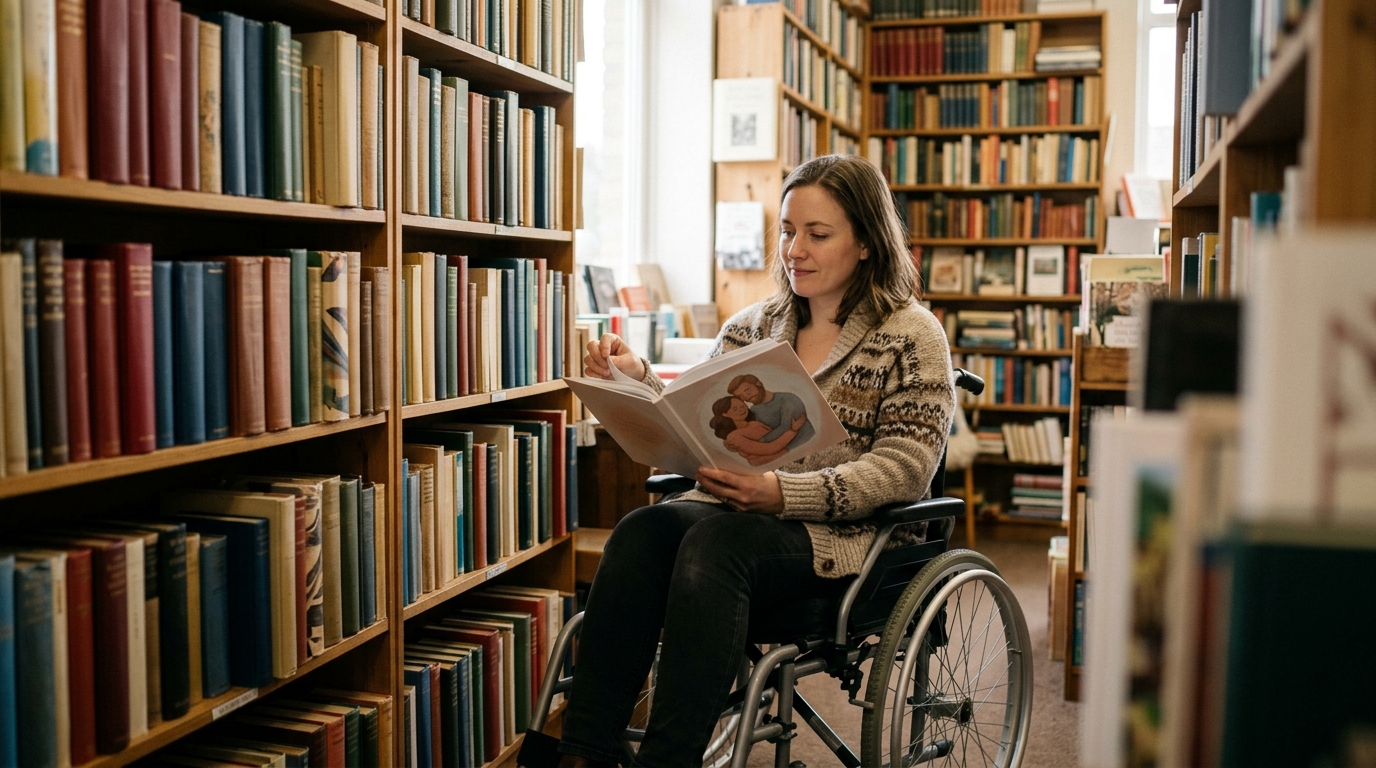
You can find disability romance books by searching for the character, disability, or access experience you want to read about, then checking the book’s description and other reader-facing details. Specific searches can lead you beyond a single recommendation list and toward a fresh, swoon-worthy binge-read. Before you search, think about the kind of story you want. The steps below can help you narrow the results without treating different disabilities or relationship setups as interchangeable.
Search wording can make a big difference: “disabled romance” may bring up a wide mix, while a phrase naming a particular disability or pairing can narrow the results. A fuller description can help you decide whether a steamy contemporary romance, a historical love story, or another kind of book fits what you’re looking for.
Thoughtful disability representation gives a disabled character agency, romantic desires, and a life that isn’t reduced to disability. Ask yourself whether the character makes meaningful choices, pursues personal goals, and helps shape the relationship. A character who sets a boundary, initiates affection, or changes a shared plan takes part in the romance rather than simply being carried through it. By contrast, a character who exists only to inspire a nondisabled partner or teach them a lesson may feel more like a story device than a full romantic lead.
Look at what the character wants beyond being loved. A disabled character might care about work, friendship, family, creativity, or a future unrelated to a partner. Those goals don’t need to take up as much space as the romance, but they can show that the character’s life is larger than the couple’s storyline. Notice whether both partners affect the relationship: the disabled character’s preferences and decisions should matter, not just the nondisabled partner’s learning or growth.
A satisfying romance can make room for intimacy, attraction, and joy alongside access needs, care, pain, or uncertainty when those details fit the character’s experience. A date might call for a change of plans; a moment of closeness might involve communication about comfort or boundaries. These scenes can show access and care as part of how two people build trust, not as interruptions that make desire impossible. Disability experiences vary, so a story doesn’t need to include every possible challenge to feel complete.
Support from a romantic partner can be tender without making the disabled character helpless. Notice whether help is offered with respect for the character’s wishes, or whether a partner takes control and the story presents that control as romantic. Care can go both ways: each person can listen, compromise, and show up for the other, even when their needs differ. Mutual affection feels more convincing when neither partner is treated as the other’s project.
Love can support a character without curing or erasing disability. A loving relationship may bring comfort, confidence, companionship, or practical support. It shouldn’t need to make a disability disappear, resolve every symptom, or suggest that the character can be loved only after becoming more like a nondisabled person. A hopeful ending can include uncertainty or ongoing needs while still giving the couple a joyful future.
When you assess a portrayal, look for specific descriptions of the disability and how it affects this character’s daily life, relationships, or access needs. A label alone may leave important details unclear, while a detailed portrayal can help you understand what the story chooses to show. Still, one character can’t represent every person with the same disability, and one author can’t speak for every disabled reader. You may find a book moving, frustrating, or simply not for you, while another reader responds differently to the same portrayal.

Pick a book from the list that makes you curious and give it a try. Then follow the detail that caught your eye: search for an autistic heroine, a blind lead, or a romance with two disabled leads. A specific search can lead you to more stories with a setup you’re excited to read, while leaving room for books that surprise you.
Your next swoon-worthy read might be easy to borrow. Check your library’s catalog for the title, or ask whether the library can get a copy if it isn’t on the shelf. Borrowing from the library lets you explore a new author or subgenre without buying every book you’re curious about.
Sales can help stretch your reading budget, too. Look for discounted print books or ebooks, and browse library book sales for low-cost finds. You can build a joyful, steamy binge-read pile without paying full price for every title.
As you follow a promising recommendation trail, stay open to different authors, voices, and experiences. A search for one representation detail may introduce you to a new setting, relationship dynamic, or kind of romance you hadn’t considered. Keep a personal list of titles you want to try and the representation details you’d like to explore next.
Choose a title based on the story setup you want tonight. For a romance with two disabled leads, search your library catalog for Out on a Limb by Hannah Bonam-Young. For an autistic heroine and a story centered on sex and relationships, look up The Kiss Quotient by Helen Hoang. For a Regency romance featuring a blind captain, search for The Captain’s Wallflower by Audrey Harrison.
Open the catalog record instead of relying on a search-results label. Check whether your library has a print or digital copy, and use its hold option if available. Before borrowing, read the full book description and any available content notes to see whether the premise and themes fit your mood.
If your library doesn’t list a title, ask a librarian whether another branch or a borrowing request might help. Availability varies by library. Keep a short reading note with the title, the disability detail that caught your interest, and one question you want reviews to answer. After you finish, use that note to guide your next search, such as “romance with two disabled leads” or “Regency romance with a blind hero.”
Contemporary romance novels with explicitly autistic protagonists include Helen Hoang’s The Kiss Quotient (2018) and The Bride Test (2019), Chloe Liese’s Always Only You (2020), and L. A. Schwartz’s My Kind of Trouble. A 2025 dissertation closely examines eight adult romances by Hoang and Liese, including three books by Hoang and five by Liese, exploring how sensory needs, routines, masking, consent, and boundaries intersect with romance conventions, as summarized by the Romance Scholarship Database.
For your next swoon-worthy binge-read, check whether a character is explicitly identified as autistic or whether that’s a reader’s interpretation. Content notes can also help you choose a story that fits your mood and boundaries, especially when it comes to emotional and physical intimacy. Then check your library, used-book shelves, or ebook deals for a free or lower-cost way to discover these romances.
Several contemporary romances feature explicitly autistic protagonists, including novels by Helen Hoang and Chloe Liese, as well as L. A. Schwartz’s My Kind of Trouble. Browse by author to find a quick starter list:
L. A. Schwartz’s My Kind of Trouble gives you another author to explore. Its male lead, Preston Jones, is described as an autistic librarian and piano teacher. Look for the book by title or author when you’re browsing.
The Hoang and Liese selections let you explore several romances by two authors, while Schwartz’s book offers another option. Treat these titles as a starting shelf, not a complete guide to autistic romance or a guarantee that every story will suit you. Autistic readers have different tastes, and your ideal read may depend on the characters, the relationship, or the kind of romance you’re in the mood for.
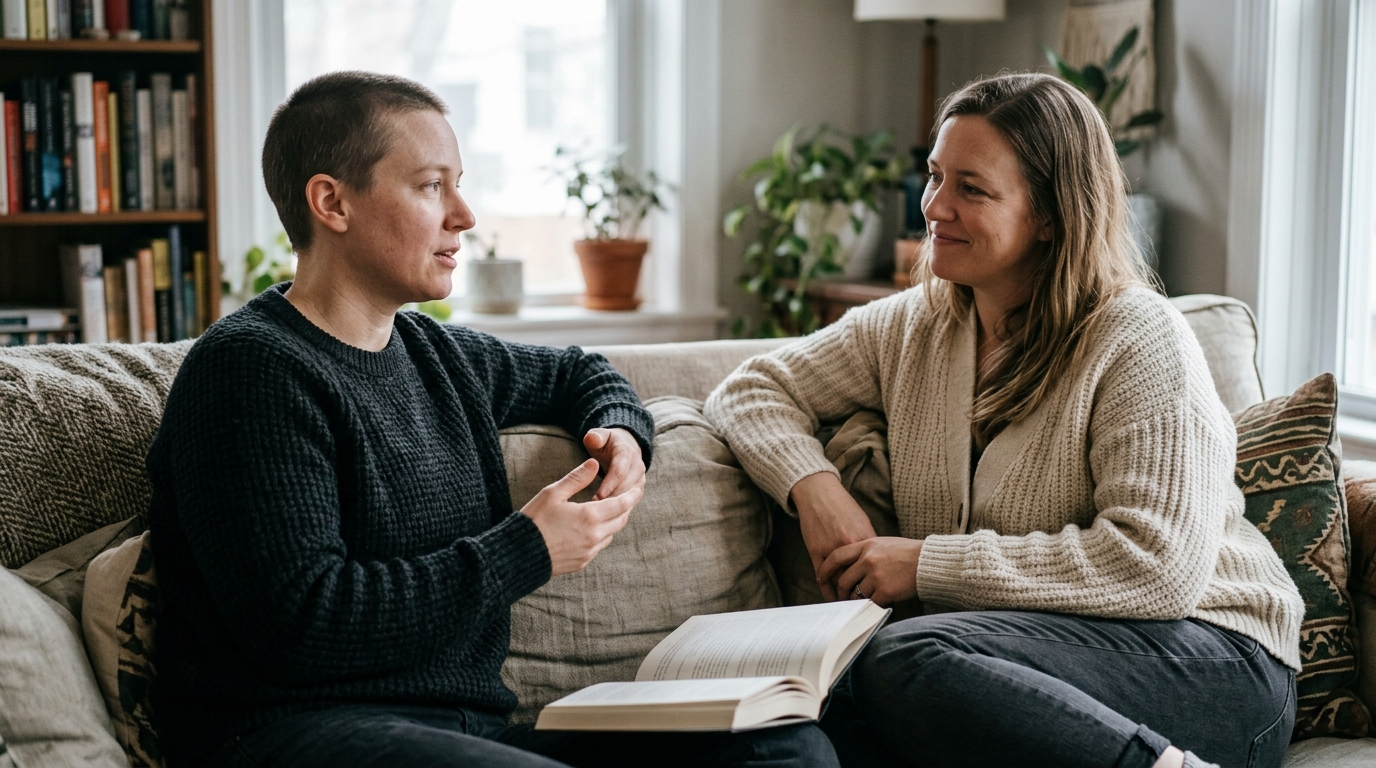
Romance novels can portray autism through more than a character’s diagnosis. Autistic traits may shape everyday life, intimacy, and the choices a character makes. A story might show masking, when someone works to hide or manage autistic traits around other people, and the relief or strain that can follow. Sensory sensitivities can affect date settings and physical closeness, while routines and special interests may bring comfort, joy, and a sense of identity. Autistic burnout can also matter, especially when social demands or pressure to keep masking become difficult to manage.
These details can make romantic scenes feel grounded in the characters’ lives, rather than suggesting that love cures practical needs. One character might need a quieter setting, time to recover, or a clear plan. Another might show care by listening and adapting. Helen Hoang’s and Chloe Liese’s romances may portray these experiences in different ways, so you won’t find a single portrayal in every book.
Consent and respect for boundaries are useful ways to think about any romantic relationship. Notice whether a character can say what feels comfortable, whether a partner listens without pushing, and whether both people can change their minds. The way characters talk about touch, sex, privacy, and time alone can show whether the romance makes room for autistic needs.
As you read, notice how an autistic character communicates needs, navigates closeness, and keeps agency in the relationship. Does the character get to make meaningful choices, or does the plot treat a partner’s preferences as the answer to everything? You can enjoy a tender slow burn, a funny meet-cute, or a steamy romance while noticing how thoughtfully the story portrays its autistic lead.
Not always. Some novels clearly identify a character as autistic, while calling a character autistic-coded is a reader’s interpretation, not canon, unless the book makes that identification clear.
Publisher descriptions can help you tell the difference. Penguin Random House describes Khai Diep in Helen Hoang’s The Bride Test as autistic, giving you a clear signal before you start reading. A character’s routines, communication style, or sensory needs may also feel familiar to autistic readers without the story identifying that character as autistic. You can note that connection, but a discovery guide should label it as an interpretation rather than an established fact.
This distinction matters when you’re looking for a particular kind of representation. An explicit identification can help you find books that name autistic identity, while a coded reading may offer a meaningful connection without confirming how the character understands themself. You don’t have to dismiss a reader’s interpretation. Clear labels simply help you know what the book actually says.
A reader guide for The Kiss Quotient raises the choice between identity-first and person-first language. It also asks readers to consider whether they are surprised to see an autistic character exploring a sexual relationship. That’s a useful prompt for thinking about whose intimacy gets treated as ordinary in romance.
For clarity, check the book description and any author notes, which may explain how the character’s identity is framed. If the description doesn’t name autism, treat your reading of the character as a possibility, not confirmation.

Check publisher samples and content notes before you begin, then use their details to decide whether a book fits your mood and boundaries. Romance can include emotional vulnerability as well as physical intimacy, so a quick check can help you choose between a gentle read and a steamier one. Try this simple checklist:
Use content notes to choose a cozy slow burn, a more open-door romance, or something in between. They’re a practical way to make your next binge-read feel right for you.
Thoughtful representation gives an autistic character a point of view, meaningful choices, and respected boundaries. It also makes them more than a diagnosis or a lesson for a partner. Fiction can spend time inside a character’s thoughts, hopes, and uncertainty, including during dates and intimate moments. Older mainstream news coverage often framed autistic dating very differently. A 2018 article in the Canadian Journal of Disability Studies analyzed 11 feature articles from major American newspapers and found recurring portrayals of autistic sexuality as disruptive or dangerous. The article also identified a heterosexualized, gendered, and whitewashed lens on autistic daters. This contrast offers a useful way to read without turning your romance into a test. Ask yourself: Does the autistic character have a point of view and agency? Are their boundaries respected? Are they more than a diagnosis or a lesson for a partner? A swoon-worthy relationship can include compromise, but care shouldn’t mean one character’s needs always disappear. No single book can represent every autistic experience. Autistic people differ, and one character’s way of communicating, relating, or enjoying intimacy isn’t a universal template. You can enjoy a steamy romance while noticing whose feelings shape the story and whose choices move it forward.

Build your reading list around the author whose style you enjoy most, then add a new voice when you’re ready for a change. Chloe Liese’s Always Only You is a contemporary romance, while Helen Hoang’s books offer another set of romantic stories to explore.
For free or lower-cost ways to discover a new read, check your local library catalog, browse used-book shelves, and keep an eye out for ebook promotions. Availability varies, so you might find one title at the library, another secondhand, and a third in an ebook deal. Borrowing a library copy can also help you sample an author before deciding which books to add to your own shelves.
Before picking your next swoon-worthy read, consider the tone you want, from a cozy slow burn to a steamy romance, and the level of intimacy that feels right. Check each title’s content notes for details that matter to you, including on-page intimacy or health-related content. Then add books that fit your mood, comfort level, and budget to a personal binge-read list, ready for your next bookish stretch.
Choose one title for your next read rather than adding every option to your list at once. To start with Helen Hoang, try The Kiss Quotient. If you’re curious about Chloe Liese’s romances, begin with Always Only You. For a different author, add My Kind of Trouble to your shortlist.
Make your choice a low-cost trial: search your library catalog by the exact title and author, then check whether a print or ebook copy is available. If it isn’t, look for the title at a used-book shop or watch for an ebook promotion. You can sample one author before deciding whether to read their other books.
Before you start, choose one personal reading priority, such as a character whose autistic identity is explicitly named, a particular intimacy level, or a story that makes room for boundaries. Keep that priority beside your shortlist, then compare it with the book description and content notes. If your first pick doesn’t match your mood, move on to your next title instead of forcing a binge-read. Which author or romance mood feels right for you today?
Romance author newsletters can bring bonus scenes, free books, and release alerts straight from the writers you love. You might get to revisit a swoon-worthy couple, sample a new series, or spot a sale before your next binge-read. Some perks are wonderfully specific: Angela Quarles offers subscribers 11 pages of deleted scenes, a series excerpt, and sticker-sheet downloads through her newsletter signup. Other authors share cover reveals, giveaways, recommendations, and upcoming-book news, helping you keep favorite writers on your radar while you look for your next romance.
Email frequency matters too, especially if your inbox is already busy. Ellen B. O’Brien says her newsletter sends one to five emails a month with ARC signups, release dates, sales, freebies, and book news. Subscribers can currently get her vampire-romance novella Bites on Bourbon through her newsletter page. Check both the perks and the schedule before subscribing. A free newsletter can be an easy way to find fresh reads and occasional deals, so choose authors whose updates you’ll be excited to open.
Several official romance-author newsletters are worth a look if you want bonus fiction, a free starter read, or book news and promotions straight from the writers. The right fit depends on what you’d most enjoy in your inbox: a scene with a favorite couple, a new author to sample, or a heads-up about a sale.
For bonus fiction and extras, try these options:
If you’d rather start with a complete free read, Jean Oram’s newsletter signup offers new subscribers a free book to claim instantly. It’s a handy way to sample an author’s storytelling before choosing what to read next. A free book can also help you get started with an author’s series or find your next romance.
For release updates and reading inspiration, Bella Andre’s official author website offers a free newsletter with new-release updates and promotions. If you like knowing when a favorite writer has a fresh book out or want a chance to spot a promotion, those are good reasons to subscribe. You can keep an author on your reading radar without having to remember to check for news yourself.
Renee Regent’s newsletter arrives every other Tuesday and includes book news, recommendations, book fairs, and freebies. Recommendations can help you discover more to read, while book-fair news and freebies may lead you to something beyond an author’s latest release.
These signup pages show how varied the perks can be. A deleted scene or bonus epilogue gives you a reason to return to a story you already love. An excerpt lets you sample something new, while a free book offers a longer first taste. Giveaways, recommendations, and promotions offer more ways to find your next swoon-worthy read or catch an appealing deal.
Choose based on the perk you’re most likely to enjoy, rather than subscribing to every author whose books you’ve liked. If you love extra story moments, look for bonus scenes and epilogues. If you’re exploring, a free book or excerpt may be more tempting. And if you want to keep up with favorite writers, release news and promotions may make a newsletter worthwhile.

Romance author newsletters can include story extras, free reads, recommendations, and alerts about books and promotions. Bonus scenes let you spend more time with a favorite couple, while deleted material can reveal moments that didn’t make the final book. Excerpts offer a taste of an upcoming or unfamiliar romance, and a free book can give you a longer sample to binge-read.
Reading recommendations can help you find your next swoon-worthy story, whether you’re in the mood for something steamy or ready to try a new author. Some newsletters mix recommendations with freebies or bonus fiction, while others focus on a particular kind of extra. A signup may promise one perk without offering them all.
News and alerts can make it easier to follow an author’s books without checking for updates yourself. Release-date announcements and cover reveals help you spot what’s coming next, while sales and giveaways can point you toward chances to find a read for free or for less. Event notices can tell you about book fairs and other author appearances, and ARC opportunities may invite readers to apply for an advance copy.
Each author chooses what to include. One newsletter might focus on bonus fiction and excerpts, while another may prioritize release news, promotions, or reading recommendations. Even a newsletter that offers a free book may not include deleted scenes, giveaways, or ARC opportunities, so check the signup details for the perks you want most.
Romance authors’ newsletters can arrive every week or two, every other Tuesday, or anywhere from one to five times a month. Schedules vary by author, so the amount of bonus content is only one thing to consider. Rina Philips says her newsletter goes out every week or two with bonus content and release updates. That rhythm may suit you if you enjoy regular notes about new books and extra story moments. Renee Regent sends her newsletter every other Tuesday, with book news, recommendations, book fairs, and freebies. Ellen B. O’Brien says she sends one to five emails a month. That range can mean a busier inbox in some months than in others, so think about whether you enjoy frequent updates or prefer fewer messages. A stated schedule gives you a useful sense of what to expect. Check an author’s signup page for the email frequency before subscribing, since not every writer lists a schedule. Then choose a rhythm that suits you, whether you’re happy to hear from an author every week or two or would rather get updates less often.

Your next read may depend on whether you want a full story or just a taste. Jean Oram’s newsletter offers a free book you can claim instantly, while Ellen B. O’Brien’s signup comes with Bites on Bourbon, a vampire-romance novella. Either gives you something to read when you’re looking for a fresh, swoon-worthy escape.
If you’ve finished a book and aren’t ready to leave its world, look for story extras. Angela Quarles offers deleted scenes, and Rina Philips shares the bonus scene “The First Whale.” These extras let you revisit an author’s stories and spend a little more time with characters you already enjoy.
When you want ideas beyond one writer’s books, Renee Regent’s newsletter includes reading recommendations alongside book news and freebies. Those recommendations can help you find another romance for your list when you’re between series or in the mood to try a different author.
For a nudge about what to read next, newsletters can also bring new-release and sale alerts. Bella Andre’s updates include new releases and promotions, making her newsletter a good fit if you like keeping favorite authors on your radar and spotting a deal.
You don’t have to subscribe to every writer you enjoy. Signing up can be an easy way to keep up with a few favorite authors, pick up an occasional free read, and discover potential binge-reads when your mood shifts from bonus scenes to something entirely new.
You can keep romance-author subscriptions manageable by choosing a few lists with perks you truly want, checking how often they send email, organizing their messages, and unsubscribing when a list no longer feels useful. A little sorting can help book news and bonus reads feel like treats instead of inbox clutter. Keep following your favorite writers fun with this simple routine:
You can also check your folder when you’re ready to browse, rather than feeling that every new message needs your attention right away. That way, you choose when to open a note about a release or a free extra, and the rest can wait.

Romance-author newsletters can help you find free or discounted reads, though savings aren’t guaranteed. Joining is often free, making a signup an easy way to hear about occasional offers and new releases straight from an author.
Bella Andre shares promotions, while Angela Quarles includes sale notices in her newsletter updates. Karin Winter lists giveaways and freebies, which may offer another chance to find a read without paying full price. Check the details: a sale alert points you to a promotion, but it doesn’t mean every book in the author’s catalog is discounted.
Newsletter perks can change over time and vary from author to author. One signup might feature giveaways and freebies, while another focuses on promotions or release news. A free subscription also doesn’t mean every book or bonus read will be free.
Before signing up, check the author’s current newsletter page to see which perks are available. Look for details about free reads, giveaways, sale notices, and new-release announcements so you know what updates to expect. A note from the author can help you spot a deal or discover a new romance when it’s announced, but offers depend on what that author is sharing.
Choose one reading goal for your next signup: a full free read, a quick extra scene, or alerts from an author you already follow. If you want a book to start now, choose Jean Oram. If you’d rather revisit a story world, pick a newsletter offering bonus fiction. Make that signup your next step, then save the first message so the promised read or extra is easy to find.
Before joining, check the author’s current signup page for the perk and email schedule. Add a short note to your reading list, such as “free book to try” or “bonus scene to read after the novel.” That gives you a clear reason to open the email when you have time, instead of letting it disappear among other messages.
If an author’s updates stop matching your reading mood, use the email’s opt-out link. For U.S. promotional emails covered by the CAN-SPAM Act, the Federal Trade Commission’s guidance says senders must provide a clear way to opt out and honor opt-outs within 10 business days. Keep the lists that bring you reads you’re excited to start, and let the others go.
Romance bookstore displays can help you find your next read by grouping novels by trope, mood, or subgenre and highlighting staff picks. A steamy contemporary favorite beside a romantasy novel can make a new author feel less daunting and help you build a binge-read shortlist.
Bookstore Romance Day offers another way to discover new reads, with activities such as blind-date bundles and author events. Participating shops may advertise discounts or free activities. More than 550 bookstores across the U.S., Canada, and U.K. took part in 2024, compared with just over 150 at the event’s 2019 debut, according to Romance Writers of America.
Romance displays make promising books easy to spot, help you explore a subgenre, and introduce you to authors you may not know. Stores use section placement, staff recommendations, themed displays, and events to encourage browsing. You can follow a cover, a mood, or a shelf label without arriving with a specific title in mind.
Romance is also gaining visibility: U.S. print romance-book sales rose almost 9% in 2024, according to Publishers Weekly’s report on Circana BookScan data.
A clearly marked section in a prominent spot, paired with recommendations, can make romance feel welcoming, even if you’re new to the genre. Whether you loved The Love Hypothesis or are simply curious about a swoon-worthy love story, displays can help you find your next binge-read without knowing an author or title in advance.
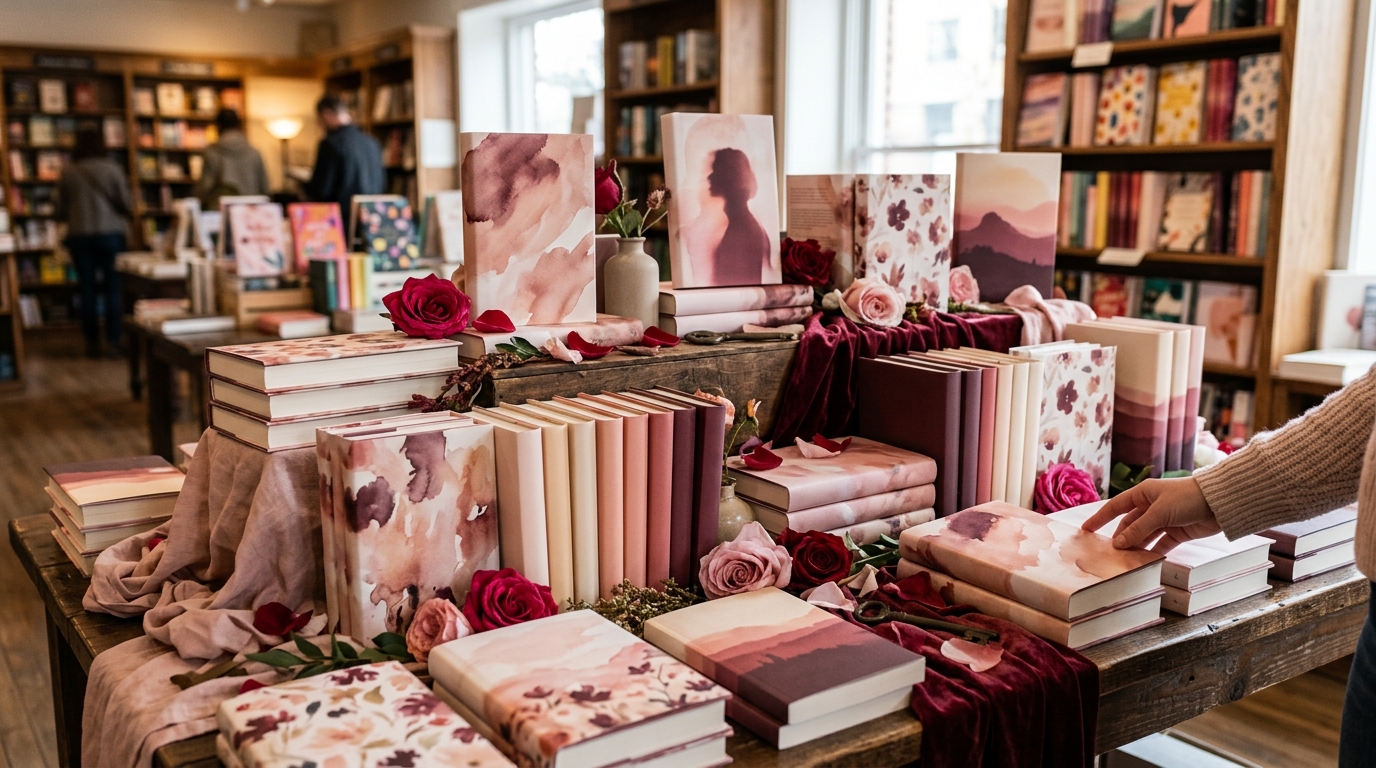
A themed romance table lets you browse for the kind of story you want, not just by author or bestseller status. A “yearning” display might gather slow-burn love stories, while a second-chance table could feature Before I Let Go by Kennedy Ryan. A small-town love table might pair Lucy Score’s Things We Never Got Over with a title you haven’t tried yet.
Subgenre themes make it easier to find a particular mood, too. A contemporary romance display could include The Kiss Quotient, while a romantasy table might place the familiar favorite Fourth Wing beside a less familiar choice like The Undertaking of Hart and Mercy. Queer romance and dark romance can each have their own table, giving you a clear path to the stories you’re craving.
Mixing well-known books with less familiar choices gives you a comfortable starting point and a chance to discover a new author. You might come for a favorite trope and leave with a swoon-worthy binge-read shortlist.
Staff picks welcome new romance readers with friendly recommendations and brief notes that make an unfamiliar section easier to explore. If you’re an avid reader, a staff pick can also introduce you to a fresh trope or author beyond your usual favorites.
A bookseller said the shop first added one or two romance titles a month to her staff picks, starting with a selection that was 70% contemporary romance, as Shelf Love reported. The shop later moved its romance section to a prominent spot at the front of the store and used staff shelf-talkers and recommendations to help readers find it.
Look for short staff notes that explain a book’s mood, trope, or appeal, rather than relying on a display label alone. A note describing The Hating Game as a witty workplace-rivals story, for example, gives you a quick sense of its vibe before you pick it up.
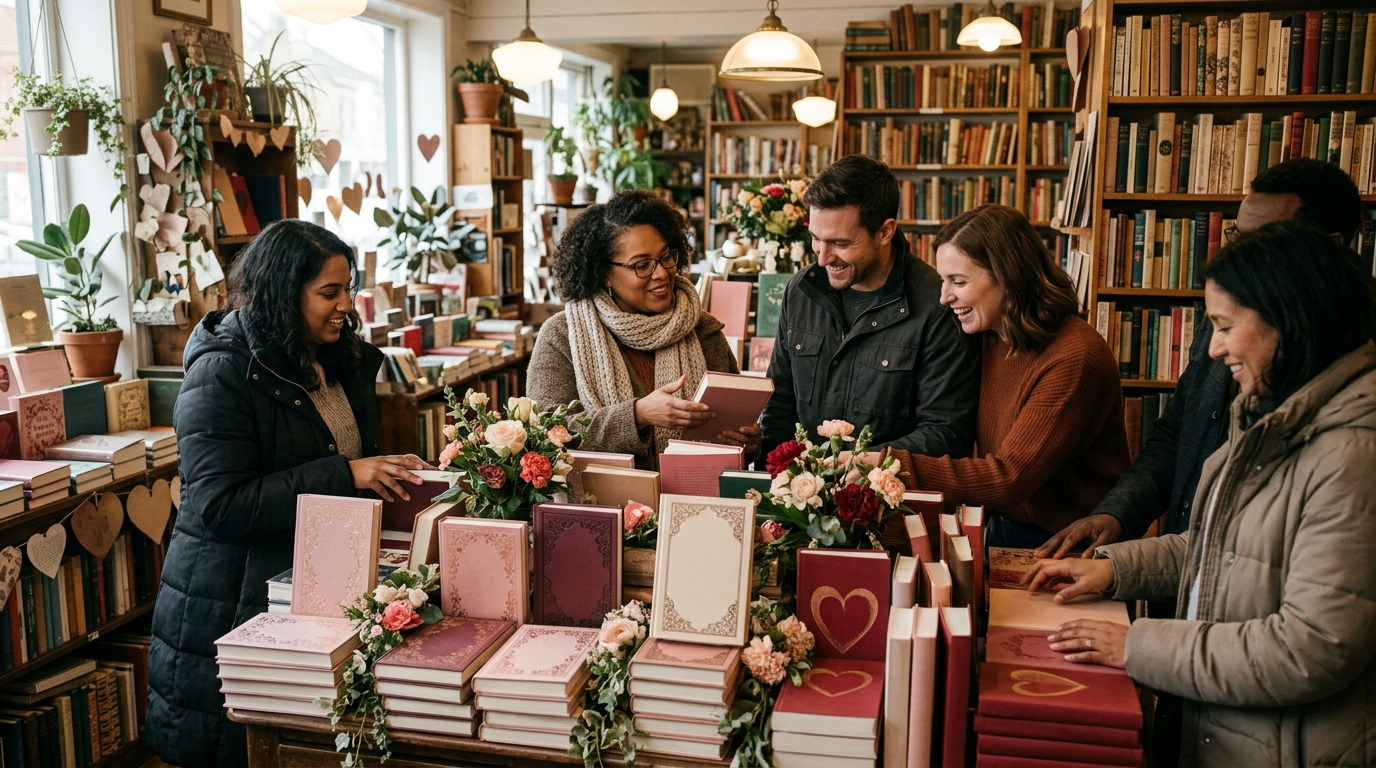
Bookstore Romance Day adds a social spark to romance displays. This recurring promotion takes place on the third Saturday in August. The event’s participating-bookstores page lists August 15, 2026, as that year’s date.
The event grew from just over 150 bookstores at its 2019 inaugural celebration to more than 550 bookstores in the U.S., Canada, and U.K. in 2024, according to Romance Writers of America.
At participating stores, you might find author appearances, blind-date bundles, or themed activities where readers can compare favorite tropes and swap recommendations. Some shops advertise discounts, and some events are free to attend, giving you a chance to discover a swoon-worthy pick without paying an event fee.
For affordable finds, check event listings and individual store announcements for advertised deals, free activities, and event details. Offers vary by bookstore, so a discount or free event at one shop doesn’t mean every participating store has the same promotion.
Reader-participation displays can invite customers to share favorite rereads or book recommendations. Romance Writers of America also gives a Mardi Gras-themed “Beads for Books” display as an example.
The Professional Booksellers School recommends choosing titles based on reader interest, newness, customer appeal, and likelihood to sell, then changing the selection often. Displayed books should still have at least one copy in their regular section, and tables should use orderly, tiered rows so covers are easy to see.
Displays should not block accessible paths. The U.S. Access Board’s ADA Standards for Accessible Design specify a 36-inch minimum clear width for accessible walking surfaces, with limited exceptions allowing 32 inches for short segments.
Plan your next bookstore stop by using the Bookstore Romance Day participating-bookstores list to find a shop you can reach. Check the shop’s event details before you go, then choose what suits your mood: an author appearance, a themed activity, or time to browse.
If keeping costs down matters most, look for a clearly advertised discount or free admission, and check whether a bundle has a separate price before choosing one. Want a surprise? Choose a blind-date bundle only if its cost fits your budget. Prefer to pick your own book? Try a staff pick or a title from a themed table, read the description, and ask a bookseller for a similar romance with a different trope or mood. You’ll have a clear next step, whether you’re ready for a steamy new favorite or just starting to explore.
In the U.S., romance book censorship mostly means challenges and access restrictions in school libraries, not a general ban on publishing or selling romance novels. In 2023–2024, PEN America reported that seven romance or romance-adjacent titles or series were banned in at least 20 public school districts. The titles included A Court of Thorns and Roses.
The American Library Association’s 2025 challenged-books list ranked Sarah J. Maas’s Empire of Storms fourth and A Court of Thorns and Roses seventh among targeted titles. The ALA and PEN America use different tracking methods, so their counts are not interchangeable. These disputes can affect which swoon-worthy stories students can access.
In current U.S. coverage, romance-book censorship mostly means challenges and access restrictions in school libraries, not a general ban on publishing or selling romance novels. A title may receive a complaint or become harder to access at one school while remaining available elsewhere. The American Library Association (ALA) defines a challenge as an attempt to remove a library resource or restrict access because of an objection. In the ALA’s terms, a ban is the removal of library materials based on an objection. A challenge does not automatically mean a book has been removed. The ALA’s definitions can help you tell the difference. A title on a list is not automatically unavailable to every reader, and its appearance does not mean publication or sale has been prohibited. For you as a romance reader, that distinction matters: a swoon-worthy story can face restrictions at a school without disappearing from the broader book market.

Several romance and romance-adjacent titles have appeared on reported school-ban and challenge lists, including books by Sarah J. Maas, Malinda Lo, and Casey McQuiston. PEN America reported that seven romance or romance-adjacent titles or series were banned in at least 20 U.S. public school districts during the 2023–2024 school year. Examples included Maas’s A Court of Thorns and Roses and Throne of Glass series, Lo’s Last Night at the Telegraph Club, and McQuiston’s Red, White and Royal Blue. Read PEN America’s report.
The ALA’s 2025 challenged-books list also featured Maas’s work: Empire of Storms ranked fourth, while A Court of Thorns and Roses ranked seventh among the most targeted titles. See the ALA’s 2025 list.
Some books on these lists are romance-adjacent rather than straightforward genre romance. The lists cover specific time periods and use different tracking methods, so they offer snapshots of reported activity, not a definitive ranking of the most censored romance books. PEN America’s school-ban definition explains its approach. A title’s appearance on one list does not show how often it has been challenged in every setting.
Objections to sexual content feature in recent reporting on challenged books, but they do not explain every challenge or mean that all romance novels are alike. Romance ranges from Sarah J. Maas’s romantasy to Casey McQuiston’s queer romance Red, White and Royal Blue. Concerns raised about either book do not tell the whole story or explain its appeal to readers. Organized pressure can also influence which titles come under scrutiny. The American Library Association reported that pressure groups, government officials, and decision makers initiated 92% of reported book challenges in 2025, compared with 72% in 2024. The ALA’s report shows why it helps to ask who is raising an objection, not just what content they cite. School library staff must consider concerns about age-appropriate access while helping students find books that reflect different experiences and relationships. You can care about what is suitable for a particular age group and still ask who gets to decide what other readers may encounter.

School rules can make a challenged romance book temporarily harder for a student to access, but the effect depends on the state and school. In Florida, Florida Statutes § 1006.28 requires certain challenged school materials, including materials objected to on specified grounds involving pornography or depictions or descriptions of sexual conduct, to be removed within five school days after the objection. Under the Florida statute, the materials must remain unavailable to students at that school until the objection is resolved.
That is a Florida rule, not a nationwide legal requirement. A temporary restriction can affect what students borrow while a review is underway, before a final decision is reached. It applies to access at that school, not necessarily at every school or library in Florida.
A title may be unavailable in a student’s school library while remaining published and available elsewhere, such as through a public library or bookstore. Availability varies by location, and a school-library restriction does not itself prohibit publication or sale.
If you’re hoping to read a particular steamy or swoon-worthy title, ask a librarian about local access and other reading options. A librarian can explain what is available nearby, though they cannot guarantee that a specific book is on the shelf.
You can follow a romance-book challenge by checking the school or library’s public information and asking staff how the review process works. A challenge, a restriction, and a removal are not the same thing. The American Library Association defines a challenge as an attempt to remove a resource or limit access, while a ban means removal based on an objection. The ALA’s definitions can help you understand what a local notice describes. Look for updates from the school district or library about the title and its review, rather than assuming a complaint means the book is gone. Ask a librarian which romance titles remain accessible and how decisions are made. You may get a clearer picture of a local challenge and discover your next binge-read, whether you’re in the mood for romantasy or a swoon-worthy love story. Thoughtful discussion can make room for questions about readers’ access, authors’ work, and librarians’ responsibilities. You can raise concerns about how a decision affects readers without shaming people who bring concerns about a book to the library. A balanced conversation recognizes that readers may lose access to stories they value, authors’ work may be restricted, and library staff must follow review processes while serving their communities.
If you are a student or parent trying to find a title in a school library, note the book’s full title and the school, then ask library staff whether the book is available, temporarily restricted, or removed. Ask who is reviewing the decision, where the district posts updates, and how you can submit a comment. Those details can help you decide whether to check back, speak at a board meeting, or look for the book elsewhere.
If you are responding as a reader, read the district’s review policy before writing. Keep your message specific: name the title, explain why access matters to you, and ask how students can find books with a range of romance stories while the review proceeds. Avoid calling a challenge a final ban unless the district says the book has been removed.
For your next steamy or swoon-worthy read, search your public library catalog by author or subgenre before spending money. If your pick is not listed, ask whether another branch has it or whether a librarian can suggest a similar romantasy or queer romance. When sharing an update with other readers, use the ALA’s definitions to say whether a notice reports a challenge or a removal, then point friends to the district’s own update.
Romance publishing has no single starting point. Samuel Richardson’s Pamela: or, Virtue Rewarded appeared in 1740, while dime novels and story papers later brought romance to more readers. Formats keep changing, but the pull of a central love story endures. Explore Cambridge University Press’s account of Pamela.
In 1860, Beadle & Company issued American paperback fiction for 10 cents, making stories easier to find and collect, as the Library of Congress records. Today, romantasy and sports romance bring fresh tropes to a genre shaped by changing formats. That history makes your next binge-read even more fun: you can spot what feels new and enjoy the swoon-worthy promise that endures.
Romance publishing developed gradually through earlier courtship fiction and later publishing traditions, rather than beginning with one universally recognized first romance novel. Samuel Richardson’s Pamela: or, Virtue Rewarded was published anonymously in Britain on November 6, 1740, in two volumes. By May 1742, it had reached its sixth edition, according to Cambridge University Press. Its success makes Pamela an important landmark, but not the single starting point for every tradition that shaped romance.
Looking back at older courtship stories and comparing them with the books you might binge-read today helps you see how the genre has changed. Similar themes can connect them, even when the formats, expectations, and endings differ.
The modern genre has a useful boundary: Romance Writers of America defines romance by a central love story and an emotionally satisfying, optimistic ending, as Kirkus Reviews explains. That definition helps you spot what has endured: the promise of love at the story’s heart. It also shows how romance has made room for new styles and subgenres. From Pamela to today’s swoon-worthy reads, the genre’s history is a long conversation among readers, stories, and the ways books reach you.
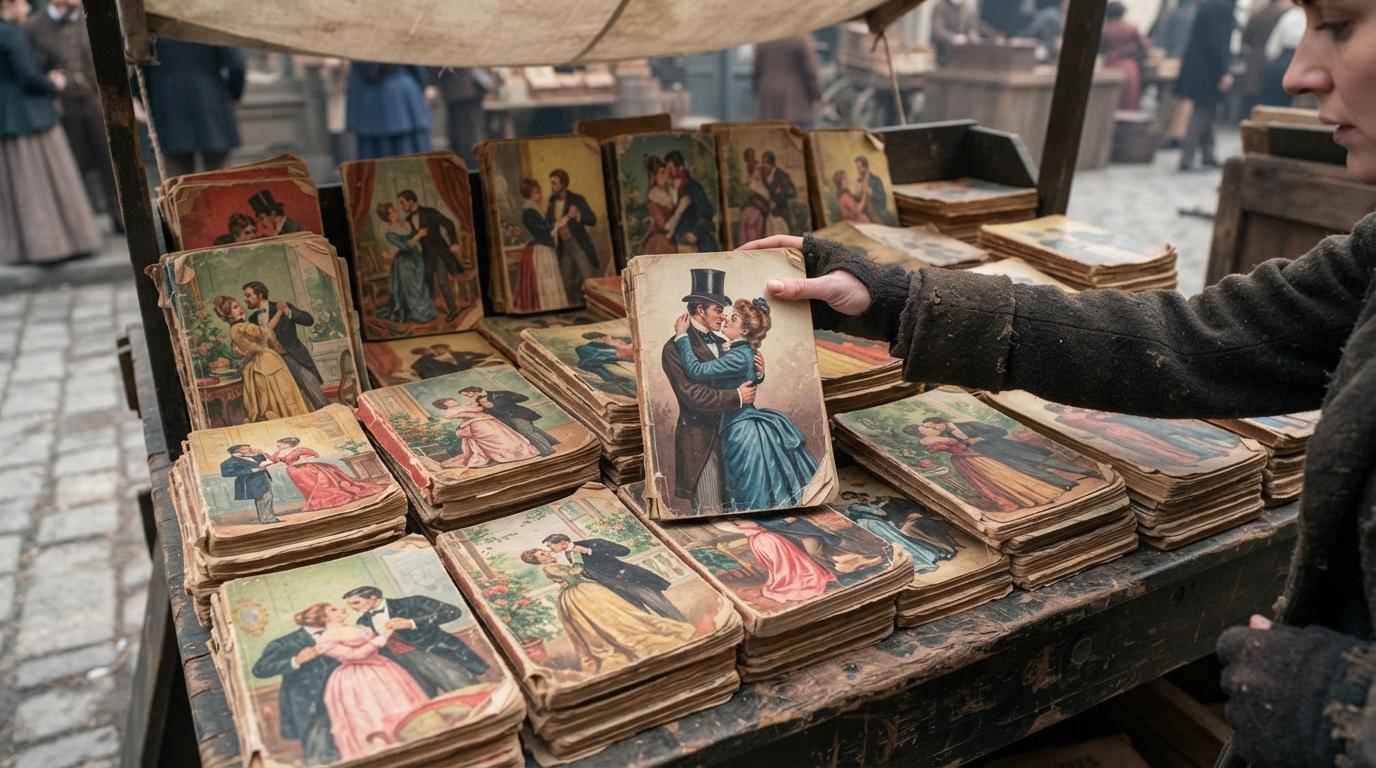
The Library of Congress dates the first American fixed-price paperback-fiction series to 1860, when Beadle & Company issued volumes for 10 cents. A set price made the cost clear before readers picked up a story, while the series format gave fiction a recognizable form. Romance could reach readers through a format designed to be accessible and collectible.
Romance story papers emerged in the United States in the 1870s, according to William A. Gleason’s scholarly account. Readers could find love stories in several kinds of print publications, not just in a single novel format. That variety gave romance more ways to reach readers as they browsed.
By the 1890s, romance-centered dime-novel series and libraries were consolidating, according to William A. Gleason’s scholarly account. Series and libraries helped establish romance as a recognizable publishing category and gave readers a way to follow and collect related titles.
There’s a familiar thrill in finding a format that makes it easy to discover another story you want to read. Today, your next binge-read can bring that same swoon-worthy sense of possibility, even as the books and ways of finding them change.
Gerald Mills and Charles Boon founded Mills & Boon in 1908 with £1,000. The company published general fiction as well as romance, so it did not begin as a romance-only publisher. Over time, Mills & Boon became closely associated with a recognizable style of romance publishing.
Harlequin followed a different path. Founded in Canada in 1949, it published its first Mills & Boon title in 1957. By 1959, 34 of the 54 books Harlequin published were Mills & Boon titles. Mills & Boon was the established source of those romances, and Harlequin’s list increasingly featured them for its readers.
The category-romance model made it easier to recognize the kind of reading experience a book promised. Familiar series names and packaging could help you spot a new romance among other books and imagine what sort of swoon-worthy story might be inside. When you finished one, you could look forward to finding another in that familiar style.
Category romance was one important path in romance publishing, but it wasn’t the only form the genre took. Readers also found love stories in novels with different lengths, packaging, and storytelling styles. Recurring series gave publishers a way to group books and gave readers an easy route back to the kinds of romance they enjoyed. If you’re ready to binge-read, finding the next steamy story in a familiar line can feel like welcoming an old favorite while meeting a new couple.

Paperbacks helped shift romance from short, familiar series toward roomier stories. Mills & Boon reported that paperbacks accounted for 50% of its turnover in 1966. In 1968, it published 72 paperback romances, and its standard book ran 188 to 192 pages. Paperbacks gave readers another way to discover romance, while longer novels could make room for more expansive stories.
Kathleen E. Woodiwiss’s The Flame and the Flower, published in 1972, is widely considered the first modern romance, not the first romance in history. Duke Today reports that the novel sold more than 3 million copies. Its success helped expand expectations for a romance’s length, packaging, and sexual content.
The book offers a bridge from category romance, with its recognizable series format, to fuller-length stories that could take a different shape. That shift helps explain why romance has no single style: a familiar series read and a sweeping, steamy novel can both belong on your reading list. Today’s range of formats and storytelling styles has roots in publishing changes like those The Flame and the Flower helped bring into view.
Romance has a recognizable framework: a love story at the center and an emotionally satisfying, optimistic ending. The Romance Writers of America definition gives you a useful guide to the genre. The setting, tone, and obstacles may change, but the story’s emotional promise still matters.
Pamela: or, Virtue Rewarded was published as a two-volume work, an example of the varied forms that helped shape romance publishing. Cambridge University Press’s account of Pamela places the novel in this history.
Romance has grown to include many styles and subgenres. You might find a tender courtship, a steamy historical, or a love story with fantasy elements. The central relationship and hopeful emotional payoff can make each feel like romance. That shared framework lets you enjoy fresh storytelling without treating a new style as a break from the genre’s past.

Recent sales growth shows how romance keeps finding new readers as formats and tastes shift. Circana reported that U.S. adult-fiction print sales grew 1% in 2023, or 1.5 million units, with romance among the subjects leading the increase. New ways of packaging and promoting books have long helped love stories reach readers, from print series to today’s varied shelves. The latest figures show that change is still underway. Circana’s 2023 report tracks the increase.
Romance-book sales rose almost 9% in 2024, according to Circana BookScan data reported by Publishers Weekly. That growth is part of a long publishing story: familiar marketing can help you recognize a type of romance, while new styles give you fresh reasons to pick up a book.
As of June 4, 2025, U.S. romance print sales were up 24% year to date, with 51 million romance units sold in the preceding 12 months. Circana also reported triple-digit growth for romantasy and sports romance in June, alongside a shift toward darker romance themes. Circana’s 2025 report captures readers’ appetite for stories that take the genre in new directions.
Romance’s changing formats and stories have always made room for different kinds of swoon-worthy reads. Knowing that history can make it even more fun to move between a classic such as Pamela: or, Virtue Rewarded and today’s steamy, binge-worthy romantasy and sports-romance discoveries.
Turn your next romance into a trope-tracing project with a book you already own or can borrow. If the description names a trope, write it at the top of a page. As you read, note the scene where that idea first shapes the relationship, then mark a later moment when it changes the characters’ choices. If the description doesn’t name a trope, choose one you notice and track it yourself.
Add two quick notes: what keeps the couple apart and what makes the ending feel satisfying. Those details help you see whether a familiar setup is doing something new in a contemporary story, rather than simply appearing as a label. Keep your notes in a reading journal or on a scrap of paper.
For a historical comparison, read a passage from Pamela: or, Virtue Rewarded or The Flame and the Flower and ask the same questions. Don’t force a modern trope name onto an older book. Instead, describe what the characters do and how the love story develops. Then choose your next read based on what you want more of, whether that’s courtship, a sweeping romance, or a fresh fantasy setting. A simple note beside each title can turn your TBR into a map of the tropes you love to binge-read.
There is no single standard length for a romance book. As a practical guide, you can think of 50,000–60,000 words as a shorter read and 85,000–100,000 words as a longer one. These are browsing ranges, not rules. Harlequin Romance Series targets 50,000 words, while Harlequin Intrigue Series gives a range of 55,000–60,000 words. That’s a reminder that romance length can vary, even across one publisher’s lines.
Your reading window can help you decide where to start, but a book’s length doesn’t tell you whether it’s well written or how swoon-worthy its emotional payoff will be. A shorter story may fit the time you have, while a longer one may give you more room to settle in. Broad publishing labels aren’t romance-specific rules, either. For comparison, the Science Fiction and Fantasy Writers Association defines a novella as 17,500 to fewer than 40,000 words and a novel as 40,000 words or more under its Nebula Awards rules. From the wit of Pride and Prejudice to the rivals-to-lovers appeal of The Hating Game, romance offers plenty of reading moods. Let length help you narrow your choices, then follow the premise, trope, or subgenre that makes you want to binge-read. Free or inexpensive finds can make trying something new even more tempting.
A good romance book length depends on your reading plans. There is no single standard. As practical starting points, you can think of 50,000–60,000 words as a shorter read, around 70,000–75,000 words as a middle-length read, and 85,000–100,000 words as a longer read. These ranges reflect market examples, not universal definitions or strict cutoffs.
Romance length varies across formats and subgenres, so a book may not fit neatly into one range. Some formats set a 50,000-word minimum but have no formal upper limit, which means a romance can run longer than the suggested ranges. A book just outside a range doesn’t suddenly become a different kind of story. The ranges simply give you a quick way to sort your options.
Use length as a first filter when you’re deciding what to read next. If you want a more compact story, start with the shorter range. If you’re ready to spend more time with a book, browse the middle or longer ranges. When a listing gives a length, compare it with the range you have in mind, then let the premise, tropes, and subgenre help you choose.
Length can’t tell you whether a romance is well written or how strongly its ending will land. A shorter book can still deliver a satisfying, swoon-worthy love story, while a longer one may offer more room for plot and character development. Neither length guarantees a better binge-read. The right fit is the story that draws you in and suits the time you have.
Treat the ranges as flexible signposts, not a test a book has to pass. A romance between two ranges can still be a great pick, and a story outside all three may be exactly what you’re looking for. If you’re curious about a new subgenre or author, a free or inexpensive read can make exploring even more inviting.

A romance of around 50,000–60,000 words can be a good fit when you want a focused love story or a quick binge-read. Category romances are often shorter, with the romantic relationship at the center of the plot. That focus can appeal when you have a smaller reading window, but a lower total length doesn’t guarantee a fast-paced or simple story.
Market examples show how the shorter range can work in practice: Harlequin Romance Series targets 50,000 words, while Harlequin Intrigue Series gives a range of 55,000–60,000 words. These figures are useful reference points, not rules for every romance. Depending on the story, a book in this range might make plenty of room for emotional tension, suspense, or character growth.
A short romance can offer a satisfying, swoon-worthy arc without requiring a long stretch of reading time. If you enjoy trying new tropes or authors, a compact book can also be an inviting way to explore, especially when you find a free or inexpensive option. Still, length alone can’t tell you how quickly a story will feel to read or how much complexity it contains.
The word “short” in a romance-length guide is a practical browsing label, not a formal publishing category. Category romance describes a type of publishing line, while a novella or novel label may come from a different system with its own definitions. The labels don’t mean the same thing, and a category romance isn’t automatically a novella.
For comparison, the Science Fiction and Fantasy Writers Association’s Nebula Awards rules, effective January 1, 2026, define a novella as at least 17,500 words but fewer than 40,000 words, and a novel as 40,000 words or more. These are general award categories, not romance-specific length rules. They don’t mean every romance below a particular length is a novella, or that the shorter range in a romance guide follows Nebula classifications. The Nebula Awards rules offer one clear comparison point, but romance length labels serve a different purpose.
When you’re choosing a shorter read, use its listed length as a rough guide to the time commitment, then check whether the premise and emotional tone appeal to you. A focused love story may be just right for a quick reading stretch, while another book in the same range may invite you to linger over its twists and feelings.
A medium-length romance is a good fit when you want a fuller story than a shorter read but aren’t choosing a book specifically for a long binge-read. This range can give a relationship and its surrounding plot more room while still feeling manageable for your reading window.
Market examples include romances at 70,000 words and submission guidelines with a 75,000-word minimum. These figures show how books can sit between the shorter and longer options in this guide. They aren’t official definitions of a medium-length romance. A 75,000-word minimum also means a book can be longer, so check its listed length when it’s available.
A story in this range may have space for a supporting cast, a suspense thread, or more time with the characters’ changing feelings. But length alone can’t tell you which elements a book includes or how much attention each receives. A 70,000-word romance doesn’t automatically offer more romance, deeper emotions, or better pacing than a shorter one.
Format and story also affect length. A category line, a trade release, and a book in a different subgenre may follow different length expectations, even when their stories have a similar mood. A suspenseful romance may need room for its mystery alongside the relationship, while another book may stay closely focused on the couple. Treat length as a rough guide to the reading commitment, not a promise about what’s inside.
If you have time for more than a compact read but don’t want to set aside a long stretch for one book, consider this practical middle range. It can help you narrow your choices when you’re browsing for a swoon-worthy story, whether you’re in the mood for tender feelings, steamy tension, or a plot with extra layers. The best fit depends on the time you have and the kind of story you want to enjoy.

Choose a longer romance when you have time to settle into a story that may give its relationship, plot, or setting more room to unfold. Some market examples reach 85,000–100,000 words, making this range a useful guide when you’re browsing for a more expansive read. It’s not a promise about what every book in the range contains. A longer book can follow a couple through more changes in their relationship, weave in additional plot threads, or build a broader story world around them. You might enjoy that approach if you like romances with a lively supporting cast, family ties, a mystery alongside the love story, or a setting you can spend time exploring. A sweeping story such as Outlander may appeal if you enjoy romance alongside a richly developed world, while other books in the same length range may keep their attention closely on the couple. Length alone can’t tell you whether a book will feel immersive or slow. A longer story may draw you in with layered characters and a compelling premise, or its pace may not suit your mood. A shorter romance can also have a well-developed relationship or an intricate plot. Fewer words don’t mean less care or emotional depth. The blurb and premise can help you see what the story focuses on. Look for clues about the couple, the main conflict, and any other plot threads that catch your interest. A reading sample can give you a sense of the writing and pacing, which length can’t provide. A longer romance may be a lovely choice when you’re in the mood for a book you can return to over a longer reading stretch instead of a quick binge-read. If your time is limited, though, the length doesn’t have to rule a book out. Your reading window, the story’s appeal, and the sample can help you decide whether that particular romance feels like a good fit. Free or inexpensive finds can also make it easier to try a longer story or explore a new kind of romance.
A romance with a modest page count can be a satisfying read. Its page count alone can’t tell you whether the story is too short for its plot or for you. Pages offer a rough clue, but they aren’t a reliable way to compare books. A contemporary romance like The Kiss Quotient and a historical romance may use their pages differently, and the listing’s page count doesn’t tell you how much room the story needs.
Formatting can change the page count. Trim size, font, spacing, and page layout all affect how many words fit on a page. An edition with larger type or a different page size may have more pages than another edition of the same book. Added or changed material between editions can also affect the total.
Two romances with similar lengths may not have the same number of pages. A print edition and an ebook edition may display length differently, too. If a listing gives a length, use it as a more useful comparison point when you want to estimate the amount of text. It still can’t tell you how quickly the story will read or whether its pacing will suit you.
When the length isn’t available, treat page count as a rough browsing clue rather than a verdict. Check the blurb for the main conflict and the kind of relationship at the story’s center. A sample can give you a better sense of the writing, pacing, and whether you want to keep turning pages. These details offer more context than the page total alone.
You may have heard of the idea of giving a book a little time before deciding whether to continue. It’s a reader’s stopping-point idea, not a standard for judging romance-book length. It doesn’t mean a romance needs a certain number of pages to establish its characters or relationship, or that you have to reach a particular point before making up your mind.
You can stop earlier if the story isn’t working for you, or keep reading past that point if you’re curious about where the couple’s story goes. The right stopping point is personal. You might want more time with a slow-burn romance, while another book may not hold your interest. Whether you’re browsing a short listing or a longer one, let the premise and your enjoyment guide your choice, not the page count alone.

Romance books can differ in length because publishing format and story focus both play a part. Category romance is generally described as shorter, with the central romance driving the plot. This focused structure can appeal when you want the couple’s relationship at the heart of your reading experience.
Across the wider romance market, length examples range from 50,000 words to 85,000–100,000 words, with several points in between. Examples include 50,000 words, 55,000–60,000 words, 70,000 words, a 75,000-word minimum, and 85,000–100,000 words. These figures show a range of market expectations, not fixed rules for every romance.
The gap between these figures reflects differences in format and individual story needs, not a simple scale from less romantic to more romantic. A shorter book can deliver plenty of swoon-worthy tension, while a longer one may give more space to other plot threads. Neither length guarantees a particular pace, level of steam, or emotional payoff.
Subgenre gives you another useful browsing clue, but it can’t predict a book’s exact length. Contemporary romance and historical romance are two options you might explore, with room for different kinds of love stories and reading moods. The Hating Game by Sally Thorne is a recognizable contemporary romance, while The Duke and I by Julia Quinn is a familiar historical romance.
These titles are examples of subgenres to browse, not length markers. You shouldn’t assume that every contemporary romance is short or every historical romance is long. Two books in the same subgenre can take different approaches to the couple, setting, and surrounding plot, and those choices can affect how much story space the author uses.
Tropes can help you narrow the mood further. If rivals-to-lovers tension appeals to you, The Hating Game may catch your eye. If you’re browsing historical romance, The Duke and I offers a recognizable starting point. The trope and premise can tell you more about the experience you’re seeking than a subgenre label alone, while the listed length can help you gauge the reading commitment.
For a free or low-cost read, use all three clues together: subgenre, tropes, and length. A shorter category-style romance might suit a compact reading stretch, while a longer listing may appeal when you want more time with a story. Checking the blurb alongside the listed length can help you find a promising match without expecting every book in a subgenre to fit one length.
Your reading window gives you a useful place to start. Your mood, favorite tropes, and curiosity about new authors can help you find a romance you’ll want to keep reading.
Free or inexpensive finds can make it easier to try an unfamiliar romance author or subgenre without spending more. A shortlist also gives you a handy place to collect intriguing finds for a future reading window.
Choose the next reading window you have in mind, then pick a starting range: 50,000–60,000 words for a compact read, 70,000–75,000 for a middle-length story, or 85,000–100,000 for a longer binge-read. Keep the range flexible. Length can help you filter, but it can’t promise how quickly a book will read.
Next, choose the mood you want. If contemporary rivals-to-lovers sounds fun, add The Hating Game to your possibilities. If you’re craving historical romance, consider The Duke and I. Check each listing for its length instead of guessing from its genre, and read the description to make sure the couple and conflict appeal to you.
Before committing, look for the title in your library’s ebook catalog or in free and discounted book listings. When you find a promising option, read a sample to see whether the writing and pacing suit your mood. If the sample doesn’t pull you in, move to the next title on your list.
Want to explore a new author or subgenre? Keep one familiar pick and one new-to-you romance on your shortlist, then compare their descriptions and available word counts. Decide which one fits the reading time you have now, and save the other for a future reading window.
Romance publishing royalties are payments an author earns under a contract or platform formula. For example, the Authors Guild’s Model Trade Book Contract sets ebook royalties at 25% of publisher net receipts. That percentage is only part of the picture. A royalty based on publisher receipts can produce a different payment from the same rate applied to a book’s list price, and print returns may also affect the amount paid. A swoon-worthy novel’s price or popularity alone won’t tell you what its author receives.
Your reading choice matters, too. A low-cost ebook, a paperback, and a binge-read through Kindle Unlimited use different payment formulas. Amazon KDP calculates ebook and print royalties differently, while KDP Select authors earn a share of a monthly fund based on pages read. KDP payments generally arrive about 60 days after the end of the month a sale is reported, or about 90 days for Expanded Distribution. Romance’s growing popularity is exciting: U.S. romance print sales rose 3.9% to almost 44 million units in 2025 at outlets reporting to Circana BookScan, according to Publishers Weekly. But market growth can’t predict an individual author’s paycheck. Understanding the difference can help you follow the business behind your next steamy discovery without taking the fun out of finding a new favorite.
A romance author’s royalty depends on the publishing arrangement, the book’s format, the contract or platform formula, and any applicable deductions. The royalty rate is only one part of the calculation. You also need to know what amount the rate applies to.
A book’s list price is its stated retail price. Publisher net receipts are the money the publisher receives after deductions, which can include discounts involved in selling the book. So the same percentage can produce different payments: a percentage of list price is calculated on the full stated price, while that percentage of net receipts is calculated on a smaller amount.
The Authors Guild notes that a royalty calculated at the same percentage of net receipts can be roughly 40–50% lower than one calculated from list price, because publisher receipts after deductions tend to be about half the list price. A contract’s headline rate alone can’t tell you what a sale may earn. The calculation base matters just as much. The Authors Guild’s explanation
The Authors Guild’s Model Trade Book Contract offers negotiating benchmarks, not guaranteed or universal terms. Its ebook benchmark is 25% of publisher net receipts. The model also proposes that the author and publisher revisit the rate after two years. If they can’t agree within 30 days, the electronic rights may revert to the author. These are proposed model terms, not rules every romance publisher follows. The Model Trade Book Contract
Format can also change the rate and the calculation. In the Authors Guild model, hardcover royalties are based on retail price and rise from 10% on the first 5,000 copies to 12.5% on the next 5,000, then 15% above 10,000, less actual returns. The model sets trade paperback royalties at 7.5% of retail price. Mass-market paperback royalties start at 8% and rise to 10% after 150,000 copies, also less actual returns. The Authors Guild’s print benchmarks
For readers, a title such as The Love Hypothesis is a familiar romance touchpoint, not a clue to what its author earned. A book’s format, contract language, and sales accounting all shape the royalty behind the story. Two swoon-worthy novels with similar prices may still generate different payments for their authors.

A traditional publishing contract may set one royalty formula for a hardcover, another for paperbacks, and a different one for an ebook. The Authors Guild’s Model Trade Book Contract is a useful benchmark, not a promise of the terms a romance publisher will offer. The contract also shows why you need to look beyond the percentage: depending on the format, the royalty may be based on retail price or publisher net receipts.
For hardcovers, the model sets a royalty of 10% of retail price on the first 5,000 copies, 12.5% on the next 5,000, and 15% above 10,000, less actual returns. For mass-market paperbacks, it sets 8% on the first 150,000 copies and 10% thereafter, also less actual returns. The Authors Guild’s model contract
The model’s ebook benchmark uses a different base: 25% of publisher net receipts. The same percentage of receipts after deductions won’t produce the same payment as a percentage of a book’s retail price. Publishers may also negotiate terms that differ from the model, so two contracts with the same headline rate can still lead to different payments.
Self-publishing platforms have their own formulas and eligibility rules. On Amazon Kindle Direct Publishing, ebook royalties depend on the royalty option and whether the book qualifies for it. Print royalties are calculated by applying a rate to the list price, then subtracting printing costs. That means the amount left from a paperback sale follows a different path from the amount earned on an ebook sale.
A subscription read follows another path. Authors enrolled in KDP Select can earn a share of the monthly Kindle Unlimited fund based on pages read. You can binge-read a steamy romance through a subscription without buying a separate ebook copy, so that read is counted differently from a direct sale.
Picture a swoon-worthy romance such as Book Lovers in three forms: a paperback, an ebook, and a subscription read. The paperback’s payment can depend on its royalty rate, price, and printing cost. The ebook’s payment can depend on its platform option and eligibility. The subscription read’s payment can depend on credited pages and the monthly fund. The story is the same, but the payment path changes with the format and terms.
Neither a traditional contract nor a self-publishing platform automatically means more income. The number of copies sold or pages read matters, along with the royalty base, deductions, platform rules, and the author’s specific agreement. A large percentage can look exciting at first glance, but it doesn’t tell you how much money reaches the author for a paperback, ebook, or late-night binge-read.
There’s no single standard income for romance authors. Earnings vary with each author’s sales, publishing arrangement, contract, and platform rules. Romance’s popularity may bring readers to swoon-worthy stories, but it can’t predict any one author’s paycheck. Earnings may depend on how many copies sell or, for subscription reading, how many eligible pages readers complete. Format matters, too: a print copy, ebook, and Kindle Unlimited read can follow different payment formulas. The contract rate and royalty base also shape the result. Returns can affect print royalties, and platform eligibility rules can determine which payment options apply. A royalty rate is not an income figure. It has to be applied to a specific amount, such as a book’s list price or the publisher’s receipts after deductions. The Authors Guild notes that royalties at the same percentage of publisher net receipts can be roughly 40–50% lower than royalties calculated from list price, because receipts after deductions tend to be about half the list price. The Authors Guild explains the difference. For example, two authors might have the same royalty percentage, but one contract could apply it to list price while another applies it to a smaller amount of publisher receipts. Differences in format, sales, or returns could also affect their payments. This example shows how the calculation works, not what romance authors typically earn or what any author is promised. A general royalty percentage can’t tell you how many books an author must sell to earn a particular amount. You’d also need details such as the royalty base, format, actual sales, returns, and any applicable platform rules. The available evidence doesn’t establish how many books an author would need to sell to make $100,000 or who the richest romance author is. So when you pick up a steamy novel such as The Kiss Quotient, its popularity or price alone can’t reveal what its author keeps. Royalty revenue isn’t necessarily the amount an author ultimately takes home. The contract or platform formula, deductions, and payment terms all matter.

Amazon Kindle Direct Publishing pays romance authors through separate formulas for qualifying ebooks, print copies, and Kindle Unlimited page reads. A low-cost ebook purchase, a paperback purchase, and a subscription binge-read may all help an author earn, but they don’t use the same calculation. For U.S. Kindle ebooks, KDP offers a 70% royalty option for ebooks priced from $2.99 to $12.99, effective July 7, 2026, subject to eligibility conditions. KDP also offers a 35% option. If you find a steamy romance as an ebook, the author’s royalty depends in part on which option applies to that book. The ebook price alone doesn’t tell you which option the author qualifies for. Paperback royalties use a different calculation: multiply the royalty rate by the list price, then subtract printing costs. For a 333-page U.S. paperback priced at $15, with $5 in printing costs, the 60% rate gives the author a $4 royalty: 60% of $15 is $9, and $5 is deducted for printing. A swoon-worthy paperback such as Book Lovers would follow a print formula like this only if its KDP terms and details matched the example. Expanded Distribution uses another rate. For the same $15 paperback and $5 printing-cost example, the 40% list-price rate gives a $1 royalty: 40% of $15 is $6, then $5 in printing costs are subtracted. The list price and printing cost stay the same, but the distribution rate changes the amount left for the author. Kindle Unlimited works differently from ebook and paperback sales. Authors enrolled in KDP Select earn a share of the monthly global fund based on pages readers read. KDP credits up to 3,000 Kindle Edition Normalized Pages per title per customer, so a KU binge-read contributes through credited pages rather than through a purchased copy. Reading a romance through Kindle Unlimited isn’t calculated like buying its ebook or paperback. An ebook purchase uses an ebook royalty option; a print purchase uses a royalty rate, list price, and printing cost; a KU read contributes to the author’s share of the monthly fund based on pages read. The story may feel like one more swoon-worthy discovery, but each way of reading follows its own payment path.
A sales total and an author’s royalty statement can differ because print returns, contract terms, and format-specific calculations affect how much is ultimately credited to an author. In traditional publishing, print royalties may be reduced by actual returns. Copies shipped to stores don’t necessarily remain sold. The Authors Guild’s Model Trade Book Contract allows a publisher to reserve up to 35% of amounts due against possible print returns during the first four accounting periods. The Authors Guild’s model contract. Ebooks still follow their own contract terms, including the royalty rate and the amount that rate applies to. A print sales figure can’t be converted directly into an ebook royalty, or even a print royalty, without knowing the relevant terms and accounting. You might enjoy a contemporary romance such as Happy Place or return to Pride and Prejudice, but a title’s place on a bookstore shelf doesn’t reveal how its author’s statement is calculated. These books are reader touchpoints, not examples of particular earnings. A market headline measures activity across many books, not one writer’s earnings. When you read publishing news, check what the number counts: tracked print units, a particular format, or money paid to authors. A headline about rising romance sales can signal more activity in the market, while individual statements still depend on each author’s formats, contract calculations, and print returns. A swoon-worthy novel can be part of a lively market without its sales headline revealing the author’s share.
A royalty check can arrive later than a reported sale, and print-return reserves or a payment minimum can delay or reduce what an author receives. A statement may record sales for a period before the related payment is due, so the sales date and payment date aren’t necessarily the same.
Amazon Kindle Direct Publishing (KDP) pays monthly, approximately 60 days after the end of the month in which a sale is reported. For Expanded Distribution, payment is approximately 90 days after that month ends. Both timelines are subject to KDP’s payment minimum, so an author may have reported royalties that haven’t yet reached the minimum needed for payment. A statement can help you distinguish royalties recorded from payments sent.
Print copies can also be returned, which may reduce royalties. The Authors Guild’s Model Trade Book Contract allows a publisher to hold back up to 35% of amounts due as a reserve against possible print returns during the first four accounting periods. If a contract includes a reserve, a statement may show that some print royalties are being held rather than paid out. The reserve isn’t the same as a royalty rate. The Authors Guild’s model contract
Copyright is separate from royalty income. Copyright concerns rights in the work. It doesn’t set the royalty rate or decide how a publisher calculates a payment. Those terms come from the author’s publishing contract or platform arrangement. Registration is also separate: the U.S. Copyright Office lists a $45 electronic registration fee for one work by one author who is also the claimant, when the work isn’t made for hire. That fee isn’t a royalty payment. The U.S. Copyright Office fee schedule
For most works created after January 1, 1978, U.S. copyright lasts for the author’s life plus 70 years, and those works don’t require renewal registration. A contract or statement may still determine whether and when an author earns money from a particular edition, format, or sale. A long-lasting copyright doesn’t mean a royalty check arrives promptly or that a specific royalty rate applies. The U.S. Copyright Office’s duration guidance
Romance’s print growth shows why readers and publishers pay attention to the genre, but it can’t predict what any individual author earns. Circana BookScan data reported by Publishers Weekly counted almost 44 million U.S. romance print units in 2025 at reporting outlets, up 3.9% year over year. That market-wide figure doesn’t prove that every romance author sold more books, earned more, or received a particular amount.
The thrill for you is finding your next swoon-worthy read, whether you’re exploring free or low-cost romance or picking up a new-to-you story like The Hating Game. A growing market means plenty of readers are seeking romance in print, but it doesn’t reveal how many copies of one author’s book sold or what that author’s contract pays.
The way you read can also affect how an author earns. Buying an ebook may count as a sale under the platform’s ebook formula, while buying a paperback involves print royalties and may also be affected by returns. Reading through Kindle Unlimited is different again: an eligible author enrolled in KDP Select can earn from credited pages read and a share of the monthly fund, rather than from a separate ebook purchase. Free or low-cost ways to discover romance can make it easier to find your next binge-read, while a purchase or subscription read may follow a different path to author payment.
A steamy book can be a delight to discover at any price, even though its format and reading arrangement shape how its author may be paid.
For your next steamy read, note the title, format, and how you’ll read it: ebook, paperback, or Kindle Unlimited. Those details can help you identify the payment route that may apply, without suggesting you can see the author’s exact royalty from a book’s price or popularity. Then enjoy the swoon-worthy story, whether you found it free, at a low price, or through a subscription.
Curious about a particular author? Check the author’s own site or publisher listing for information about how the book was published. If the author has shared contract details, compare them with the format you’re reading. If not, treat the exact royalty as private rather than trying to calculate it from a sales rank or market headline.
If you’re curious about how romance publishing works, read the royalty section of the Authors Guild’s Model Trade Book Contract for context on the royalty base, format, returns, and payment terms. Treat it as a negotiating benchmark, not a promise of what a publisher will offer.