
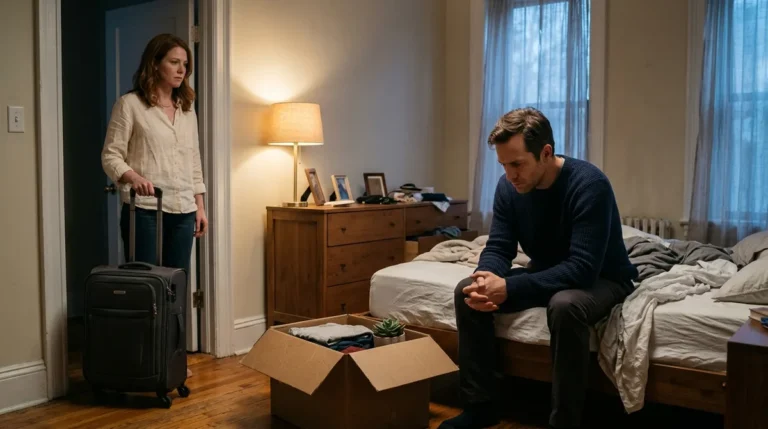
A third act breakup is a late-story split, or a serious threat to the relationship, that hits after the couple has finally come together and before the happy ending. Romance craft editor Emily Keyes defines it this way, and it usually lands near the story's final stretch. Story-structure guide Save the Cat! places a similar "All Is Lost" moment at about 75% of a story, with "Dark Night of the Soul" at 75 to 80% and "Break into Three" at 80%, so many readers can feel the low point coming before the couple reconnects.
The beat works best when it grows out of character rather than plot twists. When one lover chooses fear over love, the split can expose a wound or flaw the story has been circling all along. Romance author Kelly Jamieson notes that "third act breakup" is a recent label for what she once called a "black moment" or "dark moment," so the idea is older than the name. Some readers adore the emotional gut punch, while others want the couple to face the final obstacle together. Both camps have plenty of swoon-worthy books to explore.
Put simply, a third act breakup is the moment when two lovers who have finally committed to each other nearly or actually walk away, and the reader feels the floor drop out. It is more than a heated argument. The beat usually makes both characters ask whether they can stay together at all, which is what makes it a rupture rather than a squabble.
The timing is what sets it apart. In the Save the Cat! framework, the "Dark Night of the Soul" sits at 75 to 80 percent of the way through a story, and the "Break into Three" turning point lands at 80 percent. These are story-structure markers, not romance rules, but they explain why the split arrives so late. By then you have spent most of the book watching the couple fall for each other, so the separation hits hard.
The name comes from three-act structure, which many novels follow. Act one sets up the world and the romance, act two builds attraction and complications, and act three brings everything to a close. A breakup that lands in that final act sits right before the last turn. Romance Writers of America describes the genre as having a central love story and an emotionally satisfying, optimistic resolution, so the breakup has to be a dip in the road, not a dead end.
Older readers and writers often focused on the feeling of the scene. Words like "dark" or "black" describe the mood, which can fit a fight, a betrayal, or a quiet decision to leave. The newer label describes where the scene sits in the story. That means a single book can have a dark moment in the middle and a true third act breakup near the end, so the two terms do not always overlap.
Romancing the Beat, published on April 19, 2016, by Gwen Hayes, describes its method as a recipe rather than a rigid system. That idea helps here. Think of the late breakup as one ingredient you can add, adjust, or leave out, depending on what the couple needs to face next.
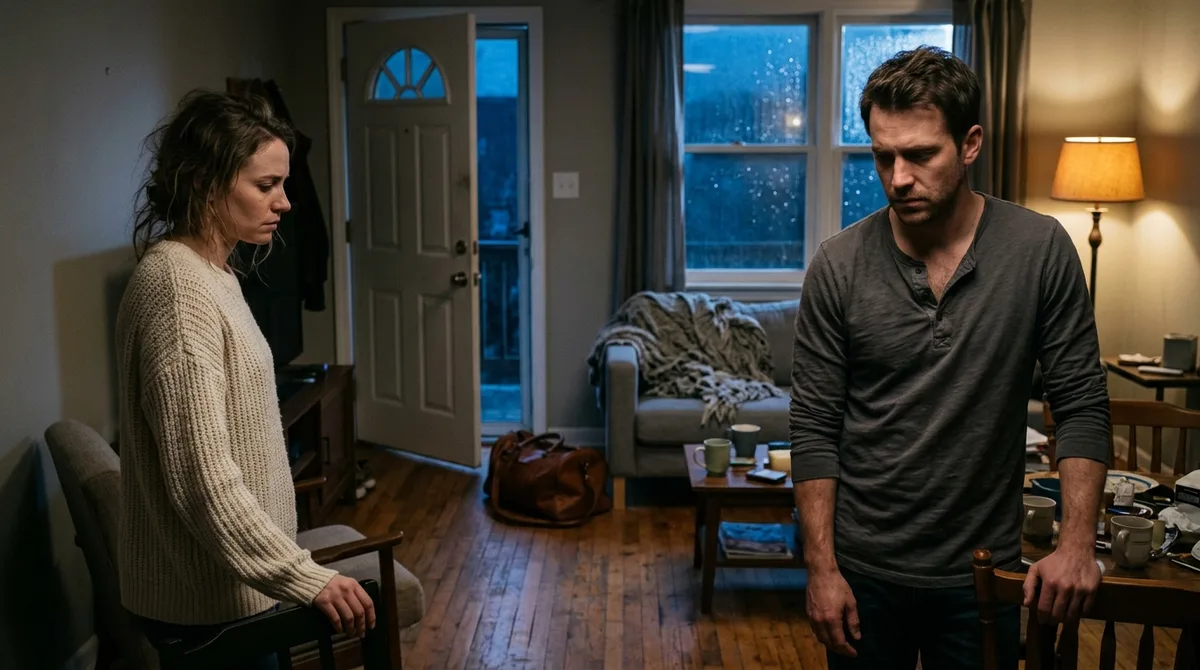
Couples break up right before the ending because the story has pushed each lover to face the fear that has been steering them all along. At that point the romance is no longer just a pleasant pull between two people. It becomes a test of what each character will do when love asks something hard of them.
Kelly Jamieson's view is that the breakup works best when a character chooses fear over love. The split should not be a simple misunderstanding that one honest talk could fix. It is a decision, and you should be able to see why that character would make it, even while you hope they won't.
That choice carries the most weight when it connects to the character's fear, flaw, or wound. A lover who was left behind as a child may pull away the moment closeness starts to feel permanent. A proud character may walk out rather than admit they need help. When the split grows from something the book has been planting from page one, it feels earned rather than staged.
Timing gives the moment its punch. General story-structure guidance places a comparable "All Is Lost" beat at about 75% of a story, with a "Dark Night of the Soul" at roughly 75 to 80%. Treat those numbers as a framework for pacing, not a universal romance rule. Plenty of happy endings arrive without a breakup at all, and plenty of stories place the low point a little earlier or later.
Think of the breakup as a test of who the characters really are. Does the hero run, or does he stay and fight for the thing he wants? Does the heroine trust the person who has shown her love, or does she assume the worst? The answers reveal growth, and a satisfying reunion depends on the characters changing in response, not on the plot tying a neat bow.
Careful writers keep the fear real but the choice reversible. You should understand the pain, believe the couple could lose each other for good, and still sense that a return to love is possible. That balance lets the late dip feel like a turn toward the happy ending instead of a betrayal of the romance you signed up for.
Love triangles, bully romance, forbidden love, kidnapping, and revenge are all setups that may suit a third act breakup, according to romance craft editor Emily Keyes. Each one puts the couple under a different kind of pressure, so the same late split can feel very different from one book to the next.
Romantic suspense often pairs the late split with external danger. Here the pressure comes from outside the couple as well as within. A break can be triggered by a threat neither lover can outrun, such as a stalker, a conspiracy, or a secret that puts someone in harm's way. The danger can drive the lovers apart, or it can force them to decide whether they still trust each other when the stakes are high.
Other setups keep the conflict inside the relationship. Keyes also describes low-angst alternatives, where a couple handles a late problem through an honest conversation or faces an outside conflict together without turning on each other. A 2023 Book Riot list of romances without a third act breakup includes The Duke Who Didn't by Courtney Milan and Rafe: A Buff Male Nanny by Rebekah Weatherspoon. Both show that a story can keep its love steady to the final page and still deliver plenty of tension.
So which kind of story are you in the mood for? The blurb usually gives it away. A mention of a rival, a family feud, a forbidden match, or a dangerous mission can hint that a late rupture is coming. If the blurb leans on a thrilling threat, expect the couple's trust to be tested from the outside too.

Not automatically. Readers and writers disagree about whether a late low point makes the happy ending sweeter.
Some readers love the emotional intensity. A breakup in the final stretch can leave you aching, and the reunion can feel like a hard-won exhale after a shaky ride. For these readers, the fear of losing the couple is part of the pleasure, and a binge-read can feel like a rollercoaster with a guaranteed safe landing.
Others would rather skip the gut punch. They want the lovers to face the final obstacle side by side, or to sort out the trouble through a frank conversation. For them, a swoon-worthy ending built on steady trust feels more satisfying, not less.
Romance author Helen Hoang has a related view. In a 2021 TIME interview, she said readers who trust that a romance will end well can open themselves to a wider range of emotions. That promise of a happy ending may let you feel the dark stretch more deeply, because you are not worried the story will abandon you.
Opinions on this vary widely. A breakup does not automatically make an ending more rewarding, and plenty of readers would never miss one.
What tends to decide the matter is whether the reunion feels earned. When the characters grow during the split, you believe the second chance. A stubborn hero learns to speak up, or a guarded heroine learns to trust someone with her past. When one lover simply snaps back because the plot needs it, the happy ending can feel like a shrug, no matter how dramatic the fight was.
So before you start a book, look at what the characters have to learn. If the story sets up a clear fear and lets the lovers wrestle with it, a late split may pay off. If the blurb promises a couple who stays together through the hard parts, you can expect the tension to come from somewhere else.
You can get the emotional tension of a late-story dip without a breakup at the end. Kate Goldbeck's You, Again is a good example. Its separation gives both leads room to grow, so the reunion feels earned rather than rushed.
Emily Henry's People We Meet on Vacation works in a similar way. It follows a friends-to-lovers pair across a series of summer trips, and the time between those getaways gives both characters space to change. The tone is funny and bittersweet, which makes it a perfect pick for a beach-read binge.
If you prefer a steadier ride, Courtney Milan's The Duke Who Didn't offers a historical romance with sharp wit and a couple who stays focused on each other. The tension comes from the characters' own choices and the world around them, not from a late collapse of trust.
Rebekah Weatherspoon's Rafe: A Buff Male Nanny brings a playful, steamy setup with a male nanny at the center. It is a lighthearted pick for readers who want heat and humor without a heartbreak near the finish line.
Some romances take a different path. Jeff Zentner's Colton Gentry's Third Act is a second-chance romance, and Publishers Weekly's March 1, 2024 review describes its protagonist reconnecting with a former love. The emotion comes from that reconnection and the history between the characters.
When you browse for your next read, a few clues can help you spot the kind of story you want:
If you want a steamy, binge-read slow burn with no late split, filter for that tone first. Then decide how much emotional turbulence you're ready for, because the right amount is different for every reader.

Writers get the most from a third act breakup when it grows from a choice the character makes out of fear, not from a misunderstanding that one honest conversation could clear up. Before you draft the scene, name the fear. Is your hero afraid of being left, of looking weak, or of repeating a family pattern? Let that fear push him toward the exit.
Plant the wound early. Show the fear in small first-act moments, like a lover who never fully unpacks or a heroine who always checks the exits. When the split arrives, readers should think, "Of course, that's what she'd do."
Keep the choice reversible. Let readers feel the pain and believe the couple could lose each other for good, but leave a thread of hope that the character can choose love again. The reunion then has to be earned through growth, not a convenient letter or a sudden confession.
If your story doesn't need a rupture, consider the low-angst route Emily Keyes describes. Let the couple work through a late problem in a frank conversation, or send them against an outside threat side by side. The tension can come from a rival, a mystery, or a dangerous mission rather than from lovers turning on each other.
Authors who want their finished romances in front of more readers can look at promotion options too. CraveRomance offers author promotional plans starting at $5, and signing up for its author promotion service is free.
Whichever path you pick, test the scene against the genre promise. Ask whether it serves the characters and still leads toward an optimistic ending. Readers are split on the gut punch, so a breakup works best when it feels like a necessary turn in the story, not a cheap twist.
Ready to find out which kind of ending you love? Pick one slow burn and one story with a late dark moment from the blurbs above, then see which one pulls you in faster.
Joining costs nothing. Join CraveRomance to get daily email alerts about limited-time free and discounted romance eBooks and audiobooks. Each daily deal runs for a short time, so open the alert as soon as it arrives.
Before you buy, make sure the promotion is running in your country, because authors can set different deals in different countries. Prices can also change at any time, and that is outside the site's control. If you notice a price mismatch on the day's deals, report it, and the site will do its best to update the price as soon as possible.
Once you have a book, you can read it on your favorite eReader or app, and it is yours to keep. Join the core list of about 8,000 romance readers, and let your next binge-read be the one that makes you swoon.