
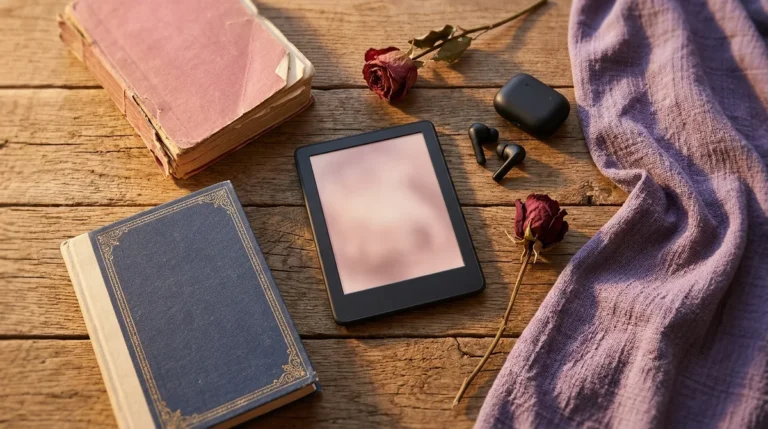
Romance books come in four main formats: ebook, paperback, hardcover, and audiobook. Each one changes how a love story feels, whether you hold it in your hands or listen through your earbuds. Price matters too. A romance like Kristan Higgins's Look on the Bright Side can cost $9.99 as a mass-market paperback, $19.00 as a paperback, or $30.00 as a hardcover.
Audio has its own rhythm. Marie Rutkoski's Ordinary Love runs 12 hours and 44 minutes. Each format is also its own listing, because the U.S. ISBN Agency requires a separate ISBN for every binding and e-book, so that steamy slow-burn you want may appear in several versions.
The best romance format is the one that fits how and where you read. Maybe you read on a crowded train, in a quiet bedroom, in your favorite armchair, or during a long weekend with a stack of steamy slow-burns. Start with your daily routine, then think about the price.
On the go, an ebook or audiobook is hard to beat. Your phone or e-reader holds a whole shelf of swoon-worthy stories in your pocket, and you can pick up right where you left off on the bus. Audio also works while you fold laundry or walk the dog, so your favorite enemies-to-lovers pair can keep you company.
Bedtime readers often reach for print. A paperback is light and easy to hold open with one hand, so you can doze off with it resting on your chest. A hardcover feels more like a treat. It sits sturdily on the nightstand and makes the book feel like an event.
At home, shared shelves matter. Print books sit where housemates and visitors can see them, while ebooks keep your library private. If you love to collect, a row of paperback and hardcover spines gives you favorites you can admire again and again.
The good news is that the same romance often comes in several formats. You might binge-read Emily Henry's Beach Read as an ebook on vacation, then add a print copy to your shelf later. Choose the format that suits the moment, and the same happily-ever-after can fit into your life.
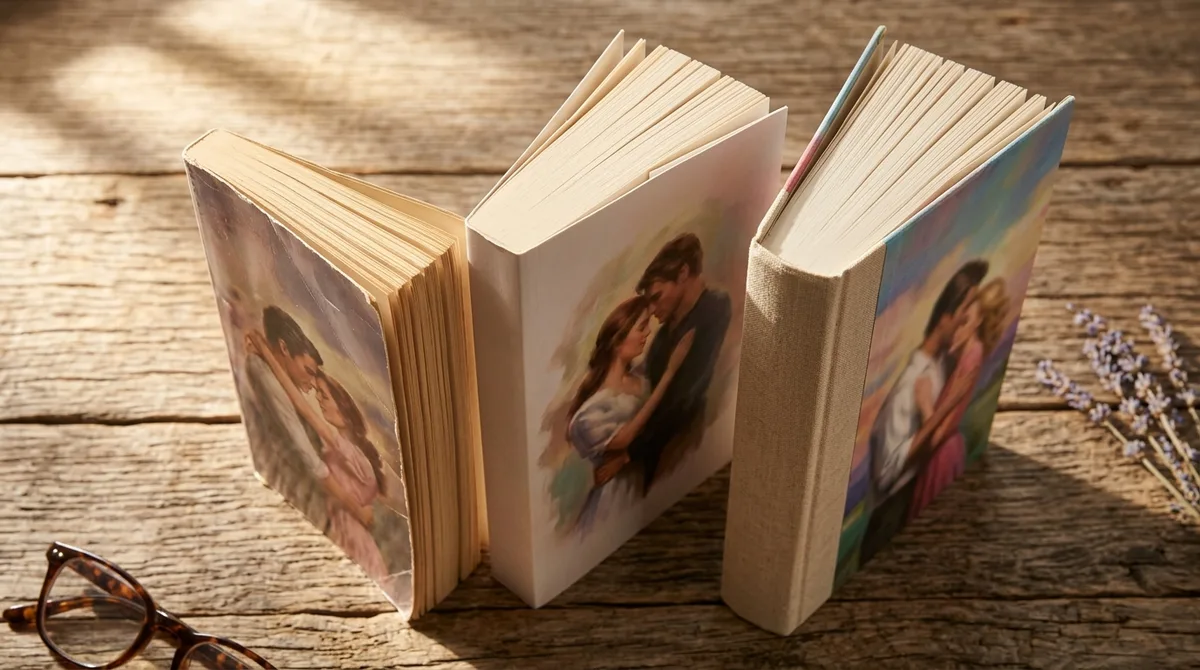
Paperback, hardcover, and mass-market are all print bindings, so the differences come down to the cover, the size, and how the book feels in your hands.
Think about how you read. A hardcover lies flat on the kitchen counter while you cook, and a paperback bends to your grip during a late-night chapter of a slow-burn. A mass-market copy of your favorite enemies-to-lovers story fits your commute without weighing down your bag.
Shelf presence matters too. Hardcovers and paperbacks both look lovely lined up on a bookcase, and print remains a big business. In 2024, U.S. publishers reported $7.9 billion in hardback revenue and $7.8 billion in paperback revenue across all books, not romance alone.
Binding is also a formal category in libraries and publishing. The Library of Congress lists hardback and paperback among its standard binding terms. That's why the same romance can show up in several bindings, each with its own description. Your favorite title might be waiting in whichever version fits your bag, your budget, or your shelf.
Not every edition of a romance costs the same, and the gap can be bigger than you expect. Take Kristan Higgins's Look on the Bright Side. The mass-market edition is a budget-friendly pick, while the hardcover costs about three times as much for the same story. That's why it pays to compare the exact edition in front of you.
Several things push the price up or down. Binding is the biggest factor. A hardcover uses sturdier boards and a more substantial cover, so it usually costs more to make than a flexible paperback. Size matters too, since a smaller mass-market trim needs less paper and fits into a lower price range.
Release timing can change the price as well. A new hardcover often arrives first at full price, and a paperback or mass-market printing that comes out later may be priced lower.
Price depends on binding and edition, not just on the story itself. Two copies with identical pages can carry very different tags, so your favorite love story isn't automatically the cheap option.
Before you buy, open each edition's listing and check the format, page count, and publication date. Make sure you're looking at the version you want, especially when a title has several printings. A quick check can keep you from paying hardcover prices for a paperback you didn't mean to order.
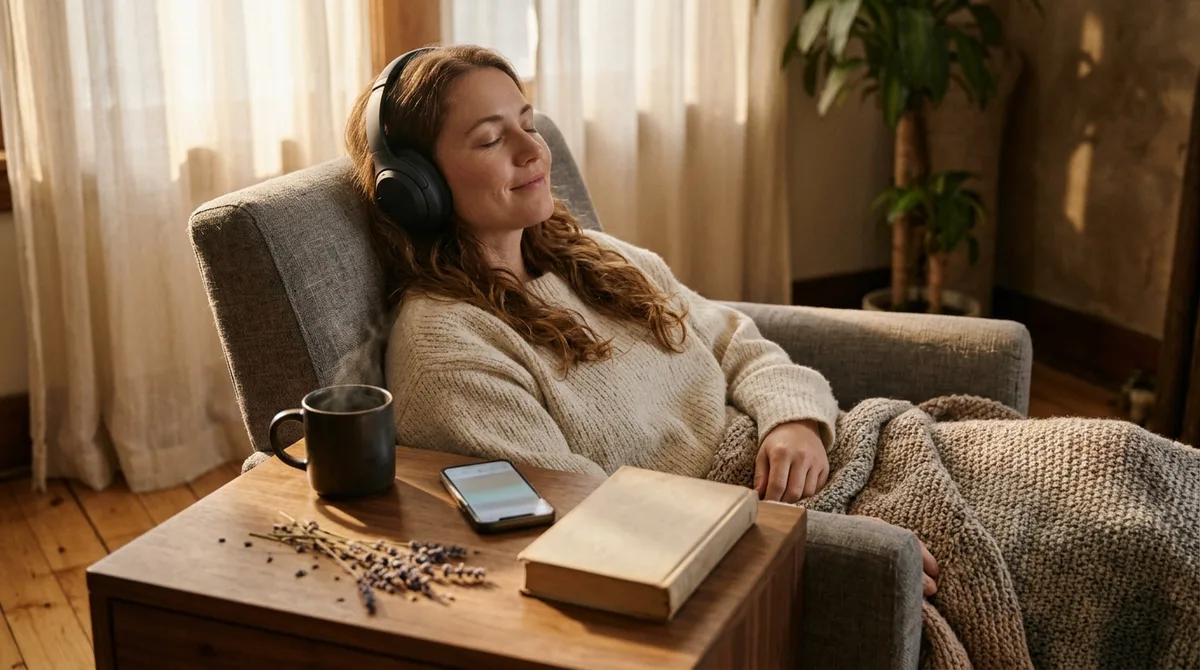
Yes, an audiobook romance is well worth the listen when you're short on reading time but still want your daily dose of swoon-worthy tension. You can follow a love story while you commute, fold laundry, or lace up your running shoes, so the book fits into the gaps in your day.
Runtime is your best planning tool. The audiobook of Marie Rutkoski's Ordinary Love runs 12 hours and 44 minutes, so you can map out your listening before you press play. That works out to nearly twenty 40-minute commutes, or a handful of longer chore sessions on the weekend. Knowing the total helps you see how many listening days stand between you and the happily-ever-after.
A typical routine might look like this. You listen on the drive to work, pause when you reach your desk, then pick the story back up during an evening walk. Each session can be short, and the characters are right where you left them. Audio also suits multitaskers, because your hands stay busy while your heart races over a slow-burn confession.
Keep in mind that audio is its own edition, listed separately from print and ebook versions. The narrator, running time, and release date belong to the audio listing, not to the paperback on your shelf. Before you buy or borrow, confirm you're looking at the audio version so you know exactly what you're getting.
Ebooks can work well for many readers, especially when the file follows a common standard. The World Wide Web Consortium (W3C) describes EPUB as a distribution and interchange format for digital publications. In plain terms, it's a shared file type that moves books between apps and devices. Its newer version, EPUB 3.3, is backward compatible with EPUB 3.2, so older EPUB files keep working with newer tools.
That matters when you want to read on your own terms. A well-built EPUB lets you change the text size, pick a font, or adjust the brightness, so a late-night slow-burn is easier on your eyes. If you use a screen reader or a read-aloud tool, the same file can read your favorite enemies-to-lovers story out loud while you cook or stretch.
Rules are also pushing publishers in the right direction. EU Directive 2019/882 applies to consumer e-book services provided after June 28, 2025, and it says assistive technology must not be blocked. It also says digital-rights measures should not stop accessibility features from working. In everyday terms, the copy protection on an ebook should not shut out the tool you rely on to read.
Still, every edition is different, so check before you buy. Look for accessibility details on the store listing, and try a sample if one is offered. A few minutes of checking can save you from a frustrating binge session.

Print romance still sells well. Circana BookScan data reported by Publishers Weekly show that U.S. print romance sales rose 3.9% to almost 44 million units in 2025. That's a solid gain for a category many readers assume has gone fully digital.
The 2024 industry revenue figures cover all publishing, not romance alone, but they show how much print still matters. U.S. publishers brought in $7.9 billion from hardbacks, $7.8 billion from paperbacks, $2.4 billion from digital audio, and $2.1 billion from e-books. Print sits at the center of the business, and that includes the romance shelves you love.
If you enjoy building a collection, hardcovers are where the fun really starts. They look striking lined up on a bookcase, and their sturdier covers hold up better over years of rereads. Each format and binding also gets its own identifier, since the U.S. ISBN Agency requires a separate ISBN for each one. A hardcover and a paperback of the same steamy story are tracked as different editions, so you can tell exactly which version is on your shelf.
Pick the format that fits your daily routine first, then check the exact edition before you buy. A quick routine check often makes the choice easy and keeps you from overthinking it.
Here's a simple way to decide:
Keep an open mind about formats. That slow-burn you planned to listen to on the train might feel even more intimate in print, and you won't know until you try.
Your next step is to pick one romance you've been itching to read and try it in a format you haven't used before. If you usually read ebooks, grab a paperback of Kristan Higgins's Look on the Bright Side and see whether the flexible pages change how the story feels. If you mostly read print, try Marie Rutkoski's Ordinary Love as an audiobook on your next commute, then track how many listening days its 12 hours and 44 minutes take.
Before you add anything to your cart, open the listing for that exact edition. Check the price, format, and publication date. A mass-market, paperback, and hardcover of the same story can carry very different tags, so the edition you pick matters as much as the story.
Give the new format about a week. Pay attention to whether you read faster, stay up later, or feel closer to the characters. Your own experience will tell you more than any general rule, and it will point you toward your next binge-read.