
Romance book cover typography is the lettering that hints at a story's mood before you read a single line, and it can make or break a swoon-worthy find on a crowded shelf. Large titles often fill half to two-thirds of the cover, since many of us now shop online, where a cover appears as a tiny thumbnail. A 2019 study of 207,572 book covers found a strong preference for decorative fonts on recreational books.
Think of it as a sneak peek. Curly script on a steamy historical promises a dreamy escape, while clean serif type can signal something more grounded. Romance is a big deal in publishing too, and TIME reported that it accounts for nearly a quarter of adult fiction print sales. So the next time you browse, look at the letters first, then binge-read your way to your next favorite.
Romance covers mostly rely on four type styles: script, serif, sans-serif, and decorative fonts. Think of them as conventions, the patterns readers have come to expect, not fixed rules that lock a book into one genre.
Script is usually the first style you notice. Sensual cursive is a favorite for dreamy historical romances, while Publishers Weekly contrasted it with the no-nonsense typography of Emily Henry titles, which feels direct and modern.
Serifs often read as more grounded. In a 2022 interview with the Romantic Novelists' Association, cover designer Lisa Firth called swirly scripts a long-running romantic-comedy fashion and said she was seeing more serious serifs, such as Didot and Caslon Pro.
Sans-serifs and decorative fonts fill out the family. Decorative lettering is where covers get the most playful, and it is often the first thing to catch your eye. A 2024 study found that cover text design slightly improved genre classification beyond the words themselves, but the wording remains more influential, so type works as a supporting cue rather than the whole story. That is the core question this guide explores: what each choice tells you about the reading experience. As you browse, let the letters set your expectations, then let the blurb and sample pages confirm them.
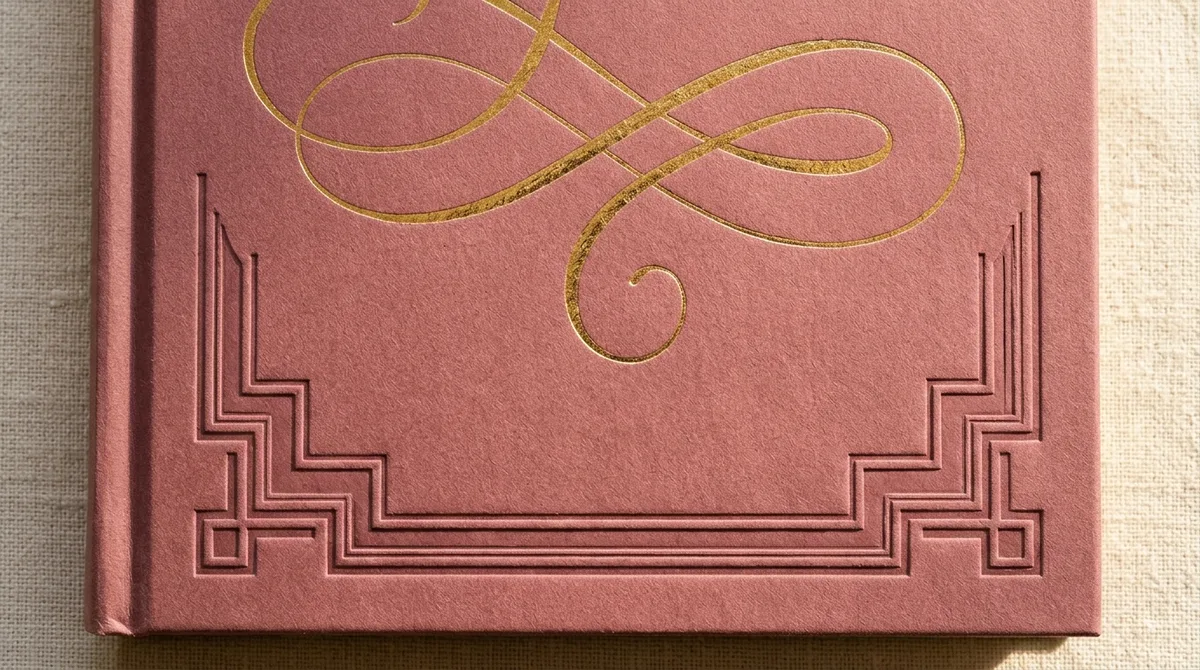
Script and serif fonts feel different because they set different expectations before you read a word. Script feels light and dreamy, while serif feels weightier and more literary.
A flowing cursive title tells you to settle in for a playful, bubbly ride. It is the kind of cover that makes you think of a sunny escape, the perfect pick for a weekend binge-read. Swirly scripts have a long history in romantic comedies, and that history has taught readers what to expect when they see one.
Cover designer Lisa Firth has noted that swirly scripts have been a long-running fashion in romantic comedy. She has also seen more serious serifs, such as Didot and Caslon Pro, appear on covers. Those faces pull a cover toward something richer and more grown-up.
Serifs have small finishing strokes, or "feet," at the ends of each letter. Because they look like the type in a classic printed novel, they often suggest a slower, more immersive story. Even if the plot is full of steamy tension, a serif title can make the book feel like a serious literary experience.
You do not have to choose one or the other. A serif title paired with a script tagline can blend tones, so the cover feels grounded at first glance but still promises a little swoon. This works well when a book mixes heartfelt drama with lighter, flirtier moments. When you spot that combination, you can expect a read that moves between depth and fun.
Lettering can hint at how steamy, sweet, or dark a romance might be, but it works best as a clue rather than a verdict. Heavy, bold, or stark letters often read darker, like the moody title you might spot on a brooding enemies-to-lovers pick. Light, curly, or pastel lettering usually reads sweeter, and the playful retro-groovy title on Cosmic Love at the Multiverse Hair Salon feels like a lighter, funnier ride.
Color adds another layer. A 2024 study from Kyushu University researchers found that cover text design slightly improved genre classification beyond the words alone, and that character color was useful for telling romance books apart. So a deep red title on a black background may feel more intense than a soft peach one, even before you read the blurb.
Still, the wording does most of the work. Your eyes may catch the font first, but the title and tagline usually tell you more about the story, and the blurb settles the heat level. Treat the lettering as a first impression, then check the blurb and any sample pages to confirm the spice level you want.
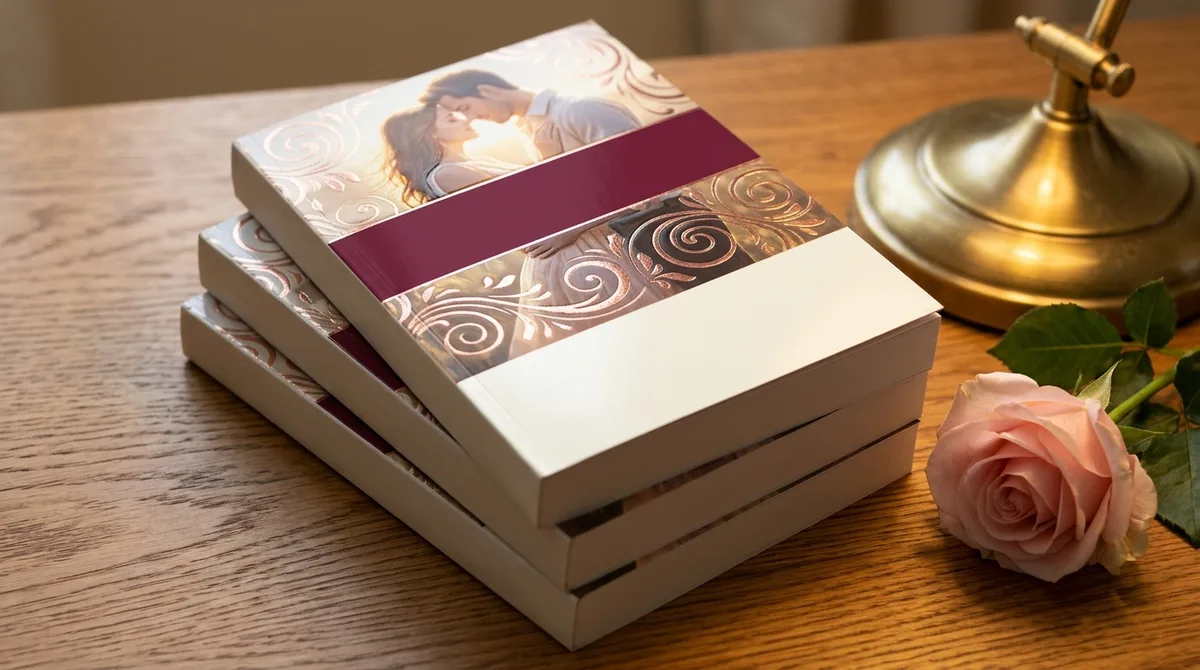
Size is often what decides whether a cover makes it past the first scroll. Lisa Firth explained that titles filling half to two-thirds of the cover became the norm because so many readers pick their books online, where a cover shrinks to a small image on a screen. Big letters stay legible at that size, so they earn a second look.
Author names matter too, especially for bestselling writers. When you already trust a name, the author's name can be set large enough to catch your eye, so you spot a new release from a favorite author before you read a word of the blurb.
Series branding is another trick. A repeated font, a matching color band, or the same title layout across books helps you spot the next installment on a crowded shelf or a long list of search results. Once you have loved one book in a series, that look becomes a signal to grab the next one.
Placement completes the picture. Titles near the top or center stay readable when the cover is small, while lettering tucked into a corner can blend into the background. As you scroll, notice where the title sits, because that spot often decides whether you stop to read the blurb.
Your cover font stays readable as a thumbnail when its letters contrast strongly with the background and keep enough weight to survive being shrunk. Most of us now browse on phones and e-readers, where a cover shows up as a small image among dozens of others. A Portland State University paper from August 2025 looked at 100 highly rated queer romance titles from 2020 to 2024 and checked how each cover held up as a digital thumbnail.
The results were a mixed bag. Many covers fell short of the color-contrast requirements in the Web Content Accessibility Guidelines, while a majority were colorblind safe. WCAG 2.2 asks for a contrast ratio of 4.5:1 for ordinary text and 3:1 for large text.
In plain terms, a blush-pink script on a pale peach sky can look lovely on a big monitor and then vanish in a thumbnail. Big titles get the easier 3:1 bar, but a thin tagline or a small series label needs 4.5:1 to stay clear. You do not need a ruler to judge this. Try these three checks as you scroll:
A cover that passes all three will look just as inviting on a small screen as it does in your hand.
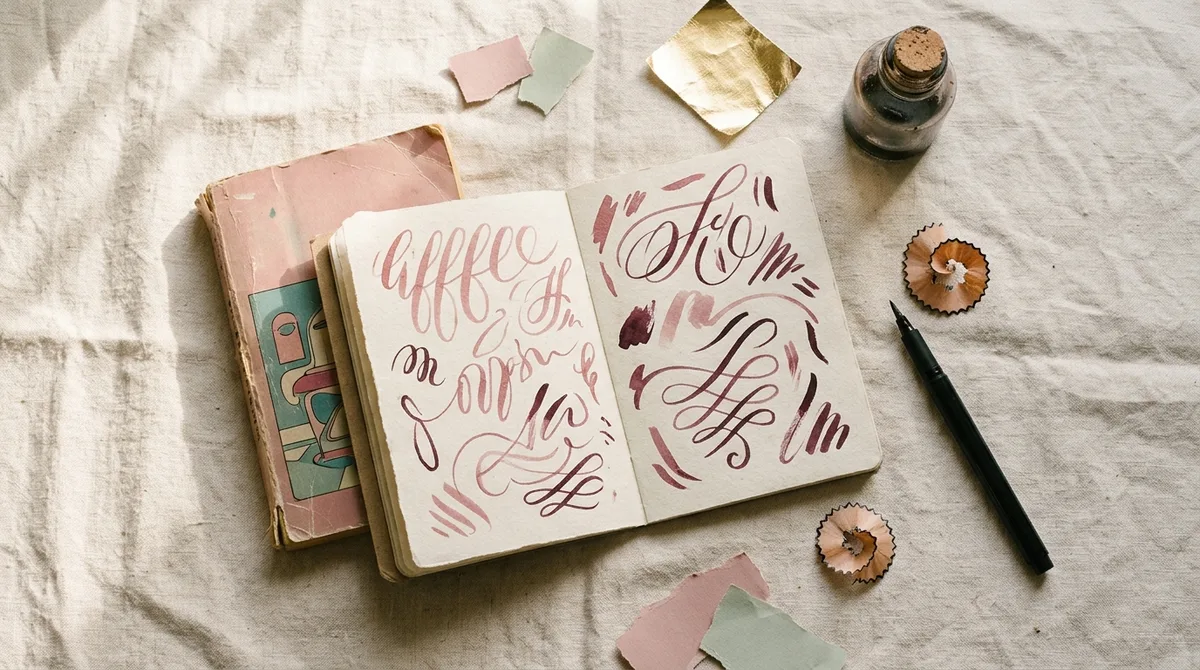
Retro lettering is one of the most fun corners of romance cover design right now. Some covers borrow the look of old comic books, with bold outlines, bright colors, and punchy words that could have sat on a 1960s newsstand rack.
Lyla Sage's self-published 2023 novel Done and Dusted is a good example. Its cover used artwork by Austin Drake, inspired by romance comics from the 1950s to the 1970s. Kensington editor Alexandra Sunshine credited that look with kick-starting a "pop art nostalgia" trend in western romance visuals, so if you have noticed more comic-style panels on your browsing feed, you are not imagining it.
Hand-drawn titles take the idea a step further. A custom-lettered title looks sketched just for that book, which makes it feel personal and a little rebellious. Cosmic Love at the Multiverse Hair Salon stands out for its prominent retro-groovy lettering, a playful look that signals a lighter, funnier ride.
Then there is the question of who does the heavy lifting on the cover. Typographic-only covers let the title carry the whole mood, with a bold word and a solid color field doing the talking. Image-led covers let the art set the scene, with the type playing a supporting role. When the words dominate, expect a sharp, steamy hook. When the picture dominates, the art is your first clue, and the lettering simply confirms it.
Ready for a little romance cover time travel? In the late 1980s and early 1990s, some publishers began using step-back jackets. The front showed a quiet landscape, and the more graphic clinch image waited underneath. Slide the jacket off, and you got a sudden hint of heat that made you want to keep reading.
Then came a milestone. Beverly Jenkins' 1994 novel Night Song became the first all-Black clinch cover from a major publisher. For readers who rarely saw themselves on the front of a romance, that cover was a real swoon moment, and it showed how much a cover can reflect the readers it hopes to reach.
Historical covers show that type and art choices keep tracking what readers expect from a genre. Hold a vintage paperback next to a modern one, and you can see the shift in both the picture and the lettering. Each era promised a different kind of story, and you can still spot those promises when you browse.
Your next step is easy. Pick up ten romance covers, either on a shelf or on a browsing screen, and sort them into three piles. Put script-led titles in one pile, serif-led titles in another, and anything with bold retro comic lettering in a third. You will quickly notice which pile you keep reaching for.
Then choose the cover that grabbed you most and run the squint test on its thumbnail. If the title still reads as clear words, open the blurb and read the first page of a sample. Those two checks will tell you whether the heat level matches the lettering.
Want a place to start? Try Beverly Jenkins' Night Song, the 1994 novel that made cover history, then compare it with Lyla Sage's Done and Dusted for a jump from older visuals to newer comic-style art. Look for both through your local library's catalog, where a loan costs nothing, or check for affordable used copies. Read the two covers side by side and notice what each one promised you before you turned a single page.
Romance book serialization is the practice of releasing one continuing love story in sequential installments, so you read the book a little at a time instead of all at once. The Library of Congress describes serial fiction as one larger work split into pieces, and the format is far from new. Readers in 1851 eagerly waited for each new part of Harriet Beecher Stowe's Uncle Tom's Cabin, which ran in the weekly National Era over 40 weeks starting June 5, 1851.
Today the same idea thrives on digital platforms, where you can binge-read a steamy romance in bite-sized chunks. On one popular platform, an episode is designed for a five-to-ten-minute read, and eligible episodes can unlock after a three-hour countdown, then stay readable for 72 hours. Some platforms let authors start for free, while others take a share of earnings, such as a 10 percent cut plus payment processing fees, so the way a story is set up can shape what you pay. There is also a special thrill in waiting for the next installment, when a cliffhanger leaves you refreshing your app and planning your next reading session around it.
Romance book serialization is a love story told in one continuing book that reaches you in installments rather than all at once. You read the first part, wait for the next, and pick up the same couple right where you left them. The format has deep roots, so this is an old way of reading love stories, not a new trend.
Think of it as a romance in chapters you can savor between errands. Each installment moves the relationship forward, whether that means a first glance, a heated argument, or a confession at the worst possible moment. The heroine and hero stay the same from start to finish, and the story builds toward one emotional payoff.
The Romance Writers of America defines romance as a novel with a central love story and a positive ending. That definition is why a serialized story still counts as a romance even though you read it in pieces. The romance runs through every installment, and the story ends with the couple together. Jane Austen's Pride and Prejudice follows the same pattern, with Elizabeth and Darcy's relationship driving the plot to a happy ending.
Long before smartphones, readers learned to wait for the next part. Newspapers and magazines printed novels in sections, and readers came back week after week or month after month to find out what happened after a dramatic moment. Charles Dickens published many of his novels in monthly parts, so his fans spent weeks discussing each new chapter with friends.
Digital platforms have brought that old habit back. Many readers now start on a phone, read an episode during a lunch break, and then keep going late into the night. Community sites like a large community writing platform reported about 89 million monthly active users in the quarter ended March 31, 2024, though that number covers every genre, not romance alone.

Authors release romance in installments because each release gives you a reason to come back, and that return visit keeps the love story alive between updates. When you finish one episode, you already know the next one is coming, so the book becomes an ongoing conversation between the writer and the people following along.
Cliffhangers do much of the heavy lifting. A slammed door, a secret letter, or an almost-kiss that gets interrupted can leave you restless for days. Slow-burn tension works the same way. The author stretches a will-they-won't-they storyline across several parts, so every lingering glance feels like a big moment.
For the writer, serialization is a slow and steady way to build an audience. Readers who enjoy the first installment often follow the story from one release to the next, and their loyalty grows over months. A predictable schedule gives those readers a place to return to, and it gives new readers a reason to start at the beginning.
Short releases also fit real life. You might read on a bus, in a waiting room, or in bed with your phone glowing under the covers. An episode that takes a few minutes slips into those gaps far more easily than a full-length novel you have to plan an evening around.
Serialization also gives authors feedback while the story is still taking shape. If readers rush to comment on a particular couple or a surprising plot twist, the writer can notice what is landing and lean into it. Responses arrive as the relationship develops, not only after the final page is written.
Serialized romance lives on several reading platforms, and each one handles installments differently. You can find these love stories on episode-based apps, comic-style platforms, open writing communities, and membership-based sites, so it helps to know how each one works before you settle in for a binge-read.
Episode-based apps are built around short reads, and you can unlock paid episodes with in-app currency or claim free episode tickets. Comic-style platforms, by contrast, feature episodes that you scroll through on your phone, so a swoon-worthy romance arrives as panels and dialogue rather than plain text. Open writing communities work more like a huge crowd where writers post chapters for anyone to read.
Membership-based sites are where authors decide what their readers pay. An author can set membership prices and the perks that come with them. Some of these platforms also describe their content terms as non-exclusive, which means an author's story is not tied to any one site.
The size of the largest open writing communities is worth a closer look. One such platform reported roughly 89 million monthly active users, but that crowd reads every genre, from fantasy to mystery. Platform scale does not mean every reader there is a romance reader, so you will want to search by romance tags and genre labels to find the love stories you crave.
Platforms can also change, and one big example is a reminder to stay flexible. A major online retailer ended its serialized reading service on February 26, 2025, and its episodes and stories are no longer available for purchase on its site. Readers who had followed serials there lost their easy path back to those stories.
Before you start a series you love, check each platform's current terms. Rules about unlocking, access windows, and author payments can shift, and a story you adore should stay within reach for as long as you want to keep reading.
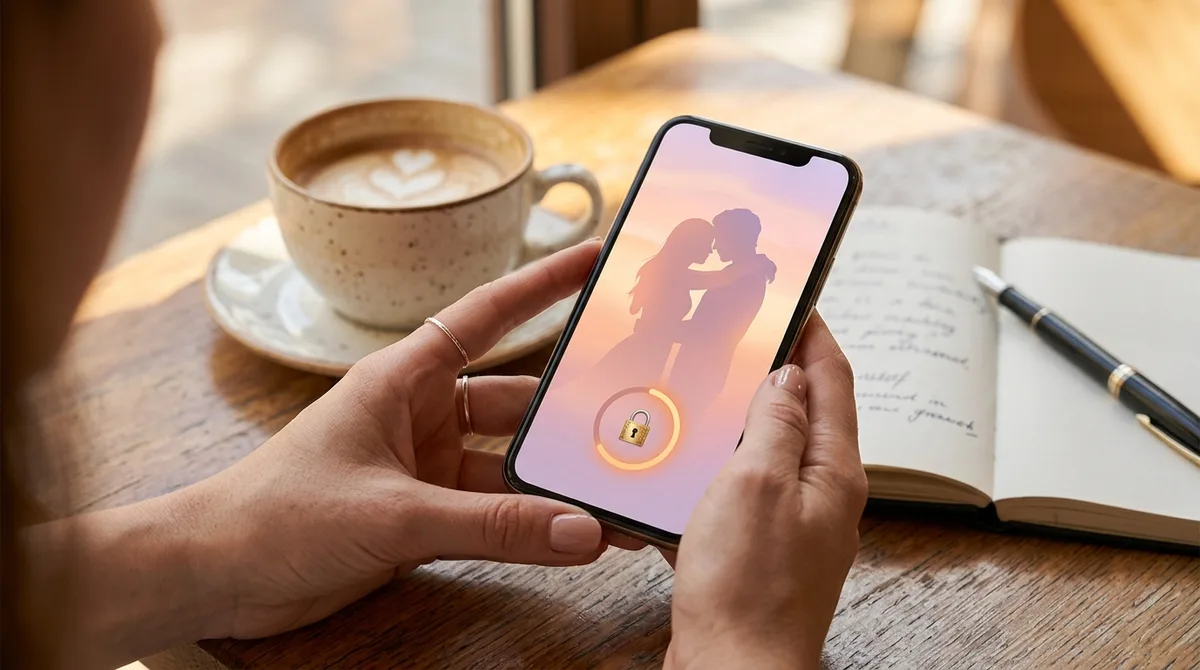
Paid episodes and wait timers decide when you can read the next installment and what it costs you. Some episodes require in-app currency or a free episode ticket, while others unlock after you wait. Knowing which is which helps you plan your reading so a cliffhanger doesn't catch you off guard.
On many episode-based apps, you can unlock paid episodes with in-app currency, or you can use free episode tickets when you have them. Some episodes are Wait Until Free, which means you can skip the payment and wait for the episode to open up instead. Once an eligible episode is unlocked, it stays readable for 72 hours, so you have three days to finish it.
Some eligible episodes use a 3-Hour Wait Until Free timer. You start the countdown, and after three hours the episode unlocks. It then stays readable for 72 hours, which gives you plenty of time to savor every swoon-worthy moment.
Waiting for free is what makes a binge-read affordable. If you are happy to be patient, you can follow a whole arc without spending much at all. Only a few episodes in a series might need in-app currency or tickets, so you can keep the story going without a surprise bill.
Subscription services work differently. On membership-based sites, each author sets their own prices and benefits, so the perks for one series can look nothing like the perks for another. Before you subscribe, read what that particular author offers.
Here is a simple way to plan a reading session around these systems:
Serialized romance is worth the cost when the format matches how you like to read. Free chapters and wait timers let you follow a whole love story for nothing, as long as you are willing to be patient. A wait timer costs you time instead of money, which is a fair trade if you enjoy checking your app each day for the next installment.
Paid episode unlocks suit readers who want to binge without waiting. If you finish one episode and need the next right away, paying a small amount per episode can feel worth it, especially when the couple's relationship finally heats up. Set a monthly spending limit before you start so a late-night reading streak doesn't turn into a surprise bill.
Authors have costs too, and those costs shape what they charge. Some membership-based platforms take a 10% share of an author's earnings instead of an upfront fee, so an author can start without paying anything first. Payment processing typically adds 2.9% plus $0.30 per transaction. That flat 30 cents takes a bigger bite out of a cheap episode than an expensive one, which is one reason a short episode can seem pricey compared with a longer one.
To judge value, ask yourself three things. How quickly do you want the next part? How many paid episodes stand between you and the ending? Do the membership perks match what you would read anyway? A series with frequent free episodes can be a bargain, while a short paid run may cost more than you planned. Weigh each price against the swoon you get from every reading session.

Romance readers use many formats, and digital reading is especially popular. In a 2017 survey of 2,000 romance readers, 64% said they read e-books and 15% used a subscription service. If you love swiping through a love story on your phone, you are in good company.
Print still has a strong following, too. Publishers Weekly reported, citing Circana BookScan data, that U.S. print romance-book sales rose almost 9% in 2024. That kind of growth shows romance remains a substantial book market, with paperbacks and hardcovers selling alongside digital copies.
Big reading platforms tell a different story. The roughly 89 million monthly active users on one large writing community are impressive, but that crowd reads fantasy, mystery, teen drama, and every other genre. A platform's size tells you how many people are online, not how many of them are romance readers.
So how do you find the romance in the crowd? Start with genre labels and romance tags, then look for stories with a central love story and a happy ending. Fans of contemporary romance often reach for Emily Henry's Beach Read, while readers who crave historical drama tend to dive into Julia Quinn's Bridgerton novels. Once you find an author who makes your heart race, you can binge-read your way through every installment they have released.
Yes, each installment of a serialized romance can be protected by copyright under the U.S. Copyright Act, but the way you register it matters. Registration works issue by issue, so you need to know what a filing covers before you rely on it.
Think of each installment as its own published piece. The U.S. Copyright Office says that registering a single serial issue covers that issue only, not future issues under the same title. If you register episode one of your enemies-to-lovers story, episodes two, three, and beyond are not covered by that filing.
The Office also offers group registration for serial issues. For that option, it generally requires at least two eligible issues published under the same continuing title within three calendar months and the same calendar year. Say you publish episode one in March and episode two in April of the same year. Those two issues would fall within the requirement, while episodes released a year apart would not.
Authors should consider copyright registration separately for separately published installments. A serial published in bite-sized parts can have a different release schedule than a finished novel, so the timing of each episode may shape your plans. If your installments appear on more than one platform, each release is worth thinking through on its own.
Readers don't need to register anything to enjoy a steamy installment on their phone. Your job as a reader is simpler: read the episode on the platform where the author posted it, and avoid copying or passing along pages you didn't pay for or weren't given. Authors depend on that trust to keep writing the stories you love.
This is general information, not legal advice. If you're unsure how your own installments should be registered, talk with a qualified attorney who can look at your specific situation.
Your next step is simple: start the first installment of one serialized romance today. Search your reading app for a romance tag or genre label, such as enemies-to-lovers or slow-burn, and look for a story whose first episode is free. Read the description to confirm it has a central love story and a happy ending, the two markers that make a serial a romance in the first place.
Before you commit, check how the next episodes unlock. If a wait timer applies, note the time you can return. If episodes cost in-app currency or require free episode tickets, decide now how many you will spend each week. Write that limit in your notes app so a midnight cliffhanger doesn't push you past it.
Then build a reading rhythm. Read the first episode on your commute or during lunch, and set a reminder for the day the next one opens. Keep a short list of the couples you're following, so you can jump right back in after a heated argument or a first kiss.
If the first story doesn't make your heart race, try another. Many readers find their favorite serial after a few tries, and each one teaches you what kind of swoon you crave. Once you find that story, you'll know exactly where to start your next binge-read.
Romance books come in four main formats: ebook, paperback, hardcover, and audiobook. Each one changes how a love story feels, whether you hold it in your hands or listen through your earbuds. Price matters too. A romance like Kristan Higgins's Look on the Bright Side can cost $9.99 as a mass-market paperback, $19.00 as a paperback, or $30.00 as a hardcover.
Audio has its own rhythm. Marie Rutkoski's Ordinary Love runs 12 hours and 44 minutes. Each format is also its own listing, because the U.S. ISBN Agency requires a separate ISBN for every binding and e-book, so that steamy slow-burn you want may appear in several versions.
The best romance format is the one that fits how and where you read. Maybe you read on a crowded train, in a quiet bedroom, in your favorite armchair, or during a long weekend with a stack of steamy slow-burns. Start with your daily routine, then think about the price.
On the go, an ebook or audiobook is hard to beat. Your phone or e-reader holds a whole shelf of swoon-worthy stories in your pocket, and you can pick up right where you left off on the bus. Audio also works while you fold laundry or walk the dog, so your favorite enemies-to-lovers pair can keep you company.
Bedtime readers often reach for print. A paperback is light and easy to hold open with one hand, so you can doze off with it resting on your chest. A hardcover feels more like a treat. It sits sturdily on the nightstand and makes the book feel like an event.
At home, shared shelves matter. Print books sit where housemates and visitors can see them, while ebooks keep your library private. If you love to collect, a row of paperback and hardcover spines gives you favorites you can admire again and again.
The good news is that the same romance often comes in several formats. You might binge-read Emily Henry's Beach Read as an ebook on vacation, then add a print copy to your shelf later. Choose the format that suits the moment, and the same happily-ever-after can fit into your life.
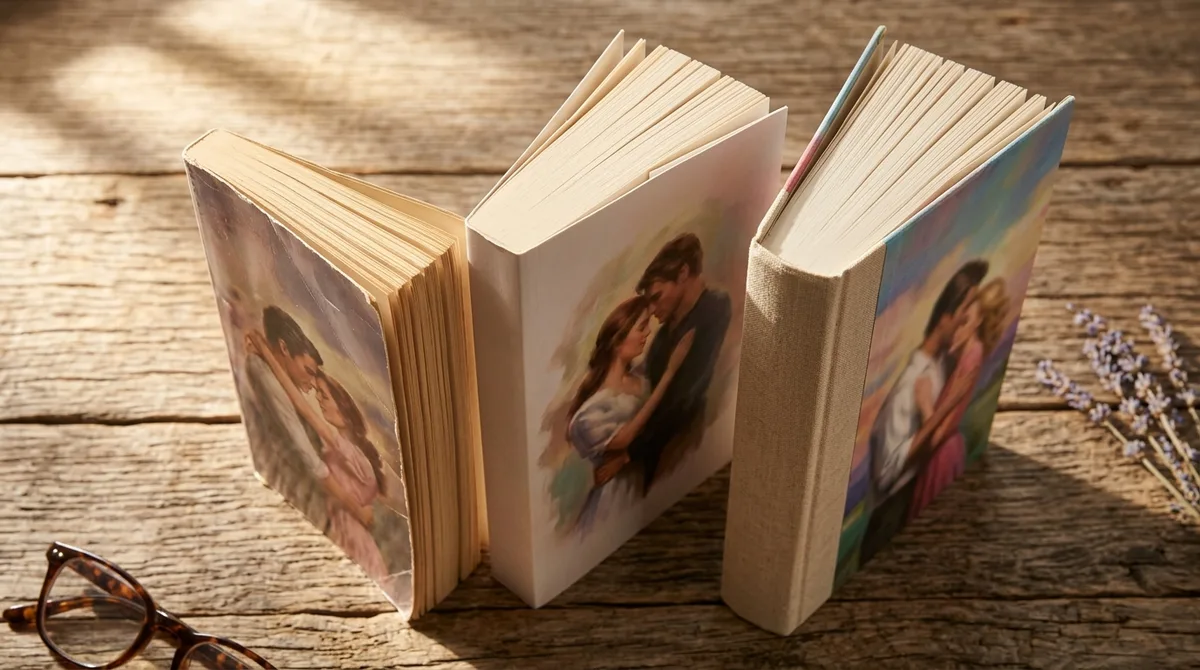
Paperback, hardcover, and mass-market are all print bindings, so the differences come down to the cover, the size, and how the book feels in your hands.
Think about how you read. A hardcover lies flat on the kitchen counter while you cook, and a paperback bends to your grip during a late-night chapter of a slow-burn. A mass-market copy of your favorite enemies-to-lovers story fits your commute without weighing down your bag.
Shelf presence matters too. Hardcovers and paperbacks both look lovely lined up on a bookcase, and print remains a big business. In 2024, U.S. publishers reported $7.9 billion in hardback revenue and $7.8 billion in paperback revenue across all books, not romance alone.
Binding is also a formal category in libraries and publishing. The Library of Congress lists hardback and paperback among its standard binding terms. That's why the same romance can show up in several bindings, each with its own description. Your favorite title might be waiting in whichever version fits your bag, your budget, or your shelf.
Not every edition of a romance costs the same, and the gap can be bigger than you expect. Take Kristan Higgins's Look on the Bright Side. The mass-market edition is a budget-friendly pick, while the hardcover costs about three times as much for the same story. That's why it pays to compare the exact edition in front of you.
Several things push the price up or down. Binding is the biggest factor. A hardcover uses sturdier boards and a more substantial cover, so it usually costs more to make than a flexible paperback. Size matters too, since a smaller mass-market trim needs less paper and fits into a lower price range.
Release timing can change the price as well. A new hardcover often arrives first at full price, and a paperback or mass-market printing that comes out later may be priced lower.
Price depends on binding and edition, not just on the story itself. Two copies with identical pages can carry very different tags, so your favorite love story isn't automatically the cheap option.
Before you buy, open each edition's listing and check the format, page count, and publication date. Make sure you're looking at the version you want, especially when a title has several printings. A quick check can keep you from paying hardcover prices for a paperback you didn't mean to order.
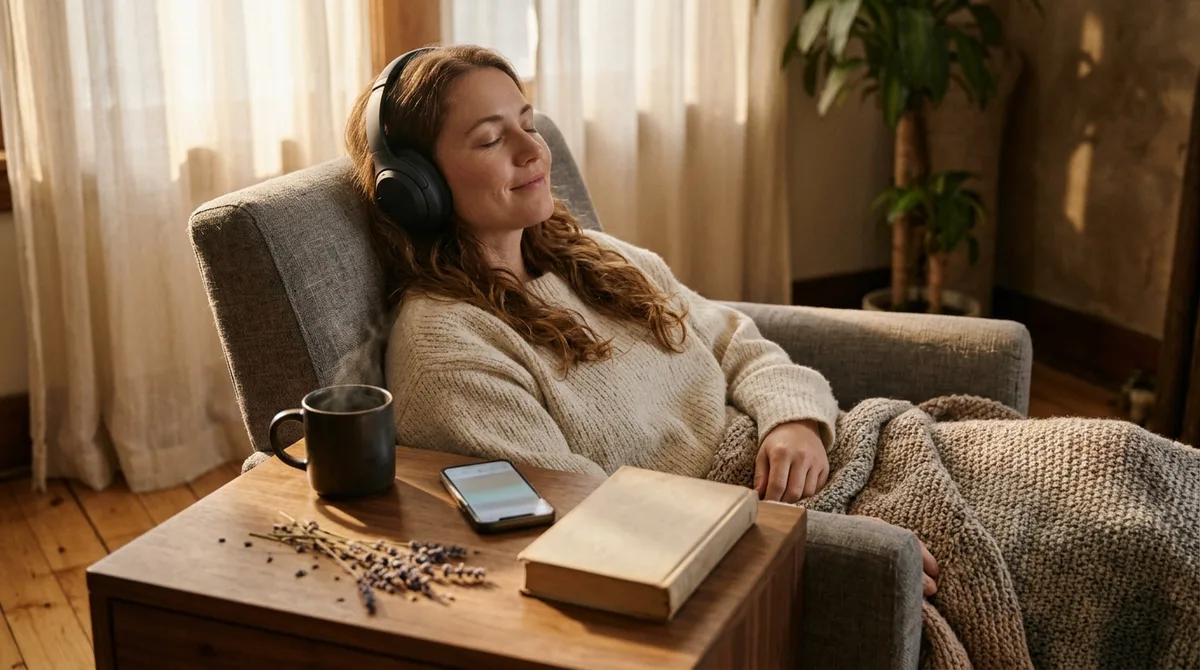
Yes, an audiobook romance is well worth the listen when you're short on reading time but still want your daily dose of swoon-worthy tension. You can follow a love story while you commute, fold laundry, or lace up your running shoes, so the book fits into the gaps in your day.
Runtime is your best planning tool. The audiobook of Marie Rutkoski's Ordinary Love runs 12 hours and 44 minutes, so you can map out your listening before you press play. That works out to nearly twenty 40-minute commutes, or a handful of longer chore sessions on the weekend. Knowing the total helps you see how many listening days stand between you and the happily-ever-after.
A typical routine might look like this. You listen on the drive to work, pause when you reach your desk, then pick the story back up during an evening walk. Each session can be short, and the characters are right where you left them. Audio also suits multitaskers, because your hands stay busy while your heart races over a slow-burn confession.
Keep in mind that audio is its own edition, listed separately from print and ebook versions. The narrator, running time, and release date belong to the audio listing, not to the paperback on your shelf. Before you buy or borrow, confirm you're looking at the audio version so you know exactly what you're getting.
Ebooks can work well for many readers, especially when the file follows a common standard. The World Wide Web Consortium (W3C) describes EPUB as a distribution and interchange format for digital publications. In plain terms, it's a shared file type that moves books between apps and devices. Its newer version, EPUB 3.3, is backward compatible with EPUB 3.2, so older EPUB files keep working with newer tools.
That matters when you want to read on your own terms. A well-built EPUB lets you change the text size, pick a font, or adjust the brightness, so a late-night slow-burn is easier on your eyes. If you use a screen reader or a read-aloud tool, the same file can read your favorite enemies-to-lovers story out loud while you cook or stretch.
Rules are also pushing publishers in the right direction. EU Directive 2019/882 applies to consumer e-book services provided after June 28, 2025, and it says assistive technology must not be blocked. It also says digital-rights measures should not stop accessibility features from working. In everyday terms, the copy protection on an ebook should not shut out the tool you rely on to read.
Still, every edition is different, so check before you buy. Look for accessibility details on the store listing, and try a sample if one is offered. A few minutes of checking can save you from a frustrating binge session.

Print romance still sells well. Circana BookScan data reported by Publishers Weekly show that U.S. print romance sales rose 3.9% to almost 44 million units in 2025. That's a solid gain for a category many readers assume has gone fully digital.
The 2024 industry revenue figures cover all publishing, not romance alone, but they show how much print still matters. U.S. publishers brought in $7.9 billion from hardbacks, $7.8 billion from paperbacks, $2.4 billion from digital audio, and $2.1 billion from e-books. Print sits at the center of the business, and that includes the romance shelves you love.
If you enjoy building a collection, hardcovers are where the fun really starts. They look striking lined up on a bookcase, and their sturdier covers hold up better over years of rereads. Each format and binding also gets its own identifier, since the U.S. ISBN Agency requires a separate ISBN for each one. A hardcover and a paperback of the same steamy story are tracked as different editions, so you can tell exactly which version is on your shelf.
Pick the format that fits your daily routine first, then check the exact edition before you buy. A quick routine check often makes the choice easy and keeps you from overthinking it.
Here's a simple way to decide:
Keep an open mind about formats. That slow-burn you planned to listen to on the train might feel even more intimate in print, and you won't know until you try.
Your next step is to pick one romance you've been itching to read and try it in a format you haven't used before. If you usually read ebooks, grab a paperback of Kristan Higgins's Look on the Bright Side and see whether the flexible pages change how the story feels. If you mostly read print, try Marie Rutkoski's Ordinary Love as an audiobook on your next commute, then track how many listening days its 12 hours and 44 minutes take.
Before you add anything to your cart, open the listing for that exact edition. Check the price, format, and publication date. A mass-market, paperback, and hardcover of the same story can carry very different tags, so the edition you pick matters as much as the story.
Give the new format about a week. Pay attention to whether you read faster, stay up later, or feel closer to the characters. Your own experience will tell you more than any general rule, and it will point you toward your next binge-read.
Romance author pen names let writers keep their personal lives separate from their steamy stories, and they often hint at the swoon-worthy romance waiting on the page. You might be surprised how common this is. A 2018 study found that most romance writers in Canada and the United States used at least one pen name during the first decade of the 21st century, and some used three or four. A 2023 study of 15 self-publishing novelists found that every one of them published romance under a pen name.
Once you know why authors do this, tracking down all the names a favorite writer uses becomes a fun treasure hunt. It can lead you to a whole new shelf of books to binge-read.
Romance authors use pen names to keep their private lives apart from their steamy stories, and the name itself can tell you what kind of romance is waiting inside. Think of it as a clue on the cover before you even open the book.
The first job of a pen name is to separate the person from the page. An author may have a family, a day job, and a social media presence that have nothing to do with the swoon-worthy scenes they write. A different name draws a clear line between the two.
The second job is signaling. A name can hint at a cozy small-town love story with a happy ending, or at a darker, sizzling enemies-to-lovers tale. Researchers who studied self-publishing romance novelists found that writers used different names to split their subgenres and reach different groups of readers. So if one name keeps showing up on sweet holiday romances and another on fantasy romances full of dragons, you know which shelf to browse for your next binge.

Privacy is the most common personal reason a romance author picks a pen name. Romance can include explicit scenes, and many writers want those steamy pages kept apart from their everyday lives. Their home, day job, and family can stay out of the spotlight. Imagine reading a sizzling chapter and then bumping into the author at your kid's soccer game. A pen name spares writers that moment. The same CHI research found that interviewees chose pen names to protect their privacy, which shows how much this matters to working authors. The good news for you as a reader is that the author's personal name can stay hidden while the books remain easy to follow. Check the cover, the spine, or the author bio for the pen name, then follow it on your favorite shopping or reading site. That way, you won't miss the next swoon-worthy release.
Yes, one author can write across many subgenres, and a separate name is often the simplest way to keep those worlds apart. Imagine you adore sizzling contemporary romance, then grab a book by the same writer that turns out to be a dark paranormal full of brooding vampires. That surprise can ruin a cozy night. Different names help you avoid it.
In the 2023 interviews with self-publishing novelists, writers said they used pen names to split romance subgenres and reach different reader groups. Jennifer L. Armentrout, for example, writes paranormal series like Lux under her own name, while the contemporary romance Wait for You appears under the pen name J. Lynn. Readers who want a steamy, grounded love story can head straight to one shelf, while fans of supernatural twists can binge the other.
Separate names also keep each brand clean. An author can market a spooky suspense thriller to thriller fans without confusing readers who come for sweet, happy-ending romances. When you spot a new name in an author bio, check the cover blurb before you buy. It usually tells you which kind of romance you're getting.
Nora Roberts gained a separate readership that could grow on its own, apart from her name on the cover. Her first J. D. Robb novel, Naked in Death, was published in 1995, and the publisher revealed in 2001 that J. D. Robb was her pseudonym, according to the official J. D. Robb website. Readers who had already fallen for the series suddenly learned who was behind it.
The series also became its own shelf. Many fans follow it by name, hunting for each new release in the Eve Dallas books, where a tough New York police lieutenant solves crimes in a futuristic world alongside her husband, Roarke. The mix of gritty suspense and steamy romance is a big reason readers keep coming back.
If you love futuristic romantic suspense, the J. D. Robb name is your key to a whole series to binge. Start with Naked in Death, then work through the numbered books in order so the characters' relationships build the way the author intended. Searching the pen name is often faster than searching for Nora Roberts.
Some writers of color chose white-sounding pen names because they believed readers expected romance authors to be white and female. The 2023 study of self-publishing novelists reported this among its interviewees, which shows that a pen name can also reflect assumptions about readers, not only privacy or branding. In other words, the name was sometimes a response to what authors thought readers would accept.
That matters when you browse. A byline that sounds unfamiliar or very ordinary may carry a story about who the writer felt welcome to be. Keep an open mind, and don't assume the name tells you everything about the author behind a steamy story.
You can also dig a little deeper. Author bios, interviews, and social media posts often reveal how a writer talks about their work and their readers. Those details help you connect with the people behind your favorite swoon-worthy romances, and they might point you to a new name worth following.
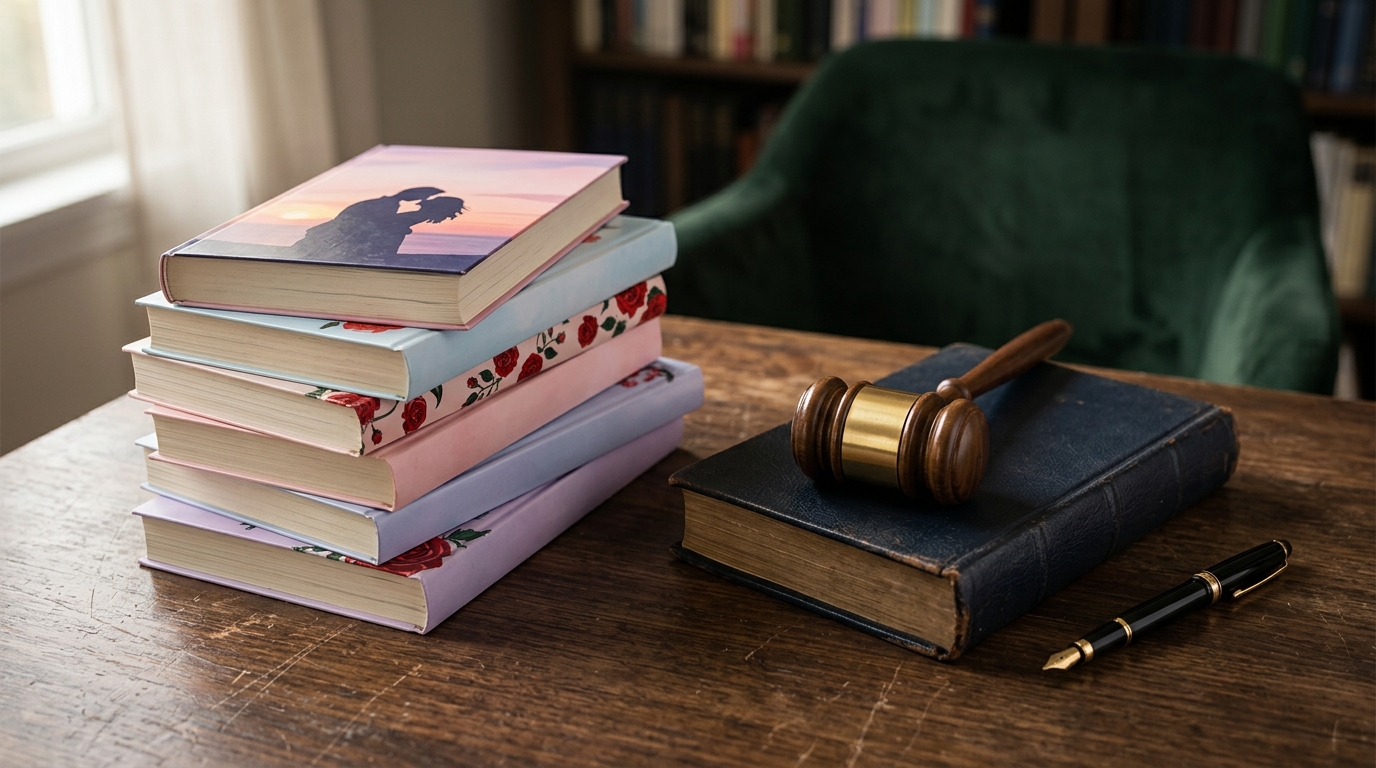
Yes, a pen name changes a few legal details. Under U.S. Copyright Office guidance, an author registering a pseudonymous work does not have to give their full real name. Still, Circular 32 on pseudonyms notes that registration records are public, and the Office says it will not remove a name after it issues the certificate.
The length of copyright protection depends on whether the author's legal name is on file. For U.S. works created on or after January 1, 1978, protection generally lasts 95 years after publication or 120 years after creation, whichever is shorter. If the author's legal name appears in Copyright Office records, the term is the author's life plus 70 years instead.
A pen name can also work as a trademark, but not always. A name used only as a byline may be refused registration, because it just tells readers who wrote the book. A name that identifies a whole series of works may qualify, which is why series names often carry more weight than a single author signature.
If an author ever wants to register a trademark, the cost is worth knowing. The USPTO electronic base application fee is $350 per class, based on its fee schedule revised August 14, 2026. A class is a category of goods or services, and a later statement of use can add another $150 per class.
AI-written books can be uploaded under a real author's name, so a favorite writer's profile may suddenly list titles they never wrote. That happened to romance author Olivia Sinclair. A September 18, 2026 report described six suspected AI-written children's books on her Amazon profile. After the report, those books were delinked from her profile.
The same September 2026 reporting said Amazon limited authors to 10 self-published books per week per book format. It also said Amazon sometimes requested identity verification from accounts. Those limits and checks make impostor uploads harder, but they don't remove the risk entirely.
So when you're about to buy from a name you already love, take a quick look first. Scroll the author page and check that the titles match the steamy, swoon-worthy romances you know. Then read the book description closely. If the genre, age range, or tone feels off, pause before you click.

The fastest way to find an author's other pen names is their official website, which often lists every name they write under. J. D. Robb's official site, for example, shows the pen name tied to Nora Roberts. Once you have a list, you can confirm each match before you buy. Here's how to do it:
Ready to start your own treasure hunt? Pick one author you already love, such as Jennifer L. Armentrout, and open her official website or the author page on your favorite reading site. Write down every name you find, including Armentrout and J. Lynn. Then follow each one, so a new steamy release under either name lands in your feed.
Next, read the blurb of the first book under each new name. If it sounds like the romance you crave, add it to your reading list. If it doesn't, you've just saved yourself a surprise on a quiet night.
Romance book cover artists make a novel’s mood, characters, and subgenre visible before you read a page. They use details such as lush botanical colors, comic-inspired gazes, and hand-drawn lettering to set the scene. With nearly 40 million romance print copies sold in 2023, covers offer a vivid way to discover your next swoon-worthy binge-read, TIME reported.
From botanical detail to bold, character-led illustration, romance covers offer plenty of styles to explore.
Romance cover artists stand out when their choices make a story’s emotional promise clear at a glance. Some covers feature photographic couples; others use character-led illustration, collage, bold lettering, or digital painting. Color can suggest warmth, danger, or longing, while composition draws your eye to a gaze, a gesture, or the title. Together, these choices can hint whether your next swoon-worthy read is tender, steamy, funny, or rooted in a subgenre such as western romance.
WBUR reports that Somerville-based illustrator Monique Aimee had designed around 40 covers for authors on the East Coast, in England, and in Australia. She often gives an art director three initial sketches and draws her own lettering rather than using pre-existing fonts. WBUR’s coverage describes her approach.
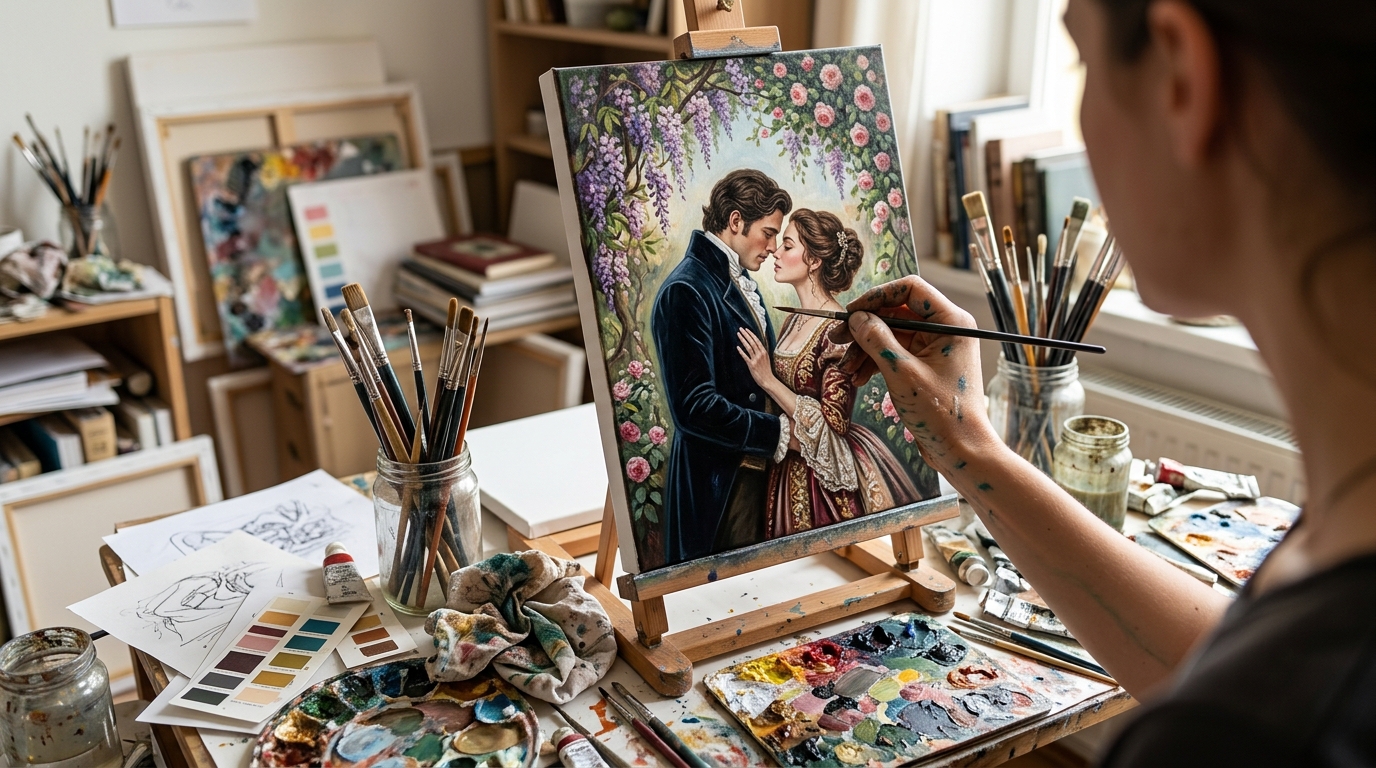
Several romance cover artists are worth knowing for the distinct visual worlds they create. Natasha Cunningham draws on nature’s colors and textures, often weaving plants and flowers into her covers. Jenifer Prince looks to romance comics and pulp novels from the 1940s to the 1960s, using bold colors, intense gazes, and moody lighting. Liza Rusalskaya starts with inspirations, sketches, mood boards, and a client brief; her cover art is primarily digital. Austin Drake’s illustrated kissing-couple cover for Lyla Sage’s Done and Dusted drew on romance comics and helped inspire pop-art nostalgia in western romance visuals. Publishers Weekly’s coverage explores these artists and trends.
Romance covers have shifted from photographic couples in passionate embraces to illustrated, character-led designs, though older styles keep returning. The embrace-focused jacket is often called a “clinch cover.”
Retro touches also appear in western and monster romance, where you might spot pulp-inspired art, bold colors, or comic-book styling. No single look defines either subgenre.
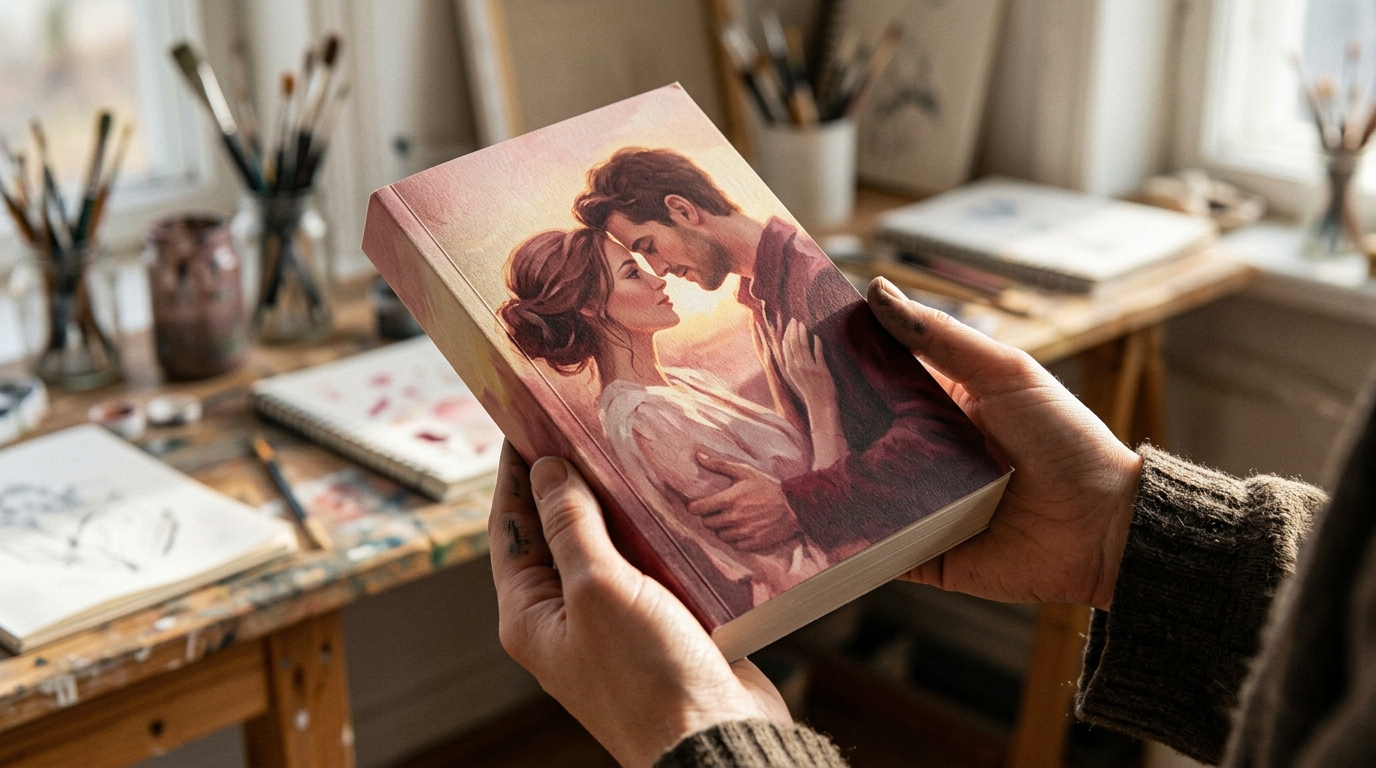
A romance cover can hint at a book’s emotional tone, character focus, and subgenre, but it can’t promise what happens in the story. Flora and natural textures may suggest a setting close to nature or a softer mood, while comic-inspired gazes and moody lighting can put the characters’ attraction front and center. Bright pop-art colors may signal a playful, punchy feel, and bold lettering can add energy.
As you browse for your next binge-read, compare covers and notice which styles catch your eye. Then check each book description for the actual premise, characters, and romantic setup.
You can follow romance cover artists by tracing a favorite cover to its creator and keeping up with their credited work. When a cover catches your eye, try this simple routine:

Before commissioning a romance cover, agree in writing on ownership, permitted uses, source files, and licensing terms. Prices and rights depend on the project’s scope and license. Starting prices range from $300 for commissioned covers to $2,800 for custom cover illustration, and a typical project timeline can be four to six weeks. Under U.S. Copyright Act §201, copyright initially vests in the work’s author or authors. Commissioned art is not automatically a work made for hire in every case; when it qualifies, the commissioning party is considered the author and owns the rights unless the parties agree otherwise in a signed writing. Put the agreed rights and uses in the contract before work begins.
Pick the cover style you want more of: Natasha Cunningham’s botanical detail, Jenifer Prince’s pulp-comic mood, or Monique Aimee’s hand-drawn lettering. Search the artist’s name with “romance covers” and jot down titles that catch your eye. Before buying, check your library catalog or current ebook promotions. A cover can lead you to a new author without committing to a full-price book. If you find a title for free or at a discount, read the description and sample first to see whether the characters and romantic setup sound right for your next swoon-worthy binge-read.
A romance novella often runs about 20,000–40,000 words, but there’s no single length range that applies to every romance book. Romance guidelines use different ranges: 20,000–40,000 words is one example, while short stories may be fewer than 20,000 words and novels may be 40,000 words or more. These categories give you a helpful point of comparison, but publishers don’t all sort books the same way. Writers can also check Cupid’s Arrow Publishing’s guidelines when comparing submission requirements. If you’re looking for a quick, focused love story rather than a full-length binge-read, check the listed length to get a better sense of what to expect before settling in with a swoon-worthy couple.
Guidelines vary by publisher. Some romance guidelines use a broader novella range of 25,000–50,000 words. That variation means “novella” alone can’t tell you exactly how long a book will feel. Page totals are less dependable because editions and text layout affect the number of pages, while a book’s stated length gives you a steadier way to compare books. Writers can also consult Hachette Book Group’s Forever Yours guidelines for submission requirements. Check the format, blurb, and listed length together, then choose a story to suit your mood, whether you want a brief steamy escape or a longer romance with more room to linger.
A romance novella may be classified as 20,000–40,000, 25,000–50,000, or 30,000–40,000 words, depending on the guidelines. No single boundary applies to every book. These ranges suggest a quick, focused romance, but the label alone can’t tell you exactly how much story you’ll get. The listed length and the publisher’s classification offer a clearer idea.
Some publisher guidelines use 30,000–40,000 words as an ideal novella range. A book in that range may still differ in plot, pacing, and how much space the couple’s relationship gets. Writers can also consult Quills & Quartos Publishing’s guidelines when choosing a target. The number of words is a guide to length, not a promise about your reading experience.
Publishers can also set different targets by imprint or subgenre. For instance, contemporary and historical romance manuscripts may have different length ranges from paranormal romance manuscripts. This variation shows that “novella” may reflect a particular publisher’s categories rather than one standard used across romance.
Award categories can have their own definitions, too. The 2026 Nebula Awards rules classify a novella as 17,500 to fewer than 40,000 words, with novels starting at 40,000 words. The Nebula Awards recognize science fiction, fantasy, and related genres, so their classification isn’t a universal rule for romance.
When you see “romance novella,” treat it as a helpful sign that the story is shorter and more focused than a full-length romance, not as an exact measurement. A listing that includes the number of words makes it easier to compare books, even when their publishers use different cutoffs. The specific guidelines behind the label add context, especially when a publisher sorts lengths by imprint or subgenre.
Romance word counts vary because publishers and imprints set their own boundaries, and some use different ranges for different subgenres. A “novella” can mean one length in a contemporary romance list and another in a paranormal romance list.
Some guidelines consider contemporary and historical romance manuscripts of 15,000–55,000 words, while others consider paranormal romance manuscripts of 15,000–60,000 words. These ranges show how much the category can vary, even within one publisher’s guidelines.
Subgenre helps shape what you can expect from a story, but it doesn’t set one fixed length. A contemporary romance such as Beach Read by Emily Henry, a historical romance such as A Knight in Shining Armor by Jude Deveraux, and a paranormal romance such as A Discovery of Witches by Deborah Harkness each offer a different story world. They’re examples of their genres, not promises about novella length.
For writers, the intended publisher or imprint matters more than a general definition of “novella.” A manuscript that fits one publisher’s range may fall outside another’s, even when both are considering the same subgenre. Check the current submission guidelines for the specific publisher or imprint you’re targeting, including any separate ranges for contemporary, historical, or paranormal romance.
For you as a reader, the novella label gives you a broad category, not an exact measure of a book’s length. The listed length offers a more specific sense of length, while the publisher or imprint’s classification can explain why the book carries that label. If a listing includes both, use the number to compare titles and the classification to understand how that publisher groups them.
A novella falls between a shorter story and a full-length novel. It gives a romance room for a relationship to develop while keeping the reading experience more focused than a novel. It can follow a couple through attraction, conflict, and a meaningful choice without taking the longer route a full-length story might. The result can still feel swoon-worthy and emotionally complete, with less room for side plots and extended subplots.
Short-story, novella, and novel labels don’t divide romance into one universal set of word counts. A separate awards classification from science fiction, fantasy, and related genres defines a novelette as at least 7,500 but fewer than 17,500 words, a novella as 17,500 to fewer than 40,000 words, and a novel as 40,000 words or more. Romance publishers use their own ranges, which can differ from those awards categories. Those thresholds are an awards classification for those genres, not a rule every romance publisher follows.
That difference matters when you compare labels. One publisher may set a different novella range from another, while an awards category sorts eligible works into defined length groups. A romance described as a novella can therefore fall outside the novella range used by an awards classification and still fit its publisher’s romance guidelines. The label tells you how a particular publisher or classification groups the work, while the stated length gives you a clearer sense of its size.
Length doesn’t determine whether a love story feels satisfying. The Romantic Novelists’ Association defines romance around a healthy relationship dynamic between the main characters and an uplifting, positive resolution, such as a happily-ever-after or happily-for-now ending. A novella can deliver that relationship arc in a focused way, without needing the breadth of a full-length novel. For a familiar example of a romance centered on a changing relationship, The Kiss Quotient by Helen Hoang follows Stella and Michael as their connection develops. A shorter romance can give its own couple room to build trust and reach a positive ending, while keeping the story moving at a brisker pace.
A romance novella has no dependable page count. The total changes with the edition and the way its text is laid out. A paperback, hardcover, and ebook can present the same story across different numbers of pages. In print, trim size, font, spacing, and margins all affect how many pages the text fills.
An ebook may let you change the text size or screen layout, so the page total can shift with your settings. Some digital listings show reading locations instead of a fixed page count. An audiobook listing may give you a runtime rather than a page count, which is more useful for estimating how long listening will take.
A book’s length in words gives you a steadier way to compare the length of two books. Page counts can still help when you’re choosing a specific edition, but they work best alongside the format and other details in the listing. A romance such as The Hating Game by Sally Thorne is a reminder that a page total belongs to a particular edition, not to romance as a whole.
When you’re picking a quick read, check whether the listing is for print, ebook, or audio, then look for the listed length, page total, or runtime provided for that format. A paperback page count can help you picture the physical book, while an audiobook runtime gives you a clearer sense of listening time. If the listing gives only a page total, treat it as a detail about that edition rather than a universal measure of novella length.
The blurb can also help you decide whether the story suits the time and mood you have. A focused romance about one couple may be just right for a short reading window, while a book with a larger cast or several subplots may call for a longer stretch. Together, the format, listed length, and story description give you a more useful picture than pages alone.
A short romance often keeps your attention on the central couple, moves through key relationship moments in a compact span, and leaves less room for secondary plots than a longer novel. That focus can make the connection feel immediate because you spend more of the story with the people whose choices and feelings drive the romance. If you’re in the mood for a swoon-worthy escape, a novella can give you a satisfying love story without a long wait to reach its emotional turning points.
Courtney Milan’s historical romance novella The Governess Affair centers on Serena Barton and Hugo Marshall. Their relationship unfolds amid a conflict involving the Duke of Clermont, which adds tension alongside the developing romance. The historical setting and the couple’s circumstances make the story feel distinct, while its compact scope keeps their connection in the foreground.
A shorter format can also mean fewer scenes devoted to friends, family, or other romantic pairings. You may get glimpses of those characters, but the story has less space to follow several separate arcs in depth. That doesn’t mean every novella moves at the same speed or uses the same structure. Some linger over a couple’s growing trust, while others move briskly through attraction, conflict, and a decision that changes the relationship.
A brief story can still pack an emotional punch. A romance can build anticipation, make you care about the couple’s choices, and deliver a meaningful payoff without taking the length of a full novel. Romance readers may also look for an uplifting resolution, such as a happily-ever-after or happily-for-now. That positive ending can feel earned when the couple has faced a real obstacle and reached a future together, even if the story stays tightly focused on them. A quick read can still leave you smiling over the couple long after you’ve turned the last page.

You can choose a quick romance read by checking its listed word count, then matching the story, heat level, and format to your mood and budget. Use this short checklist to find a steamy, swoon-worthy binge-read without assuming every book called a novella will take the same time to finish.
CraveRomance publishes romance recommendations and information, but it doesn’t sell books. Check book listings for current format and pricing details, then choose the story that fits your reading mood.
If you want a quick historical romance, try Courtney Milan’s The Governess Affair. Search for the title in your library’s ebook or audiobook catalog and in the book sources you already use. Compare the formats and current prices, and check whether a free library copy or low-cost offer is available before choosing where to read. Availability and deals can vary by title and source.
If you’re unsure whether a novella will suit your mood, read the book description and a sample when one is offered. For The Governess Affair, look for clues about the couple’s conflict and the Duke of Clermont’s role in the story. A sample can help you decide whether Milan’s historical setting and writing style appeal to you before you commit.
Want a different kind of romance? Choose the setup you’re craving, then search for a title with a listed length and compare it with the publisher’s label. Keep a short list of promising books in your reading app or notes, including the format and price you found. When you spot a free or inexpensive option that fits your mood, you’ll have your next read ready instead of starting your search from scratch.
Romance bookstore displays can help you find your next read by grouping novels by trope, mood, or subgenre and highlighting staff picks. A steamy contemporary favorite beside a romantasy novel can make a new author feel less daunting and help you build a binge-read shortlist.
Bookstore Romance Day offers another way to discover new reads, with activities such as blind-date bundles and author events. Participating shops may advertise discounts or free activities. More than 550 bookstores across the U.S., Canada, and U.K. took part in 2024, compared with just over 150 at the event’s 2019 debut, according to Romance Writers of America.
Romance displays make promising books easy to spot, help you explore a subgenre, and introduce you to authors you may not know. Stores use section placement, staff recommendations, themed displays, and events to encourage browsing. You can follow a cover, a mood, or a shelf label without arriving with a specific title in mind.
Romance is also gaining visibility: U.S. print romance-book sales rose almost 9% in 2024, according to Publishers Weekly’s report on Circana BookScan data.
A clearly marked section in a prominent spot, paired with recommendations, can make romance feel welcoming, even if you’re new to the genre. Whether you loved The Love Hypothesis or are simply curious about a swoon-worthy love story, displays can help you find your next binge-read without knowing an author or title in advance.
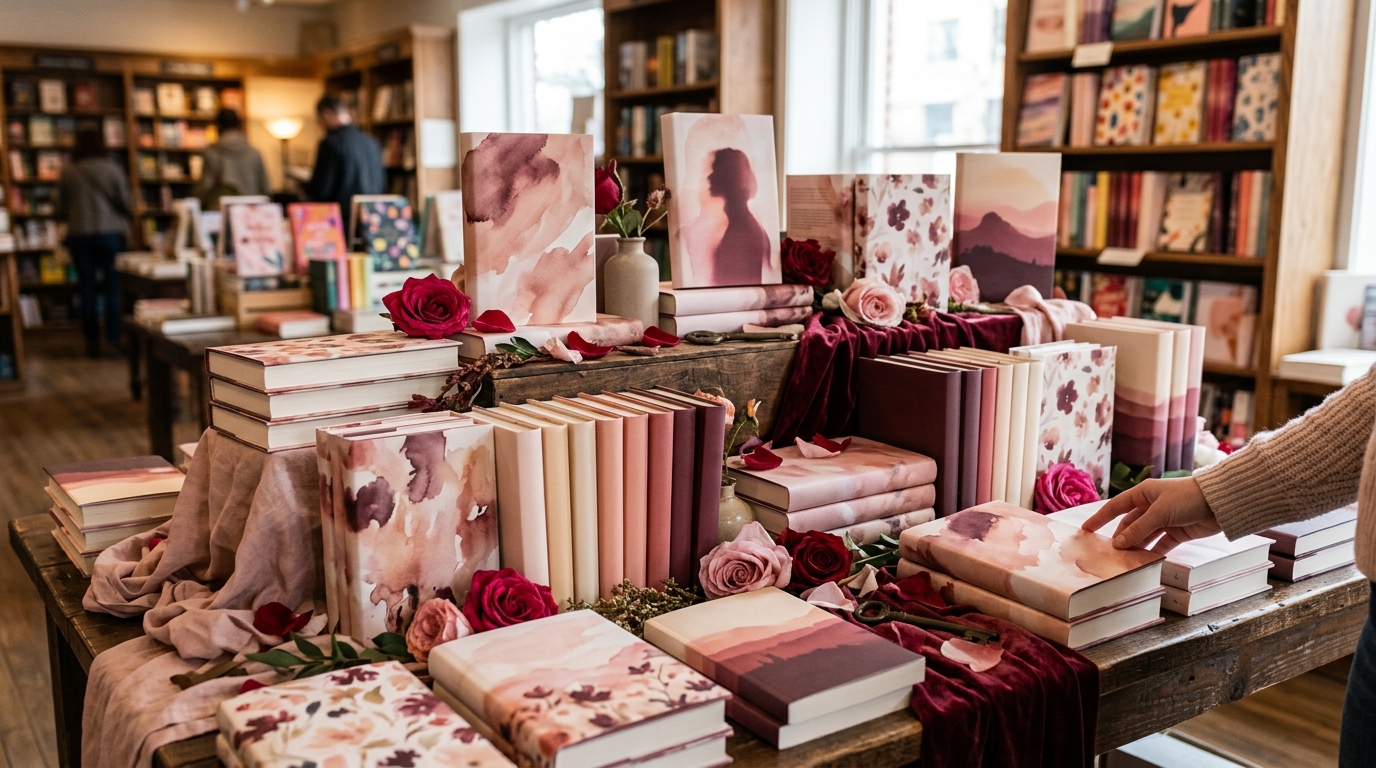
A themed romance table lets you browse for the kind of story you want, not just by author or bestseller status. A “yearning” display might gather slow-burn love stories, while a second-chance table could feature Before I Let Go by Kennedy Ryan. A small-town love table might pair Lucy Score’s Things We Never Got Over with a title you haven’t tried yet.
Subgenre themes make it easier to find a particular mood, too. A contemporary romance display could include The Kiss Quotient, while a romantasy table might place the familiar favorite Fourth Wing beside a less familiar choice like The Undertaking of Hart and Mercy. Queer romance and dark romance can each have their own table, giving you a clear path to the stories you’re craving.
Mixing well-known books with less familiar choices gives you a comfortable starting point and a chance to discover a new author. You might come for a favorite trope and leave with a swoon-worthy binge-read shortlist.
Staff picks welcome new romance readers with friendly recommendations and brief notes that make an unfamiliar section easier to explore. If you’re an avid reader, a staff pick can also introduce you to a fresh trope or author beyond your usual favorites.
A bookseller said the shop first added one or two romance titles a month to her staff picks, starting with a selection that was 70% contemporary romance, as Shelf Love reported. The shop later moved its romance section to a prominent spot at the front of the store and used staff shelf-talkers and recommendations to help readers find it.
Look for short staff notes that explain a book’s mood, trope, or appeal, rather than relying on a display label alone. A note describing The Hating Game as a witty workplace-rivals story, for example, gives you a quick sense of its vibe before you pick it up.
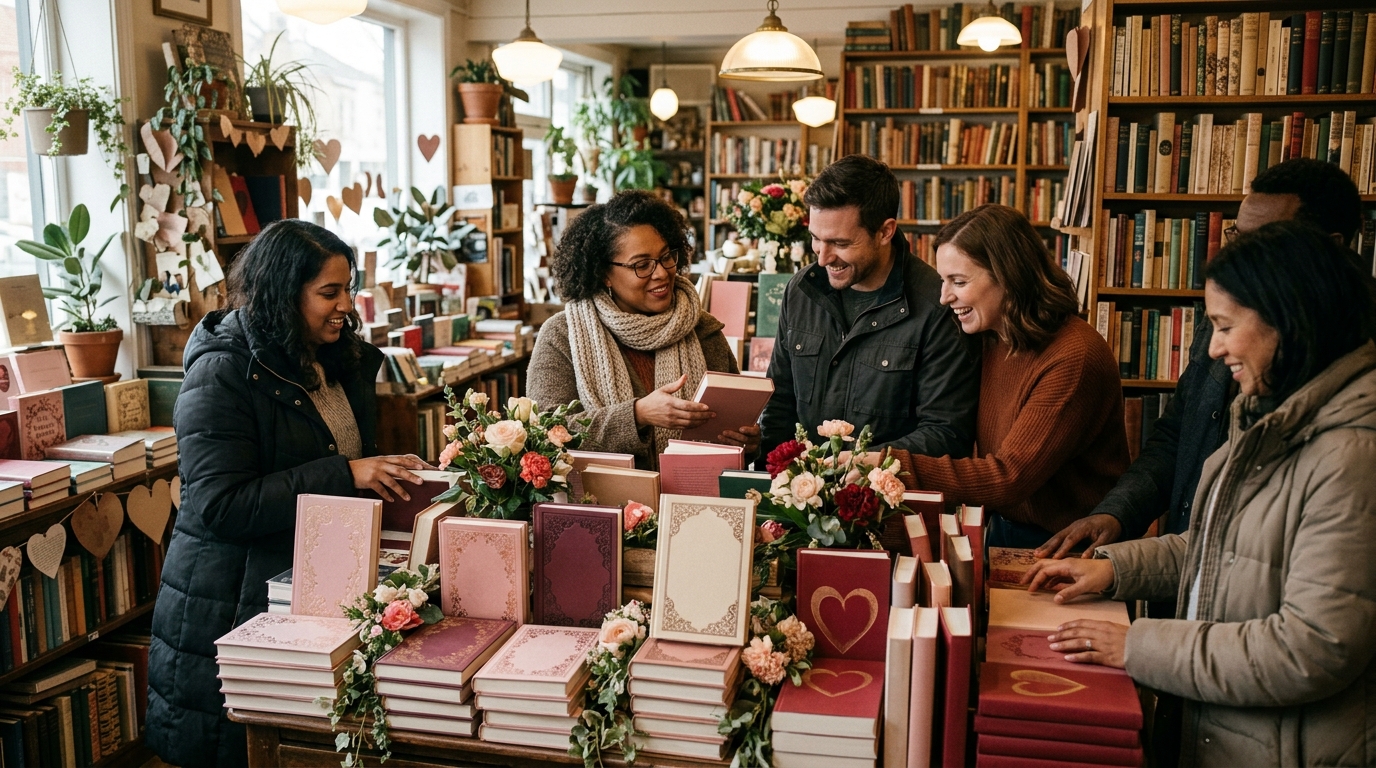
Bookstore Romance Day adds a social spark to romance displays. This recurring promotion takes place on the third Saturday in August. The event’s participating-bookstores page lists August 15, 2026, as that year’s date.
The event grew from just over 150 bookstores at its 2019 inaugural celebration to more than 550 bookstores in the U.S., Canada, and U.K. in 2024, according to Romance Writers of America.
At participating stores, you might find author appearances, blind-date bundles, or themed activities where readers can compare favorite tropes and swap recommendations. Some shops advertise discounts, and some events are free to attend, giving you a chance to discover a swoon-worthy pick without paying an event fee.
For affordable finds, check event listings and individual store announcements for advertised deals, free activities, and event details. Offers vary by bookstore, so a discount or free event at one shop doesn’t mean every participating store has the same promotion.
Reader-participation displays can invite customers to share favorite rereads or book recommendations. Romance Writers of America also gives a Mardi Gras-themed “Beads for Books” display as an example.
The Professional Booksellers School recommends choosing titles based on reader interest, newness, customer appeal, and likelihood to sell, then changing the selection often. Displayed books should still have at least one copy in their regular section, and tables should use orderly, tiered rows so covers are easy to see.
Displays should not block accessible paths. The U.S. Access Board’s ADA Standards for Accessible Design specify a 36-inch minimum clear width for accessible walking surfaces, with limited exceptions allowing 32 inches for short segments.
Plan your next bookstore stop by using the Bookstore Romance Day participating-bookstores list to find a shop you can reach. Check the shop’s event details before you go, then choose what suits your mood: an author appearance, a themed activity, or time to browse.
If keeping costs down matters most, look for a clearly advertised discount or free admission, and check whether a bundle has a separate price before choosing one. Want a surprise? Choose a blind-date bundle only if its cost fits your budget. Prefer to pick your own book? Try a staff pick or a title from a themed table, read the description, and ask a bookseller for a similar romance with a different trope or mood. You’ll have a clear next step, whether you’re ready for a steamy new favorite or just starting to explore.
In the U.S., romance book censorship mostly means challenges and access restrictions in school libraries, not a general ban on publishing or selling romance novels. In 2023–2024, PEN America reported that seven romance or romance-adjacent titles or series were banned in at least 20 public school districts. The titles included A Court of Thorns and Roses.
The American Library Association’s 2025 challenged-books list ranked Sarah J. Maas’s Empire of Storms fourth and A Court of Thorns and Roses seventh among targeted titles. The ALA and PEN America use different tracking methods, so their counts are not interchangeable. These disputes can affect which swoon-worthy stories students can access.
In current U.S. coverage, romance-book censorship mostly means challenges and access restrictions in school libraries, not a general ban on publishing or selling romance novels. A title may receive a complaint or become harder to access at one school while remaining available elsewhere. The American Library Association (ALA) defines a challenge as an attempt to remove a library resource or restrict access because of an objection. In the ALA’s terms, a ban is the removal of library materials based on an objection. A challenge does not automatically mean a book has been removed. The ALA’s definitions can help you tell the difference. A title on a list is not automatically unavailable to every reader, and its appearance does not mean publication or sale has been prohibited. For you as a romance reader, that distinction matters: a swoon-worthy story can face restrictions at a school without disappearing from the broader book market.
Several romance and romance-adjacent titles have appeared on reported school-ban and challenge lists, including books by Sarah J. Maas, Malinda Lo, and Casey McQuiston. PEN America reported that seven romance or romance-adjacent titles or series were banned in at least 20 U.S. public school districts during the 2023–2024 school year. Examples included Maas’s A Court of Thorns and Roses and Throne of Glass series, Lo’s Last Night at the Telegraph Club, and McQuiston’s Red, White and Royal Blue. Read PEN America’s report.
The ALA’s 2025 challenged-books list also featured Maas’s work: Empire of Storms ranked fourth, while A Court of Thorns and Roses ranked seventh among the most targeted titles. See the ALA’s 2025 list.
Some books on these lists are romance-adjacent rather than straightforward genre romance. The lists cover specific time periods and use different tracking methods, so they offer snapshots of reported activity, not a definitive ranking of the most censored romance books. PEN America’s school-ban definition explains its approach. A title’s appearance on one list does not show how often it has been challenged in every setting.
Objections to sexual content feature in recent reporting on challenged books, but they do not explain every challenge or mean that all romance novels are alike. Romance ranges from Sarah J. Maas’s romantasy to Casey McQuiston’s queer romance Red, White and Royal Blue. Concerns raised about either book do not tell the whole story or explain its appeal to readers. Organized pressure can also influence which titles come under scrutiny. The American Library Association reported that pressure groups, government officials, and decision makers initiated 92% of reported book challenges in 2025, compared with 72% in 2024. The ALA’s report shows why it helps to ask who is raising an objection, not just what content they cite. School library staff must consider concerns about age-appropriate access while helping students find books that reflect different experiences and relationships. You can care about what is suitable for a particular age group and still ask who gets to decide what other readers may encounter.
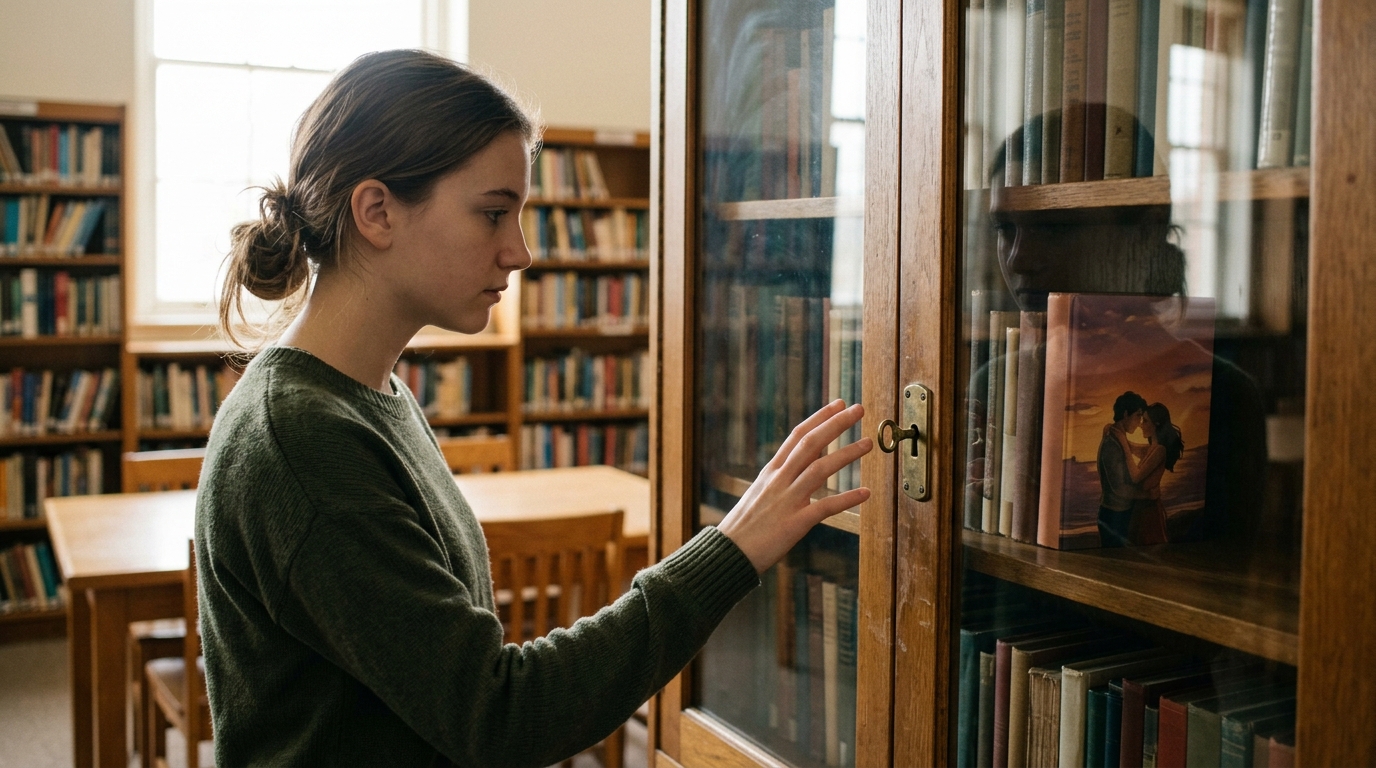
School rules can make a challenged romance book temporarily harder for a student to access, but the effect depends on the state and school. In Florida, Florida Statutes § 1006.28 requires certain challenged school materials, including materials objected to on specified grounds involving pornography or depictions or descriptions of sexual conduct, to be removed within five school days after the objection. Under the Florida statute, the materials must remain unavailable to students at that school until the objection is resolved.
That is a Florida rule, not a nationwide legal requirement. A temporary restriction can affect what students borrow while a review is underway, before a final decision is reached. It applies to access at that school, not necessarily at every school or library in Florida.
A title may be unavailable in a student’s school library while remaining published and available elsewhere, such as through a public library or bookstore. Availability varies by location, and a school-library restriction does not itself prohibit publication or sale.
If you’re hoping to read a particular steamy or swoon-worthy title, ask a librarian about local access and other reading options. A librarian can explain what is available nearby, though they cannot guarantee that a specific book is on the shelf.
You can follow a romance-book challenge by checking the school or library’s public information and asking staff how the review process works. A challenge, a restriction, and a removal are not the same thing. The American Library Association defines a challenge as an attempt to remove a resource or limit access, while a ban means removal based on an objection. The ALA’s definitions can help you understand what a local notice describes. Look for updates from the school district or library about the title and its review, rather than assuming a complaint means the book is gone. Ask a librarian which romance titles remain accessible and how decisions are made. You may get a clearer picture of a local challenge and discover your next binge-read, whether you’re in the mood for romantasy or a swoon-worthy love story. Thoughtful discussion can make room for questions about readers’ access, authors’ work, and librarians’ responsibilities. You can raise concerns about how a decision affects readers without shaming people who bring concerns about a book to the library. A balanced conversation recognizes that readers may lose access to stories they value, authors’ work may be restricted, and library staff must follow review processes while serving their communities.
If you are a student or parent trying to find a title in a school library, note the book’s full title and the school, then ask library staff whether the book is available, temporarily restricted, or removed. Ask who is reviewing the decision, where the district posts updates, and how you can submit a comment. Those details can help you decide whether to check back, speak at a board meeting, or look for the book elsewhere.
If you are responding as a reader, read the district’s review policy before writing. Keep your message specific: name the title, explain why access matters to you, and ask how students can find books with a range of romance stories while the review proceeds. Avoid calling a challenge a final ban unless the district says the book has been removed.
For your next steamy or swoon-worthy read, search your public library catalog by author or subgenre before spending money. If your pick is not listed, ask whether another branch has it or whether a librarian can suggest a similar romantasy or queer romance. When sharing an update with other readers, use the ALA’s definitions to say whether a notice reports a challenge or a removal, then point friends to the district’s own update.
Romance publishing has no single starting point. Samuel Richardson’s Pamela: or, Virtue Rewarded appeared in 1740, while dime novels and story papers later brought romance to more readers. Formats keep changing, but the pull of a central love story endures. Explore Cambridge University Press’s account of Pamela.
In 1860, Beadle & Company issued American paperback fiction for 10 cents, making stories easier to find and collect, as the Library of Congress records. Today, romantasy and sports romance bring fresh tropes to a genre shaped by changing formats. That history makes your next binge-read even more fun: you can spot what feels new and enjoy the swoon-worthy promise that endures.
Romance publishing developed gradually through earlier courtship fiction and later publishing traditions, rather than beginning with one universally recognized first romance novel. Samuel Richardson’s Pamela: or, Virtue Rewarded was published anonymously in Britain on November 6, 1740, in two volumes. By May 1742, it had reached its sixth edition, according to Cambridge University Press. Its success makes Pamela an important landmark, but not the single starting point for every tradition that shaped romance.
Looking back at older courtship stories and comparing them with the books you might binge-read today helps you see how the genre has changed. Similar themes can connect them, even when the formats, expectations, and endings differ.
The modern genre has a useful boundary: Romance Writers of America defines romance by a central love story and an emotionally satisfying, optimistic ending, as Kirkus Reviews explains. That definition helps you spot what has endured: the promise of love at the story’s heart. It also shows how romance has made room for new styles and subgenres. From Pamela to today’s swoon-worthy reads, the genre’s history is a long conversation among readers, stories, and the ways books reach you.
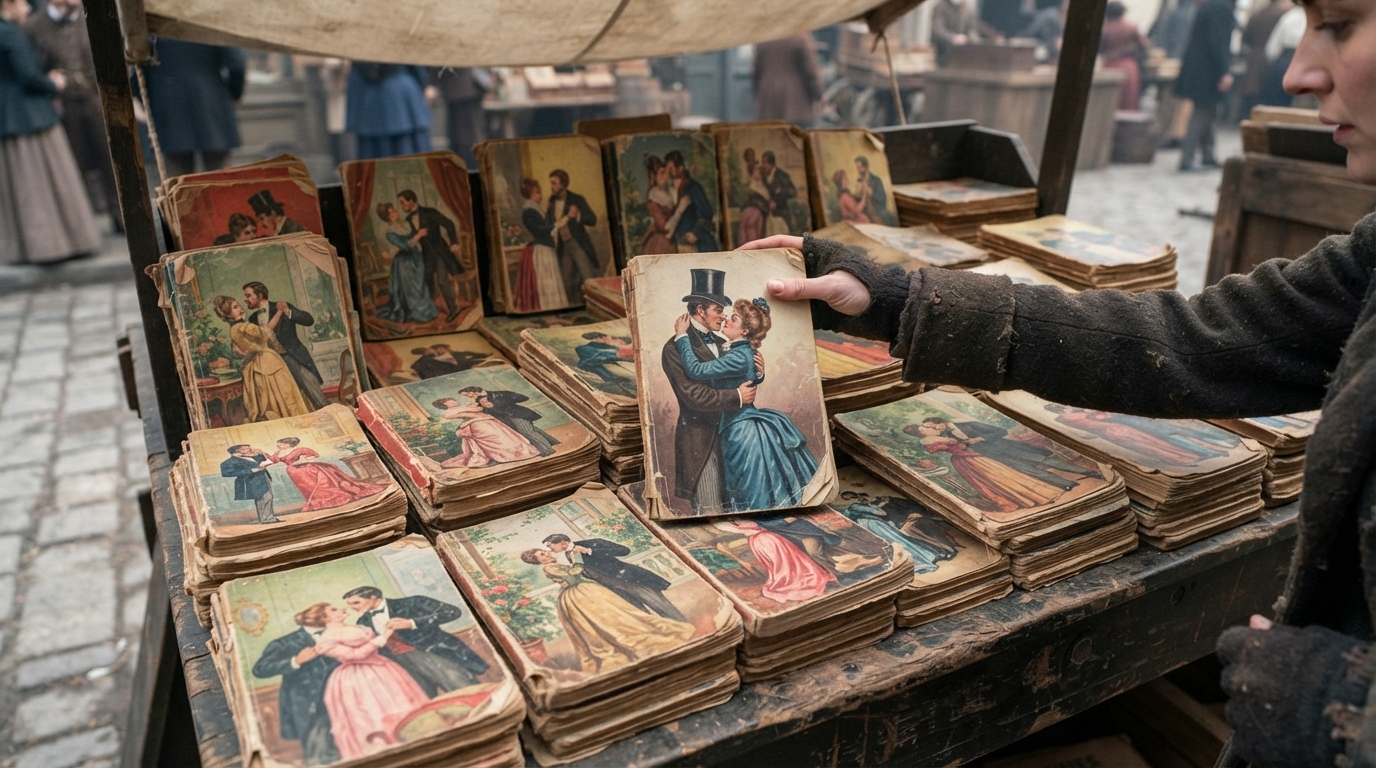
The Library of Congress dates the first American fixed-price paperback-fiction series to 1860, when Beadle & Company issued volumes for 10 cents. A set price made the cost clear before readers picked up a story, while the series format gave fiction a recognizable form. Romance could reach readers through a format designed to be accessible and collectible.
Romance story papers emerged in the United States in the 1870s, according to William A. Gleason’s scholarly account. Readers could find love stories in several kinds of print publications, not just in a single novel format. That variety gave romance more ways to reach readers as they browsed.
By the 1890s, romance-centered dime-novel series and libraries were consolidating, according to William A. Gleason’s scholarly account. Series and libraries helped establish romance as a recognizable publishing category and gave readers a way to follow and collect related titles.
There’s a familiar thrill in finding a format that makes it easy to discover another story you want to read. Today, your next binge-read can bring that same swoon-worthy sense of possibility, even as the books and ways of finding them change.
Gerald Mills and Charles Boon founded Mills & Boon in 1908 with £1,000. The company published general fiction as well as romance, so it did not begin as a romance-only publisher. Over time, Mills & Boon became closely associated with a recognizable style of romance publishing.
Harlequin followed a different path. Founded in Canada in 1949, it published its first Mills & Boon title in 1957. By 1959, 34 of the 54 books Harlequin published were Mills & Boon titles. Mills & Boon was the established source of those romances, and Harlequin’s list increasingly featured them for its readers.
The category-romance model made it easier to recognize the kind of reading experience a book promised. Familiar series names and packaging could help you spot a new romance among other books and imagine what sort of swoon-worthy story might be inside. When you finished one, you could look forward to finding another in that familiar style.
Category romance was one important path in romance publishing, but it wasn’t the only form the genre took. Readers also found love stories in novels with different lengths, packaging, and storytelling styles. Recurring series gave publishers a way to group books and gave readers an easy route back to the kinds of romance they enjoyed. If you’re ready to binge-read, finding the next steamy story in a familiar line can feel like welcoming an old favorite while meeting a new couple.
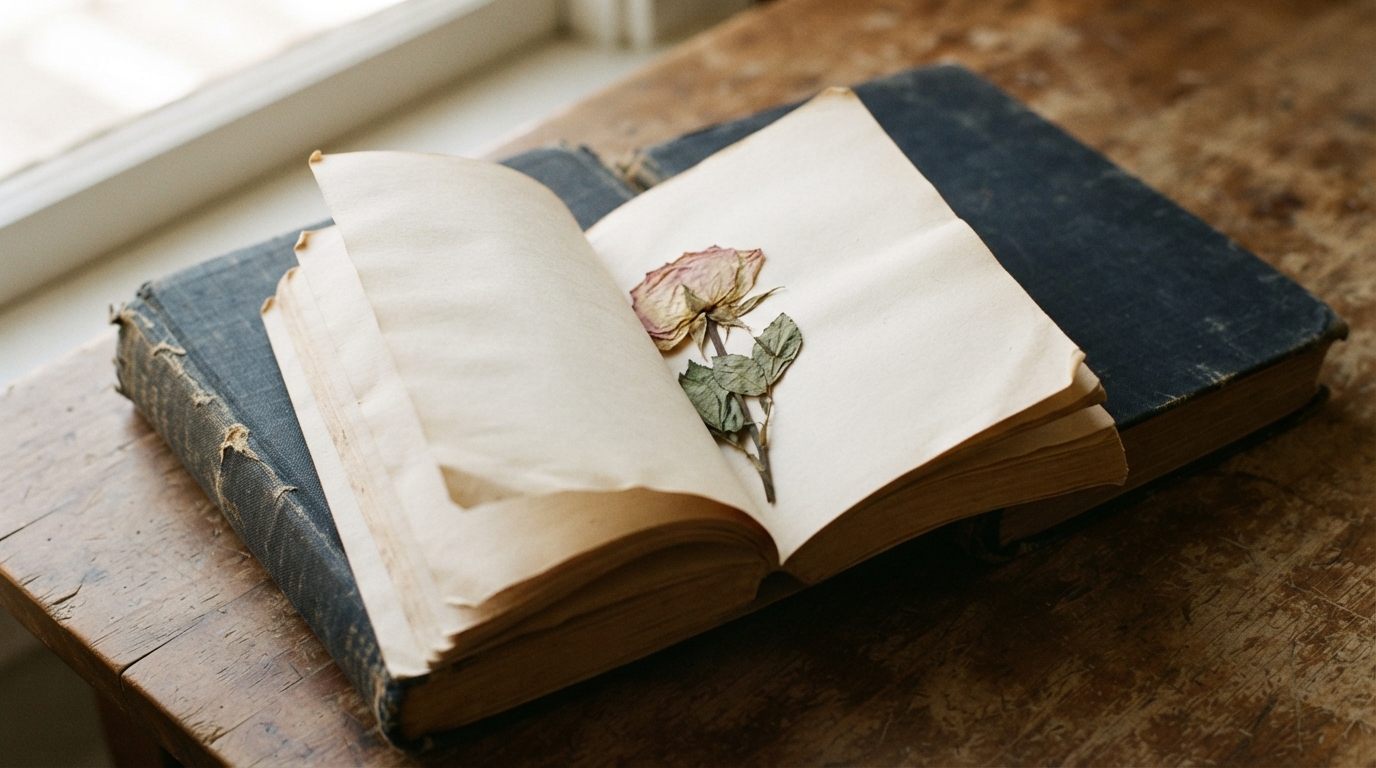
Paperbacks helped shift romance from short, familiar series toward roomier stories. Mills & Boon reported that paperbacks accounted for 50% of its turnover in 1966. In 1968, it published 72 paperback romances, and its standard book ran 188 to 192 pages. Paperbacks gave readers another way to discover romance, while longer novels could make room for more expansive stories.
Kathleen E. Woodiwiss’s The Flame and the Flower, published in 1972, is widely considered the first modern romance, not the first romance in history. Duke Today reports that the novel sold more than 3 million copies. Its success helped expand expectations for a romance’s length, packaging, and sexual content.
The book offers a bridge from category romance, with its recognizable series format, to fuller-length stories that could take a different shape. That shift helps explain why romance has no single style: a familiar series read and a sweeping, steamy novel can both belong on your reading list. Today’s range of formats and storytelling styles has roots in publishing changes like those The Flame and the Flower helped bring into view.
Romance has a recognizable framework: a love story at the center and an emotionally satisfying, optimistic ending. The Romance Writers of America definition gives you a useful guide to the genre. The setting, tone, and obstacles may change, but the story’s emotional promise still matters.
Pamela: or, Virtue Rewarded was published as a two-volume work, an example of the varied forms that helped shape romance publishing. Cambridge University Press’s account of Pamela places the novel in this history.
Romance has grown to include many styles and subgenres. You might find a tender courtship, a steamy historical, or a love story with fantasy elements. The central relationship and hopeful emotional payoff can make each feel like romance. That shared framework lets you enjoy fresh storytelling without treating a new style as a break from the genre’s past.
Recent sales growth shows how romance keeps finding new readers as formats and tastes shift. Circana reported that U.S. adult-fiction print sales grew 1% in 2023, or 1.5 million units, with romance among the subjects leading the increase. New ways of packaging and promoting books have long helped love stories reach readers, from print series to today’s varied shelves. The latest figures show that change is still underway. Circana’s 2023 report tracks the increase.
Romance-book sales rose almost 9% in 2024, according to Circana BookScan data reported by Publishers Weekly. That growth is part of a long publishing story: familiar marketing can help you recognize a type of romance, while new styles give you fresh reasons to pick up a book.
As of June 4, 2025, U.S. romance print sales were up 24% year to date, with 51 million romance units sold in the preceding 12 months. Circana also reported triple-digit growth for romantasy and sports romance in June, alongside a shift toward darker romance themes. Circana’s 2025 report captures readers’ appetite for stories that take the genre in new directions.
Romance’s changing formats and stories have always made room for different kinds of swoon-worthy reads. Knowing that history can make it even more fun to move between a classic such as Pamela: or, Virtue Rewarded and today’s steamy, binge-worthy romantasy and sports-romance discoveries.
Turn your next romance into a trope-tracing project with a book you already own or can borrow. If the description names a trope, write it at the top of a page. As you read, note the scene where that idea first shapes the relationship, then mark a later moment when it changes the characters’ choices. If the description doesn’t name a trope, choose one you notice and track it yourself.
Add two quick notes: what keeps the couple apart and what makes the ending feel satisfying. Those details help you see whether a familiar setup is doing something new in a contemporary story, rather than simply appearing as a label. Keep your notes in a reading journal or on a scrap of paper.
For a historical comparison, read a passage from Pamela: or, Virtue Rewarded or The Flame and the Flower and ask the same questions. Don’t force a modern trope name onto an older book. Instead, describe what the characters do and how the love story develops. Then choose your next read based on what you want more of, whether that’s courtship, a sweeping romance, or a fresh fantasy setting. A simple note beside each title can turn your TBR into a map of the tropes you love to binge-read.
Romance publishing royalties are payments an author earns under a contract or platform formula. For example, the Authors Guild’s Model Trade Book Contract sets ebook royalties at 25% of publisher net receipts. That percentage is only part of the picture. A royalty based on publisher receipts can produce a different payment from the same rate applied to a book’s list price, and print returns may also affect the amount paid. A swoon-worthy novel’s price or popularity alone won’t tell you what its author receives.
Your reading choice matters, too. A low-cost ebook, a paperback, and a binge-read through Kindle Unlimited use different payment formulas. Amazon KDP calculates ebook and print royalties differently, while KDP Select authors earn a share of a monthly fund based on pages read. KDP payments generally arrive about 60 days after the end of the month a sale is reported, or about 90 days for Expanded Distribution. Romance’s growing popularity is exciting: U.S. romance print sales rose 3.9% to almost 44 million units in 2025 at outlets reporting to Circana BookScan, according to Publishers Weekly. But market growth can’t predict an individual author’s paycheck. Understanding the difference can help you follow the business behind your next steamy discovery without taking the fun out of finding a new favorite.
A romance author’s royalty depends on the publishing arrangement, the book’s format, the contract or platform formula, and any applicable deductions. The royalty rate is only one part of the calculation. You also need to know what amount the rate applies to.
A book’s list price is its stated retail price. Publisher net receipts are the money the publisher receives after deductions, which can include discounts involved in selling the book. So the same percentage can produce different payments: a percentage of list price is calculated on the full stated price, while that percentage of net receipts is calculated on a smaller amount.
The Authors Guild notes that a royalty calculated at the same percentage of net receipts can be roughly 40–50% lower than one calculated from list price, because publisher receipts after deductions tend to be about half the list price. A contract’s headline rate alone can’t tell you what a sale may earn. The calculation base matters just as much. The Authors Guild’s explanation
The Authors Guild’s Model Trade Book Contract offers negotiating benchmarks, not guaranteed or universal terms. Its ebook benchmark is 25% of publisher net receipts. The model also proposes that the author and publisher revisit the rate after two years. If they can’t agree within 30 days, the electronic rights may revert to the author. These are proposed model terms, not rules every romance publisher follows. The Model Trade Book Contract
Format can also change the rate and the calculation. In the Authors Guild model, hardcover royalties are based on retail price and rise from 10% on the first 5,000 copies to 12.5% on the next 5,000, then 15% above 10,000, less actual returns. The model sets trade paperback royalties at 7.5% of retail price. Mass-market paperback royalties start at 8% and rise to 10% after 150,000 copies, also less actual returns. The Authors Guild’s print benchmarks
For readers, a title such as The Love Hypothesis is a familiar romance touchpoint, not a clue to what its author earned. A book’s format, contract language, and sales accounting all shape the royalty behind the story. Two swoon-worthy novels with similar prices may still generate different payments for their authors.
A traditional publishing contract may set one royalty formula for a hardcover, another for paperbacks, and a different one for an ebook. The Authors Guild’s Model Trade Book Contract is a useful benchmark, not a promise of the terms a romance publisher will offer. The contract also shows why you need to look beyond the percentage: depending on the format, the royalty may be based on retail price or publisher net receipts.
For hardcovers, the model sets a royalty of 10% of retail price on the first 5,000 copies, 12.5% on the next 5,000, and 15% above 10,000, less actual returns. For mass-market paperbacks, it sets 8% on the first 150,000 copies and 10% thereafter, also less actual returns. The Authors Guild’s model contract
The model’s ebook benchmark uses a different base: 25% of publisher net receipts. The same percentage of receipts after deductions won’t produce the same payment as a percentage of a book’s retail price. Publishers may also negotiate terms that differ from the model, so two contracts with the same headline rate can still lead to different payments.
Self-publishing platforms have their own formulas and eligibility rules. On Amazon Kindle Direct Publishing, ebook royalties depend on the royalty option and whether the book qualifies for it. Print royalties are calculated by applying a rate to the list price, then subtracting printing costs. That means the amount left from a paperback sale follows a different path from the amount earned on an ebook sale.
A subscription read follows another path. Authors enrolled in KDP Select can earn a share of the monthly Kindle Unlimited fund based on pages read. You can binge-read a steamy romance through a subscription without buying a separate ebook copy, so that read is counted differently from a direct sale.
Picture a swoon-worthy romance such as Book Lovers in three forms: a paperback, an ebook, and a subscription read. The paperback’s payment can depend on its royalty rate, price, and printing cost. The ebook’s payment can depend on its platform option and eligibility. The subscription read’s payment can depend on credited pages and the monthly fund. The story is the same, but the payment path changes with the format and terms.
Neither a traditional contract nor a self-publishing platform automatically means more income. The number of copies sold or pages read matters, along with the royalty base, deductions, platform rules, and the author’s specific agreement. A large percentage can look exciting at first glance, but it doesn’t tell you how much money reaches the author for a paperback, ebook, or late-night binge-read.
There’s no single standard income for romance authors. Earnings vary with each author’s sales, publishing arrangement, contract, and platform rules. Romance’s popularity may bring readers to swoon-worthy stories, but it can’t predict any one author’s paycheck. Earnings may depend on how many copies sell or, for subscription reading, how many eligible pages readers complete. Format matters, too: a print copy, ebook, and Kindle Unlimited read can follow different payment formulas. The contract rate and royalty base also shape the result. Returns can affect print royalties, and platform eligibility rules can determine which payment options apply. A royalty rate is not an income figure. It has to be applied to a specific amount, such as a book’s list price or the publisher’s receipts after deductions. The Authors Guild notes that royalties at the same percentage of publisher net receipts can be roughly 40–50% lower than royalties calculated from list price, because receipts after deductions tend to be about half the list price. The Authors Guild explains the difference. For example, two authors might have the same royalty percentage, but one contract could apply it to list price while another applies it to a smaller amount of publisher receipts. Differences in format, sales, or returns could also affect their payments. This example shows how the calculation works, not what romance authors typically earn or what any author is promised. A general royalty percentage can’t tell you how many books an author must sell to earn a particular amount. You’d also need details such as the royalty base, format, actual sales, returns, and any applicable platform rules. The available evidence doesn’t establish how many books an author would need to sell to make $100,000 or who the richest romance author is. So when you pick up a steamy novel such as The Kiss Quotient, its popularity or price alone can’t reveal what its author keeps. Royalty revenue isn’t necessarily the amount an author ultimately takes home. The contract or platform formula, deductions, and payment terms all matter.

Amazon Kindle Direct Publishing pays romance authors through separate formulas for qualifying ebooks, print copies, and Kindle Unlimited page reads. A low-cost ebook purchase, a paperback purchase, and a subscription binge-read may all help an author earn, but they don’t use the same calculation. For U.S. Kindle ebooks, KDP offers a 70% royalty option for ebooks priced from $2.99 to $12.99, effective July 7, 2026, subject to eligibility conditions. KDP also offers a 35% option. If you find a steamy romance as an ebook, the author’s royalty depends in part on which option applies to that book. The ebook price alone doesn’t tell you which option the author qualifies for. Paperback royalties use a different calculation: multiply the royalty rate by the list price, then subtract printing costs. For a 333-page U.S. paperback priced at $15, with $5 in printing costs, the 60% rate gives the author a $4 royalty: 60% of $15 is $9, and $5 is deducted for printing. A swoon-worthy paperback such as Book Lovers would follow a print formula like this only if its KDP terms and details matched the example. Expanded Distribution uses another rate. For the same $15 paperback and $5 printing-cost example, the 40% list-price rate gives a $1 royalty: 40% of $15 is $6, then $5 in printing costs are subtracted. The list price and printing cost stay the same, but the distribution rate changes the amount left for the author. Kindle Unlimited works differently from ebook and paperback sales. Authors enrolled in KDP Select earn a share of the monthly global fund based on pages readers read. KDP credits up to 3,000 Kindle Edition Normalized Pages per title per customer, so a KU binge-read contributes through credited pages rather than through a purchased copy. Reading a romance through Kindle Unlimited isn’t calculated like buying its ebook or paperback. An ebook purchase uses an ebook royalty option; a print purchase uses a royalty rate, list price, and printing cost; a KU read contributes to the author’s share of the monthly fund based on pages read. The story may feel like one more swoon-worthy discovery, but each way of reading follows its own payment path.
A sales total and an author’s royalty statement can differ because print returns, contract terms, and format-specific calculations affect how much is ultimately credited to an author. In traditional publishing, print royalties may be reduced by actual returns. Copies shipped to stores don’t necessarily remain sold. The Authors Guild’s Model Trade Book Contract allows a publisher to reserve up to 35% of amounts due against possible print returns during the first four accounting periods. The Authors Guild’s model contract. Ebooks still follow their own contract terms, including the royalty rate and the amount that rate applies to. A print sales figure can’t be converted directly into an ebook royalty, or even a print royalty, without knowing the relevant terms and accounting. You might enjoy a contemporary romance such as Happy Place or return to Pride and Prejudice, but a title’s place on a bookstore shelf doesn’t reveal how its author’s statement is calculated. These books are reader touchpoints, not examples of particular earnings. A market headline measures activity across many books, not one writer’s earnings. When you read publishing news, check what the number counts: tracked print units, a particular format, or money paid to authors. A headline about rising romance sales can signal more activity in the market, while individual statements still depend on each author’s formats, contract calculations, and print returns. A swoon-worthy novel can be part of a lively market without its sales headline revealing the author’s share.
A royalty check can arrive later than a reported sale, and print-return reserves or a payment minimum can delay or reduce what an author receives. A statement may record sales for a period before the related payment is due, so the sales date and payment date aren’t necessarily the same.
Amazon Kindle Direct Publishing (KDP) pays monthly, approximately 60 days after the end of the month in which a sale is reported. For Expanded Distribution, payment is approximately 90 days after that month ends. Both timelines are subject to KDP’s payment minimum, so an author may have reported royalties that haven’t yet reached the minimum needed for payment. A statement can help you distinguish royalties recorded from payments sent.
Print copies can also be returned, which may reduce royalties. The Authors Guild’s Model Trade Book Contract allows a publisher to hold back up to 35% of amounts due as a reserve against possible print returns during the first four accounting periods. If a contract includes a reserve, a statement may show that some print royalties are being held rather than paid out. The reserve isn’t the same as a royalty rate. The Authors Guild’s model contract
Copyright is separate from royalty income. Copyright concerns rights in the work. It doesn’t set the royalty rate or decide how a publisher calculates a payment. Those terms come from the author’s publishing contract or platform arrangement. Registration is also separate: the U.S. Copyright Office lists a $45 electronic registration fee for one work by one author who is also the claimant, when the work isn’t made for hire. That fee isn’t a royalty payment. The U.S. Copyright Office fee schedule
For most works created after January 1, 1978, U.S. copyright lasts for the author’s life plus 70 years, and those works don’t require renewal registration. A contract or statement may still determine whether and when an author earns money from a particular edition, format, or sale. A long-lasting copyright doesn’t mean a royalty check arrives promptly or that a specific royalty rate applies. The U.S. Copyright Office’s duration guidance
Romance’s print growth shows why readers and publishers pay attention to the genre, but it can’t predict what any individual author earns. Circana BookScan data reported by Publishers Weekly counted almost 44 million U.S. romance print units in 2025 at reporting outlets, up 3.9% year over year. That market-wide figure doesn’t prove that every romance author sold more books, earned more, or received a particular amount.
The thrill for you is finding your next swoon-worthy read, whether you’re exploring free or low-cost romance or picking up a new-to-you story like The Hating Game. A growing market means plenty of readers are seeking romance in print, but it doesn’t reveal how many copies of one author’s book sold or what that author’s contract pays.
The way you read can also affect how an author earns. Buying an ebook may count as a sale under the platform’s ebook formula, while buying a paperback involves print royalties and may also be affected by returns. Reading through Kindle Unlimited is different again: an eligible author enrolled in KDP Select can earn from credited pages read and a share of the monthly fund, rather than from a separate ebook purchase. Free or low-cost ways to discover romance can make it easier to find your next binge-read, while a purchase or subscription read may follow a different path to author payment.
A steamy book can be a delight to discover at any price, even though its format and reading arrangement shape how its author may be paid.
For your next steamy read, note the title, format, and how you’ll read it: ebook, paperback, or Kindle Unlimited. Those details can help you identify the payment route that may apply, without suggesting you can see the author’s exact royalty from a book’s price or popularity. Then enjoy the swoon-worthy story, whether you found it free, at a low price, or through a subscription.
Curious about a particular author? Check the author’s own site or publisher listing for information about how the book was published. If the author has shared contract details, compare them with the format you’re reading. If not, treat the exact royalty as private rather than trying to calculate it from a sales rank or market headline.
If you’re curious about how romance publishing works, read the royalty section of the Authors Guild’s Model Trade Book Contract for context on the royalty base, format, returns, and payment terms. Treat it as a negotiating benchmark, not a promise of what a publisher will offer.