
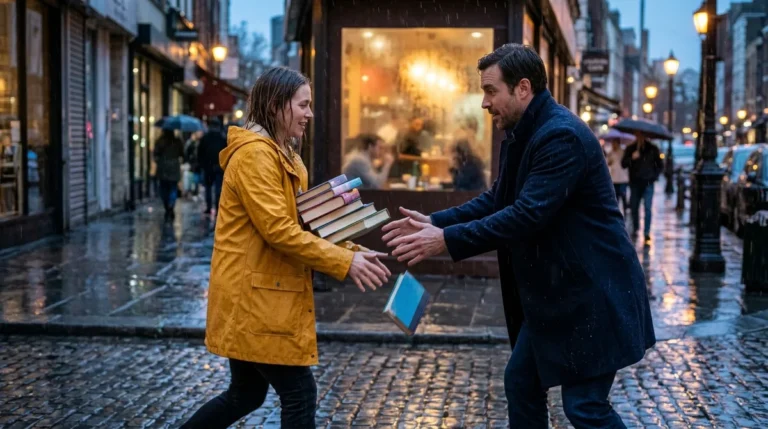
A meet cute is a chance first encounter between two characters who don't know each other, and it sets a potential love story in motion. Dictionary.com describes it as a meeting that starts a chain of events, typically leading to romance. Picture a disgraced pop star meeting a grumpy cowboy at a bus stop in Danica Nava's Love Is a War Song, or Olive and Adam bumping into each other in a public bathroom in Ali Hazelwood's The Love Hypothesis.
Not every meet cute is sweet. Some are awkward, chaotic, or deliberately unconventional. In Beth O'Leary's 336-page novel The Flatshare, Tiffy and Leon get to know each other through notes long before they meet face to face. Readers are clearly hungry for these stories. U.S. print romance sales were up 24% from a year earlier, according to Circana, as of June 2025.
A meet cute is a chance first encounter between two characters who don't know each other yet, and it's the spark that gets a romance rolling. Think of it as the first domino. Once those two cross paths, a chain of events follows, and that chain carries the story toward love.
Harlequin's romance glossary describes a meet cute as the scene where love interests meet for the first time in a funny or charming way. That's the sweet version, but it's only part of the picture. Plenty of first encounters are anything but adorable. In Liana De la Rosa's historical romance Isabel and the Rogue, the heroine walks into a British spy's office while he is mid-hookup, which is about as awkward as an introduction gets.
The YA anthology Meet Cute: Some People Are Destined to Meet shows how wide the range can be. Its stories begin with a missing library book, two girls stuck in an airport, and two Bay Area girls connecting through a customer-service tweet. Each setup is different, yet each one sparks the same curiosity between its characters.
The meeting, though, is only the opening move. Romance Writers of America says a romance novel needs two basic elements: a central love story and an emotionally satisfying, optimistic ending. A meet cute can open the door, but the couple still has to earn their happy ending on the pages that follow. Chemistry, conflict, and the slow build of trust do most of the heavy lifting, and that's where a good romance really wins you over.

A sweet first meeting works because it delivers the spark right away and lets you watch two people notice each other before the story gets complicated. In just a few lines, you learn who these characters are and why they might be drawn together.
Penguin Random House's meet-cute reading list describes Danica Nava's Love Is a War Song as opening with a disgraced pop star meeting a grumpy cowboy at a bus stop. That one scene does a lot of work. The star's fall from fame and the cowboy's sour mood create instant contrast, and you're already curious about how these two will get along.
A good first meeting usually does one of three jobs. It can show chemistry, like two people who clearly can't stop glancing at each other. It can highlight contrast, as a glamorous celebrity and a rough-around-the-edges cowboy do. Or it can hand the characters a problem they must solve together, which forces them to team up and keep talking.
Ali Hazelwood's The Love Hypothesis gives readers a double dose. Olive and Adam get two meet-cutes, and the second involves an impulsive kiss in a hallway. Two first encounters mean two chances for sparks, which is a fun way to keep a romance buzzing before the plot tightens.
Beth O'Leary's The Flatshare shows that a first meeting doesn't have to happen face to face at all. The 336-page novel, first published May 28, 2019, follows Tiffy and Leon as they trade notes while sharing an apartment on different schedules. Their connection builds slowly through those notes, so by the time they finally meet, you've been rooting for them for pages.
Readers love that early swoon. You get the butterflies of the first spark, the giddy feeling that something might happen, and the thrill of knowing trouble is coming. Soak it up, because a good romance rarely lets the couple float for long.
Some first encounters go off the rails from the start, and that's the heart of the meet horrible, or meet disaster, version. Instead of a sweet hello, the characters get a clumsy collision, a public mortification, or an argument that leaves them both red-faced. The awkwardness is the point, because every cringe-worthy moment gives the pair a reason to keep crossing paths.
The Love Hypothesis is a prime example. Olive and Adam's first encounters include a public bathroom moment and an impulsive kiss in a hallway. Neither scene is smooth, and both leave the two of them stuck with an embarrassing memory they have to face again.
Liana De la Rosa's Isabel and the Rogue takes the humiliation even further. The heroine barges into a British spy's office while he is mid-hookup, so the story opens with a moment nobody would choose and friction that starts right away. Every later exchange between them carries a little of that first sting.
Rivals-to-lovers and enemies-to-lovers stories often begin with a terrible first impression that the characters must keep dealing with. A bad opening gives them a reason to bicker, keep score, and notice each other more than they want to admit. Over time, those quarrels can shift into something warmer, and the grudge can feel just as swoon-worthy as a sweet meeting.
Many readers actually prefer a messy start to a polished one. Banter sparkles when two people are clearly sparring, and a slow-burn romance thrives on the tension of wanting someone you keep bumping into for all the wrong reasons. A rough beginning gives the story room to build, and you get to watch the walls come down one sharp remark at a time.

A meet cute feels natural when it grows out of who the characters are, what they do for a living, and how they spend their days. It shouldn't be a lucky accident the author needs to keep the plot moving. If the two people would only ever meet because the story demands it, the spark feels manufactured.
Believable meetings also carry real stakes. When a first encounter could cost someone a reputation, a job, or their peace of mind, every glance matters. Picture a hotel manager who can't afford a scandal running into a guest who is hiding from the press. Her caution makes the moment tense in the best way.
Resistance matters just as much. Each character should have a solid reason not to fall for the other, whether it's an old hurt, a clashing goal, or a rule they've made for themselves. When both people dig in their heels, you feel every crack in their defenses, and a small kindness hits much harder.
A forced meeting, on the other hand, can make you feel like the author is shoving the couple together. Maybe they keep bumping into each other for no reason, or a conveniently timed storm traps them in the same elevator. The moment you spot the strings, you step out of the story and start thinking about the plot instead of the people.
Strong openings help the whole thing land. In the first few pages, you should be able to picture the setting, sense what each person wants, and get a feel for what makes them tick. Once you have that clear picture, a meeting that seems unlikely on paper can feel completely right on the page.
The most unusual meet cutes happen through letters, texts, social media, and even the workplace, which proves a spark can start almost anywhere. These epistolary and unconventional openings break the usual pattern of two strangers bumping into each other in a crowded room.
Epistolary romances are told through letters, emails, or messages, so the characters fall for each other before they share a room. You get to know each person through the way they write, what they admit, and what they try to hide. That slow reveal can be just as swoon-worthy as a glance across a café, because every message gives you a little more to crave.
The YA anthology Meet Cute: Some People Are Destined to Meet shows how far the idea can stretch. Its stories trade the party or ballroom for everyday moments, including a customer-service tweet that feels thoroughly modern. Social media, texts, and ordinary errands can all become the spark, so you never know where the next meeting will come from.
Work settings add their own kind of tension. When two people meet through a shared shift, a deadline, or a client they both have to please, they already have a reason to keep showing up. That built-in routine lets the romance grow without relying on a lucky coincidence.
Movie fans will recognize the playbook. The trope predates books on the page, and screen classics like When Harry Met Sally and Notting Hill taught audiences to expect a charming first scene. Novelists borrowed that expectation and then twisted it, swapping the rom-com moment for a letter, a bathroom mishap, or a missing library book.

Meet cute keeps showing up because it's a flexible starting point that readers and writers both rely on. A July 6, 2026 article in the Journal of Popular Romance Studies describes tropes as shared, flexible concepts used for storytelling, marketing, recommendations, and cataloguing. That's why a meet cute works so well: everyone recognizes it at a glance, whether they're writing a book or hunting for their next one.
The market is also growing fast. As of June 2025, U.S. year-to-date print romance sales were up 24% from the same period a year earlier, and 51 million romance units had sold in the previous 12 months. Readers are clearly in a buying mood, and a familiar setup helps them pick a book with confidence.
A meet cute only lights the match, though. What keeps the pages turning is the trouble that follows. A secret gives two characters a reason to keep an eye on each other, because one of them is hiding something and the other can feel it. A rival keeps them in each other's orbit, forcing every encounter to carry a little extra tension. A shared project, like a deadline or a job they both have to finish, puts them in the same room again and again.
Those ongoing complications are what make a romance feel alive. Each new obstacle gives the couple another chance to show their true selves, and every small moment of trust feels earned. Once the spark is lit, the conflict is the fuel that keeps it burning.
Most readers want that slow burn with a payoff at the end. They enjoy sharp banter, a steady build of chemistry, and the promise that the couple will find their way to an optimistic ending. A strong first meeting gets you hooked, but the middle of the story is where you fall in love with the characters.
Start with the kind of first meeting that makes you grin. If you love a sparkling hello, Danica Nava's Love Is a War Song is a natural pick, with its bus-stop collision between a disgraced pop star and a grumpy cowboy. Prefer a little chaos? Here are some starting points for each mood:
Once you've picked your mood, you don't need a big budget to binge. Your local library likely has romance shelves and may offer digital borrowing, so you can read new titles for free. Used bookstores and discounted editions are also great for filling gaps in a series you love. Keep a running list of books that catch your eye, and check the library before you buy so your wish list stretches further.
Here's your next move: pick the mood you want tonight, then choose just one title from that list. If you're craving a sweet hello, start with Love Is a War Song and watch how the bus-stop scene sets up everything that follows. If you want a little heat with your awkwardness, The Love Hypothesis packs a public bathroom mishap and an impulsive hallway kiss into one swoon-worthy read.
Not sure how much time you have? The Flatshare runs 336 pages, so save it for a weekend when you can settle in and binge.
Before you buy anything, search your library's catalog for each title and place a hold. Many libraries offer digital copies you can borrow on a phone or tablet, so a new romance can be in your hands the same day. Isabel and the Rogue is worth requesting if you love historical settings, since its spy-office encounter is the kind of scene you'll want to talk about with friends.
Once you finish a book, jot down which meet cute made you grin the hardest. Your answer will show whether you prefer sweet, messy, or unusual starts, and that will guide your next binge.