
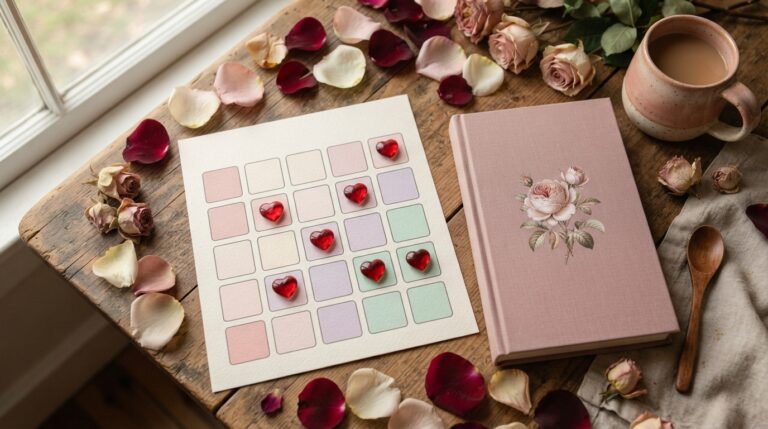
Romance book bingo 2026 is a collection of reader-made challenge cards, not one universal board. Its prompts can help you discover swoon-worthy books beyond your usual picks. Some cards run all year, while others are seasonal. One year-long challenge, for example, has 25 squares, including wedding trope, office romance, and a book published in 2026. Its rules allow one book per square and run from January 1 through December 31, but other organizers set their own timelines and guidelines. You might fill squares with steamy favorites, try a new author, or choose a book that catches your eye. You can also make the challenge fit your budget by checking books you own or can borrow before buying a title just to tick a box. The 2026 Romance Reading Bingo Challenge is one example, not a template every card follows.
The best card is the one that makes reading feel exciting, not like homework. If you love familiar tropes, choose prompts that point you toward wedding stories or office romance. If you’re craving variety, look for prompts that invite you to explore a less-read genre or a new-to-you author. Some boards focus on romance, while others welcome books from any genre that fit a prompt. Romance Writers of America defines a romance novel by its central love story and emotionally satisfying, optimistic ending. That can help you decide whether a romance-adjacent pick fits a romance-specific square. Romance Writers of America’s definition is a useful starting point, but your chosen challenge’s rules have the final say. A good bingo card leaves plenty of room for comfort reads, unexpected discoveries, and your next binge-read.
Romance book bingo 2026 is a loose name for independently organized reader challenges, not one official card or universal set of rules. Each organizer decides what the prompts cover, how long the challenge lasts, and how readers can share their progress.
The shared idea is to make discovering romance novels feel like a playful goal. A square gives you a reason to reach for a book you might otherwise scroll past, whether it leads you to an unfamiliar author, a fresh trope, or a subgenre outside your usual rotation. The fun is finding a swoon-worthy story that surprises you, not proving you have read every kind of romance.
Some 2026 cards run throughout the year, while others are seasonal editions with a shorter window. Year-long boards may invite readers to explore unfamiliar genres, anticipated new releases, or books adapted for screen; seasonal cards may use prompts drawn from details visible on a cover. Their different formats are part of the appeal: there is no single version every reader is expected to follow.
The cards also reflect a lively moment for romance reading. Circana BookScan reported that U.S. year-to-date print-romance sales were up 24% in 2025 compared with the same period in 2024, with 51 million units sold in the preceding 12 months. Circana’s report on romance sales offers a snapshot of readers’ enthusiasm for the genre.
You can choose a ready-made card that suits the way you like to read, or use its prompts as inspiration for a board of your own. Either way, treat the squares as invitations, not obligations. Romance book bingo is a reading game, so you can enjoy the books you find without making a full card a requirement.
Choose a romance-specific 2026 bingo card if you want every square to point toward a love story. Choose a flexible reading board if you want prompts to lead you into other genres, too. The best fit depends on whether you want to explore romance more deeply or broaden your reading.
Romance-focused boards can organize prompts around tropes, representation, format, or publication year. You might look for an office romance, an LGBTQ+ romance, an audiobook with multiple narrators, or a romance published in 2026. A card might also steer you toward a wedding story if you love the anticipation, family drama, and swoony promises that come with that trope. The 2026 Romance Reading Bingo Challenge includes examples of these kinds of squares.
If you already know which tropes make you reach for a book, a romance-only card can help you find fresh takes on familiar pleasures. One office romance might bring sharp workplace banter, while another pairs a slow-burn attraction with a high-stakes career. Prompts about LGBTQ+ romance or audiobook format can also help you choose a story that feels different from your usual pick without leaving the genre you came to read.
Broader reading boards offer a different kind of nudge. A prompt to try an unfamiliar genre could send you toward fantasy, mystery, or historical fiction. A new-to-you author prompt can introduce you to a fresh voice, while a screen-adaptation prompt might make you curious about a book you have seen discussed beyond book circles. Some flexible boards let any book count as long as it fits the prompt, so a fantasy novel, memoir, or romance can all earn a square. Romance-only challenges, by contrast, require romance titles even when a prompt focuses on format or publication year.
It helps to know what counts as romance when a square says “romance.” Romance Writers of America’s romance definition centers on a love story and an emotionally satisfying, optimistic ending. That definition covers a wide range of settings and styles: Pride and Prejudice offers classic courtship, The Kiss Quotient is a contemporary romance, and A Court of Thorns and Roses brings fantasy into the mix.
A romance-adjacent book may include attraction or a meaningful relationship without making the love story central, or it may not end on an optimistic note. It can still be a great choice for a flexible board or a prompt about fantasy, adaptation, or a new author. For a romance-only square, check the challenge’s rules and choose a title that meets its romance requirement. The distinction helps you match the book to the board, not rank one kind of reading above another.
The rules differ because each organizer sets its own dates, eligible books, square limits, and definition of bingo. Before you start reading, treat the card’s instructions as the rulebook, not as a guarantee that every romance challenge works the same way. The 2026 Romance Reading Bingo Challenge offers one clear example: it has 25 prompts, including wedding trope, office romance, LGBTQ+, audiobook with 2+ narrators, and a book published in 2026. It runs January 1 through December 31, 2026, and readers can join at any time. For this challenge, books must be genre romance with a happily-ever-after or happy-for-now ending, and you can use only one book per square. Those are the rules for this particular card, not universal rules for romance bingo. See the 2026 Romance Reading Bingo Challenge details for its instructions. Other boards may use seasonal windows instead of a full year, or prompts based on details visible on a cover rather than a trope or format. The finish line can change, too: one card may count a five-book straight line as bingo, while another may offer a full-card blackout goal. A year-long challenge can still have a different goal from another year-long challenge, so don’t assume the word “bingo” tells you how many squares to complete. Prompt wording can leave room for interpretation. For example, a square about a wedding trope might mean the wedding is central to the romance, or it might accept a story with a significant wedding scene. An audiobook prompt might specify a narrator count, while a cover-based prompt may ask you to judge only what appears on the cover. If the card does not make the standard clear, look for a note from its organizer before counting a book. A quick check before you begin can save you from finishing a book and finding that it does not fit the square:
Checking those details can also help you choose between a cozy comfort read and a more adventurous pick. You can still follow your curiosity, whether a prompt leads to a steamy office romance or an audiobook with multiple narrators, while knowing exactly what the organizer will count.

You can fill a romance book bingo 2026 card for less by checking books you already own, then exploring borrowing, swaps, sales, and lower-cost formats. The goal is to find a fun, swoon-worthy read, not to spend money just to make a square count. A prompt may match a book you already want to read, so look for an affordable fit before shopping for a specific title. Try this simple order of options to keep costs down while leaving room for a steamy new discovery:
Matching a prompt to a book is often easier than matching a book to a prompt. If a square asks for a particular trope, for instance, look through your collection or ask a librarian for an affordable title with that story element. If you already have a book that seems to fit, check the challenge wording before counting it. A romance-only board may have eligibility rules that a broader reading challenge does not. Borrowing can also help you try an author or subgenre without committing to a purchase. Search the library catalog by author, title, or subject, and ask library staff about other ways to find a book if the copy you want is unavailable. Friends and book swaps can turn a finished read into a new option for your card. Just confirm that the borrowed or swapped book fits the organizer’s rules. Formats can give you more ways to read within your budget. Romance Writers of America’s 2017 buyer study, which surveyed romance readers that year, reported that 92% read print books, 64% read ebooks, and 35% used audiobooks. These figures describe readers’ format habits, not a rule for any bingo card. Check Romance Writers of America’s buyer-study information for the dated findings. An ebook or audiobook may be a convenient option when you can borrow it or find a promotion, but neither format is automatically free or accepted by every organizer. If a square starts to feel like a reason to buy a book you do not really want, pause and look for another title that fits. A challenge should make discovering your next binge-read more enjoyable, not turn every prompt into a purchase.
Prompts can help you read differently when you use them to explore new tropes, subgenres, authors, formats, and stories beyond your usual habits. Instead of treating a square as a strict assignment, think of it as a playful nudge toward a book you might enjoy but would not normally pick up. Start with a familiar kind of romance, then pair it with a stretch choice. If cozy contemporary stories are your comfort reads, follow one with a fantasy romance or a historical romance. The Kiss Quotient can suit a contemporary mood, Pride and Prejudice offers a classic courtship, and A Court of Thorns and Roses mixes romance with a fantasy setting. Each could inspire a different square or help you decide what sounds exciting next. A trope prompt can also lead you into a less-read corner of romance. If you often reach for fake dating, for example, look for a book built around a trope you rarely try, such as a second-chance romance or a marriage of convenience. You can keep the emotional pull you love while changing the setup, setting, or pace. Prompts about authors and formats make room for smaller changes, too. A new-to-you author can bring a fresh voice to a favorite subgenre, while an audiobook prompt might send you toward a story told by multiple narrators. If you usually read print, an ebook or audiobook could offer a different way into a familiar kind of love story. You do not have to change everything about your reading habits at once. Some prompts invite you to choose with your eyes first. If a square asks for a book with a cover that fits a certain color, object, or mood, browse for a title whose cover catches your attention. That can introduce you to an author or story you might have passed over when choosing by trope alone. Check the card’s wording, then let a swoon-worthy cover spark your curiosity. For prompts that feel unfamiliar, make a short wish list of possible books before choosing one. Note a few titles that seem to fit, then pick the one that appeals most and is affordable for you. A book already on your shelf, a low-cost option, or a title you can borrow may make the decision easier without turning the square into a spending chore. Most of all, an unfamiliar prompt is an invitation, not a test. If your first choice is not working for you, swap it for another book that fits the prompt and sounds more enjoyable. The board should leave room for comfort reads alongside stretch picks, so your 2026 challenge stays fun, flexible, and full of swoon-worthy possibilities.

You can track romance book bingo 2026 with one easy method: mark a printable card, keep a digital checklist, jot titles in a reading journal, or use a spreadsheet. Pick whichever feels simple enough to keep up with while you enjoy your next swoon-worthy read.
For every square you fill, record the book title and the prompt it matches. That small note can help later, especially when the connection is not obvious from the title alone or when a book might fit more than one kind of prompt. You could add a short reminder, such as “office romance” or “new-to-me author,” so you remember why you counted it.
A printable card is satisfying if you like seeing your progress on the page. A digital checklist works well if you want to update your squares from a phone or computer, while a reading journal gives you room to add a quick reaction or favorite quote. In a spreadsheet, you can make columns for the prompt, title, author, and completion status. You do not need to use every option. One clear record is plenty.
If no existing card fits the way you read, make a personal tracker. A custom template can combine romance prompts, such as a favorite trope or subgenre, with broader reading goals, such as trying an unfamiliar genre or picking up a new-to-you author. You can also leave open squares for books that catch your eye during the year. If you are following an organized challenge, check its rules before changing prompts or counting a title, since organizers may define eligible books and completed squares differently.
Sharing progress can add a fun social layer, but it is entirely optional. You might share a finished line, celebrate a favorite discovery, or post an in-progress card for friends, a book club, or a reading community. A note about how a book fits the square can also help others find their next steamy read or see a new way to interpret a prompt.
Every reading community has its own rules and sharing style. Some may welcome regular updates, while others may focus on finished cards or use specific formats for posts. Check the organizer’s guidelines before sharing, and remember that no particular platform is required. You can keep your tracker private, share only with friends, or join a group conversation if that suits you.
Refreshing a romance bingo card each year keeps the challenge from feeling repetitive and gives you fresh reasons to browse. Your reading mood can change, new releases bring new possibilities, and the formats you reach for may shift, too. An annual update lets the prompts change with you instead of asking you to revisit the same list.
A lively card can keep familiar favorites alongside prompts that stretch your reading habits. You might save a square for a beloved trope, then add another that points you toward a new-to-you author or a genre you have not tried. If romantic suspense is new to your shelves, for example, Nora Roberts’s The Witness could be one place to start. A format prompt can offer a smaller experiment, such as listening to an audiobook when you usually read print.
A prompt about a book published in 2026 is another way to connect your reading goals to the year itself. It gives you a reason to notice new releases while leaving room to choose a title that genuinely appeals to you. Romance has also drawn strong print-book sales: Publishers Weekly’s sales coverage reported that U.S. print-book sales of romance titles rose almost 9% in 2024.
You do not need to make every square adventurous. Too many stretch prompts can make a card feel like homework, while a board made only of familiar choices may not lead you anywhere new. A mix gives you room for comfort reads and discoveries, whether a prompt points toward a trope you adore or an author whose books you have not yet explored.
Think about what you want your 2026 card to help you discover: a fresh voice, a new corner of romance, or a format that fits your everyday reading life. Choose prompts that feel exciting and achievable, and that are likely to lead you to a book you will want to binge-read. When the year ends, keep your favorite prompts in mind as inspiration for a future edition.
Choose your first square by deciding what you want your next book to do: deliver a familiar romance mood or nudge you toward something new. If you want every pick to be a romance, open the 2026 Romance Reading Bingo Challenge prompt list and choose a square that matches a book you can borrow or already own. Before you start, check the card’s eligibility rules so your first pick counts.
If you would rather stretch beyond your usual reading, make your first square “unfamiliar genre” or “new-to-you author.” If a 2026 release is what you’re excited about, start with a highly anticipated romance instead. Pick the prompt that makes you curious, not the one that feels like an assignment.
Now write the prompt and one possible book title in your tracker. If you do not have a good match, list two other titles you could borrow or find at a lower cost, then choose the one you most want to read. Once you finish, note why the book fits the square. That gives you a clear first win and a useful starting point for choosing your next swoon-worthy read.