

Disability in romance novels means stories where one or more disabled characters are part of the central love story, with desires, relationships, and lives beyond disability. The range is wide: in 2022, one in four U.S. adults reported at least one of six disability types, including hearing, vision, cognitive, mobility, self-care, or independent-living disabilities, according to the Centers for Disease Control and Prevention. CDC estimates put cognitive disability at 13.9% and mobility disability at 12.2%. Romance can make room for that range without making disability a character’s only defining trait. You might find a story about an autistic heroine, a character who uses a prosthetic limb, or a romance shaped by blindness. Every experience is different, so specific descriptions can help you find the representation you want.
The genre’s central love story and emotionally satisfying, optimistic ending can make room for disabled characters to be desirable, to desire, and to look forward to the future. Romance Writers of America’s definition of romance fiction puts the love story and hopeful ending at its heart. That doesn’t mean every book will suit every reader, or that one novel can represent everyone. You can look for swoon-worthy romances where disability is part of a whole life, not a problem that love must fix. With titles exploring different setups and experiences, your next thoughtful, steamy binge-read may be closer than you think.
Disability in romance novels means a disabled character is part of the central romantic relationship, and disability can shape their life without defining everything about them. A character may navigate access needs, symptoms, or other effects of disability while also having desires, flaws, relationships, and goals unrelated to disability. The romance gives that character a place in the love story, not just a role as someone to be cared for or “fixed.”
The Romantic Novelists’ Association’s description of its DISCO chapter says it includes members with disabilities, chronic health conditions, mental health issues, or neurodivergence, as well as carers. That range helps explain why readers may use different words for their experiences, or why one person’s account may not match another’s. A novel’s portrayal is one character’s story, not a template for everyone with a similar condition.
Legal definitions serve a different purpose from literary descriptions. In the U.S. federal civil-rights context, the Americans with Disabilities Act defines disability as an impairment that substantially limits one or more major life activities, a history or record of such an impairment, or being regarded as having one. The ADA’s definition belongs to that legal context. It is not a checklist readers must apply before a character or story can count as disability representation.
Romance can explore how disability and a relationship shape one another without making the relationship a cure. A 2026 article in the Journal of Medical Humanities examines three contemporary romances about relationships between disabled heroines and nondisabled heroes. The article considers how those books connect chronic illness with romance’s hopeful promise, including the possibility of love and a happy ending. This pairing is one way to tell a disability romance, not a requirement for the genre.
The key is that the disabled character belongs at the heart of the romantic story and is treated as a full person. Disability may affect intimacy, plans, or everyday choices, but it does not need to be the plot’s only source of conflict. A romance can make room for tenderness, attraction, uncertainty, humor, and joy while taking a character’s disability seriously.

Disability representation matters because disabled characters deserve to be central to love stories, not limited to plots about hardship. When a heroine or hero is desired, flirtatious, funny, uncertain, or stubborn, you can enjoy them as a full person. Their disability can shape the relationship without becoming the only reason the couple faces conflict.
Romance’s hopeful ending can give disabled characters room to build relationships and imagine futures. A 2026 research article analyzes three contemporary romances about disabled heroines and nondisabled heroes, arguing that the novels challenge the idea that chronic illness rules out romantic love or a happy ending. That possibility matters: a disabled character’s future can hold intimacy, commitment, and joy without suggesting that love cures disability.
An interabled romance pairs a disabled character with a nondisabled character. A romance with disabled leads on both sides of the central pairing is a different setup, bringing two distinct experiences into the love story without making either character a stand-in for everyone with that disability. In Out on a Limb, for example, Win’s right hand is less developed than her left, and Bo has a prosthetic leg, as described in a Publishers Weekly review. Their pairing lets you enjoy a swoon-worthy romance between two disabled characters, rather than making one partner’s disability the only one the story considers.
Representation can be meaningful without any one book needing to speak for every disabled reader. One character’s needs, boundaries, humor, or approach to desire may feel familiar to you, while another reader may have a different experience. A satisfying romance can give its disabled leads room for chemistry, disagreements, private jokes, and choices unrelated to disability. That range makes it easier to find a steamy binge-read that holds your interest without treating one portrayal as a universal answer.
You can start with these three disability romances, each offering a different way to bring disabled characters into a love story. These descriptions are a starting point, not a promise that a book will match your tastes or experiences.
These books offer examples of different portrayals: a couple with two disabled leads, an autistic woman exploring sex and relationships, and a blind captain in a Regency setting. They can help you choose a possible next read, but they don’t show how common any portrayal is across romance. A short description also can’t capture every detail of how a novel handles disability or romance. If a premise catches your interest, read a fuller description before you start. Look for details about the central relationship, the characters’ experiences, and the tone, then check any available content notes for subjects you prefer to approach with care. A disability label or promising setup can help you narrow your choices, but it can’t guarantee that a book will feel right for you.
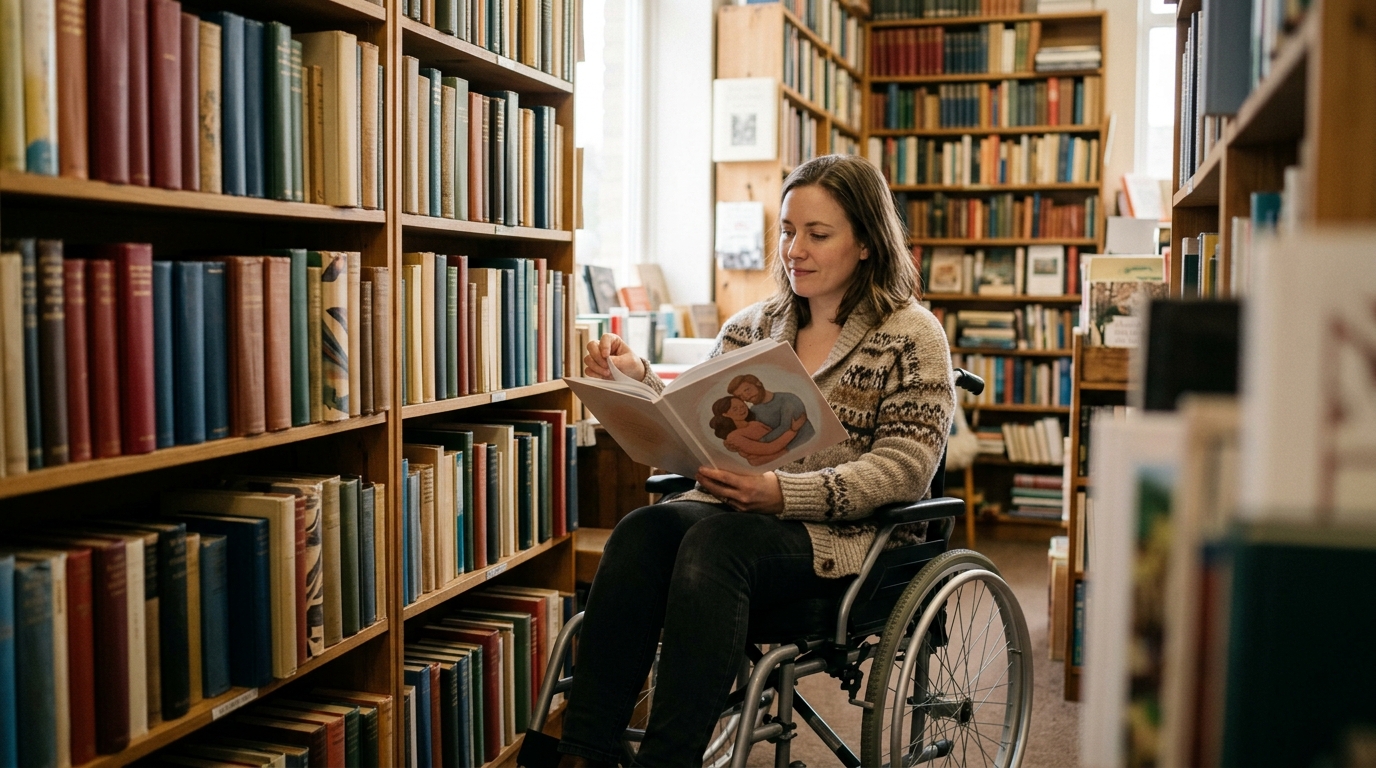
You can find disability romance books by searching for the character, disability, or access experience you want to read about, then checking the book’s description and other reader-facing details. Specific searches can lead you beyond a single recommendation list and toward a fresh, swoon-worthy binge-read. Before you search, think about the kind of story you want. The steps below can help you narrow the results without treating different disabilities or relationship setups as interchangeable.
Search wording can make a big difference: “disabled romance” may bring up a wide mix, while a phrase naming a particular disability or pairing can narrow the results. A fuller description can help you decide whether a steamy contemporary romance, a historical love story, or another kind of book fits what you’re looking for.
Thoughtful disability representation gives a disabled character agency, romantic desires, and a life that isn’t reduced to disability. Ask yourself whether the character makes meaningful choices, pursues personal goals, and helps shape the relationship. A character who sets a boundary, initiates affection, or changes a shared plan takes part in the romance rather than simply being carried through it. By contrast, a character who exists only to inspire a nondisabled partner or teach them a lesson may feel more like a story device than a full romantic lead.
Look at what the character wants beyond being loved. A disabled character might care about work, friendship, family, creativity, or a future unrelated to a partner. Those goals don’t need to take up as much space as the romance, but they can show that the character’s life is larger than the couple’s storyline. Notice whether both partners affect the relationship: the disabled character’s preferences and decisions should matter, not just the nondisabled partner’s learning or growth.
A satisfying romance can make room for intimacy, attraction, and joy alongside access needs, care, pain, or uncertainty when those details fit the character’s experience. A date might call for a change of plans; a moment of closeness might involve communication about comfort or boundaries. These scenes can show access and care as part of how two people build trust, not as interruptions that make desire impossible. Disability experiences vary, so a story doesn’t need to include every possible challenge to feel complete.
Support from a romantic partner can be tender without making the disabled character helpless. Notice whether help is offered with respect for the character’s wishes, or whether a partner takes control and the story presents that control as romantic. Care can go both ways: each person can listen, compromise, and show up for the other, even when their needs differ. Mutual affection feels more convincing when neither partner is treated as the other’s project.
Love can support a character without curing or erasing disability. A loving relationship may bring comfort, confidence, companionship, or practical support. It shouldn’t need to make a disability disappear, resolve every symptom, or suggest that the character can be loved only after becoming more like a nondisabled person. A hopeful ending can include uncertainty or ongoing needs while still giving the couple a joyful future.
When you assess a portrayal, look for specific descriptions of the disability and how it affects this character’s daily life, relationships, or access needs. A label alone may leave important details unclear, while a detailed portrayal can help you understand what the story chooses to show. Still, one character can’t represent every person with the same disability, and one author can’t speak for every disabled reader. You may find a book moving, frustrating, or simply not for you, while another reader responds differently to the same portrayal.

Pick a book from the list that makes you curious and give it a try. Then follow the detail that caught your eye: search for an autistic heroine, a blind lead, or a romance with two disabled leads. A specific search can lead you to more stories with a setup you’re excited to read, while leaving room for books that surprise you.
Your next swoon-worthy read might be easy to borrow. Check your library’s catalog for the title, or ask whether the library can get a copy if it isn’t on the shelf. Borrowing from the library lets you explore a new author or subgenre without buying every book you’re curious about.
Sales can help stretch your reading budget, too. Look for discounted print books or ebooks, and browse library book sales for low-cost finds. You can build a joyful, steamy binge-read pile without paying full price for every title.
As you follow a promising recommendation trail, stay open to different authors, voices, and experiences. A search for one representation detail may introduce you to a new setting, relationship dynamic, or kind of romance you hadn’t considered. Keep a personal list of titles you want to try and the representation details you’d like to explore next.
Choose a title based on the story setup you want tonight. For a romance with two disabled leads, search your library catalog for Out on a Limb by Hannah Bonam-Young. For an autistic heroine and a story centered on sex and relationships, look up The Kiss Quotient by Helen Hoang. For a Regency romance featuring a blind captain, search for The Captain’s Wallflower by Audrey Harrison.
Open the catalog record instead of relying on a search-results label. Check whether your library has a print or digital copy, and use its hold option if available. Before borrowing, read the full book description and any available content notes to see whether the premise and themes fit your mood.
If your library doesn’t list a title, ask a librarian whether another branch or a borrowing request might help. Availability varies by library. Keep a short reading note with the title, the disability detail that caught your interest, and one question you want reviews to answer. After you finish, use that note to guide your next search, such as “romance with two disabled leads” or “Regency romance with a blind hero.”